
Last updated November 2, 2026
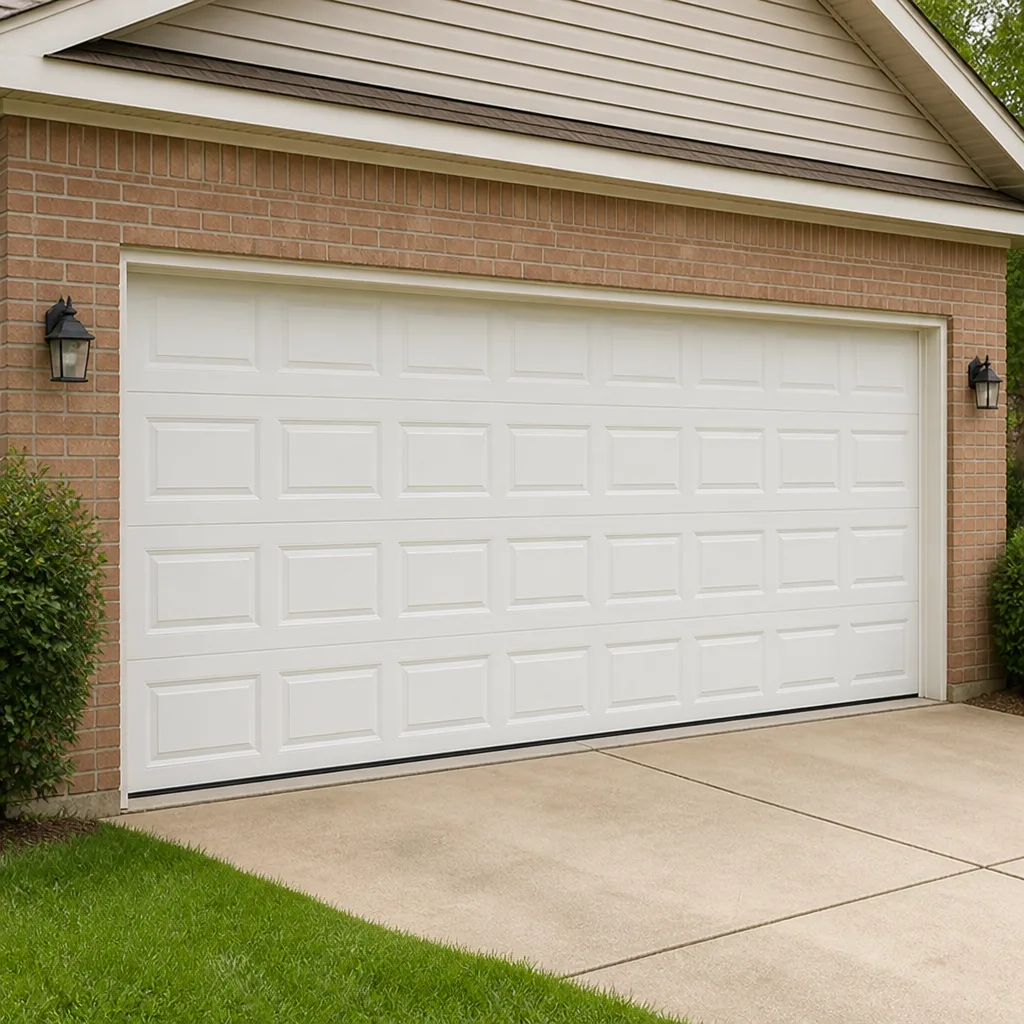 Raised-panel steel
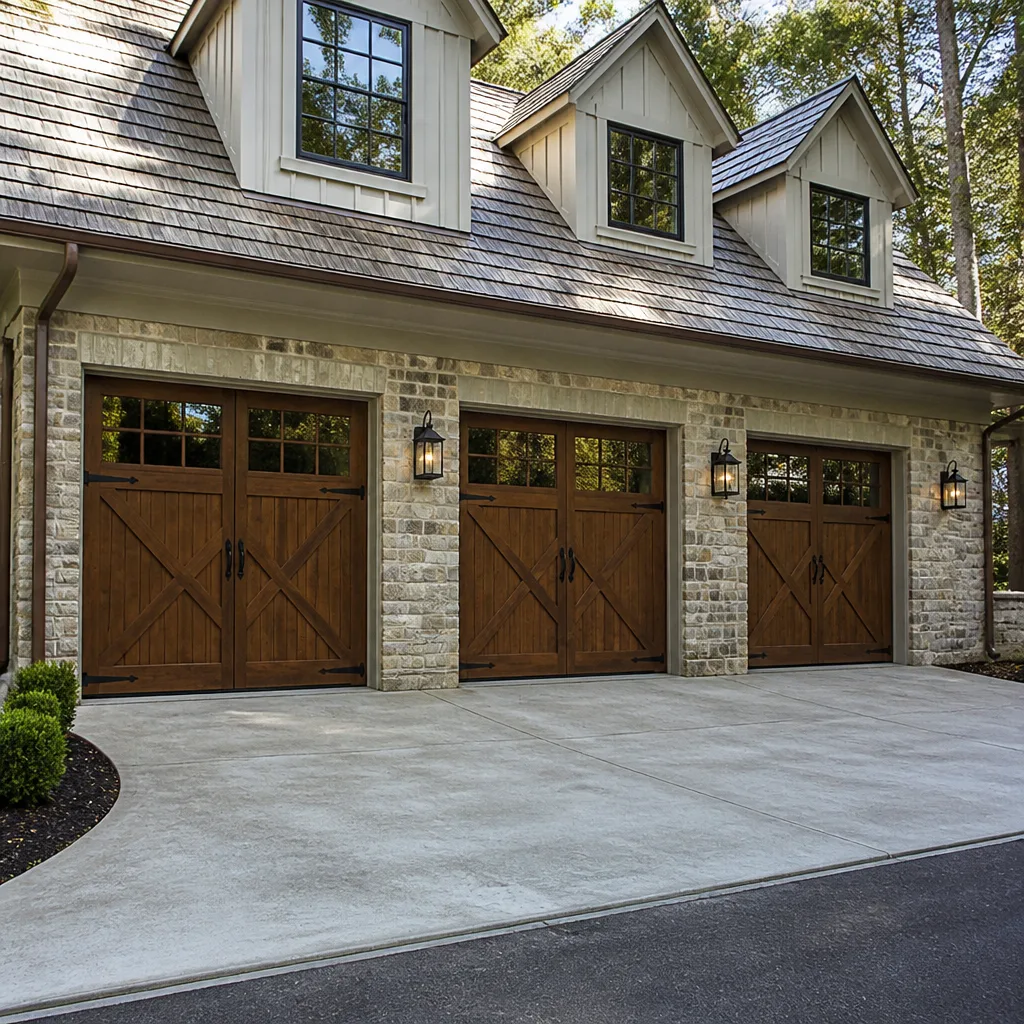 Carriage house
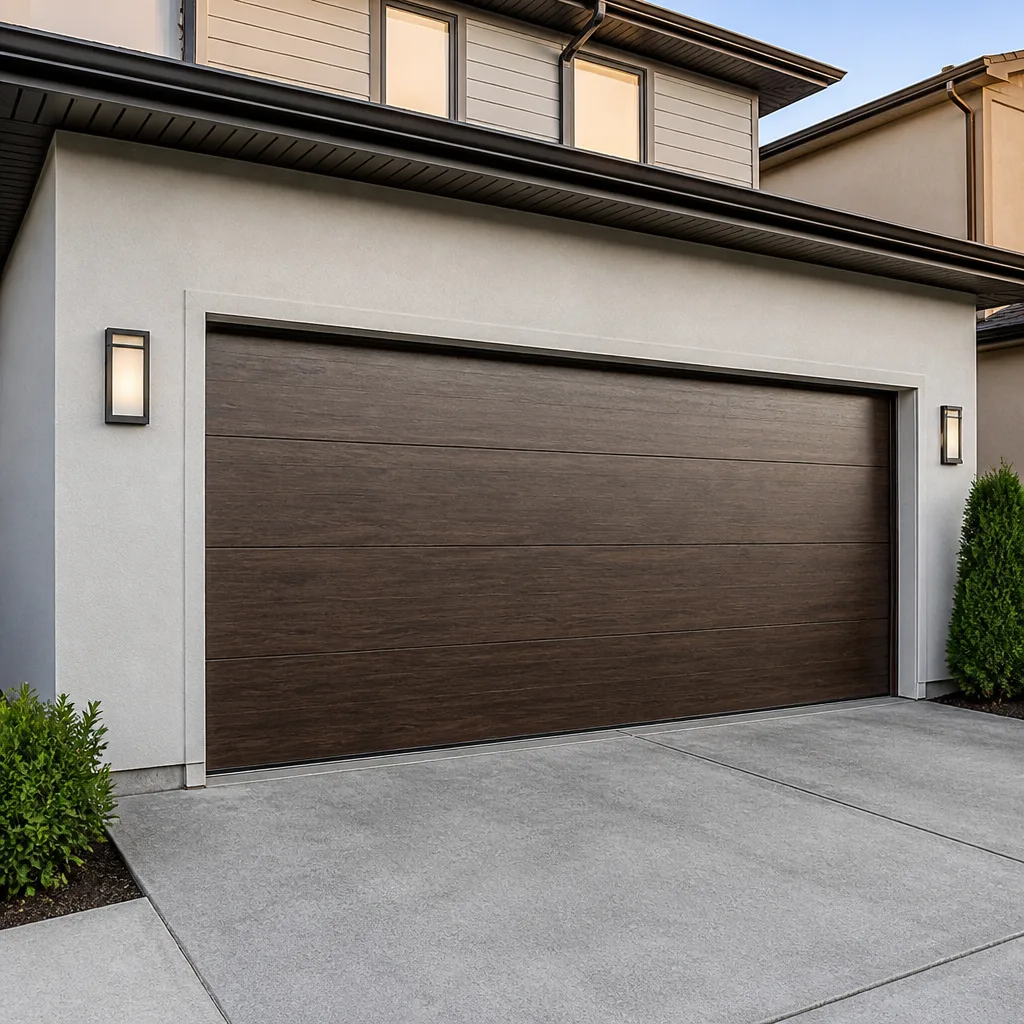 Modern flush
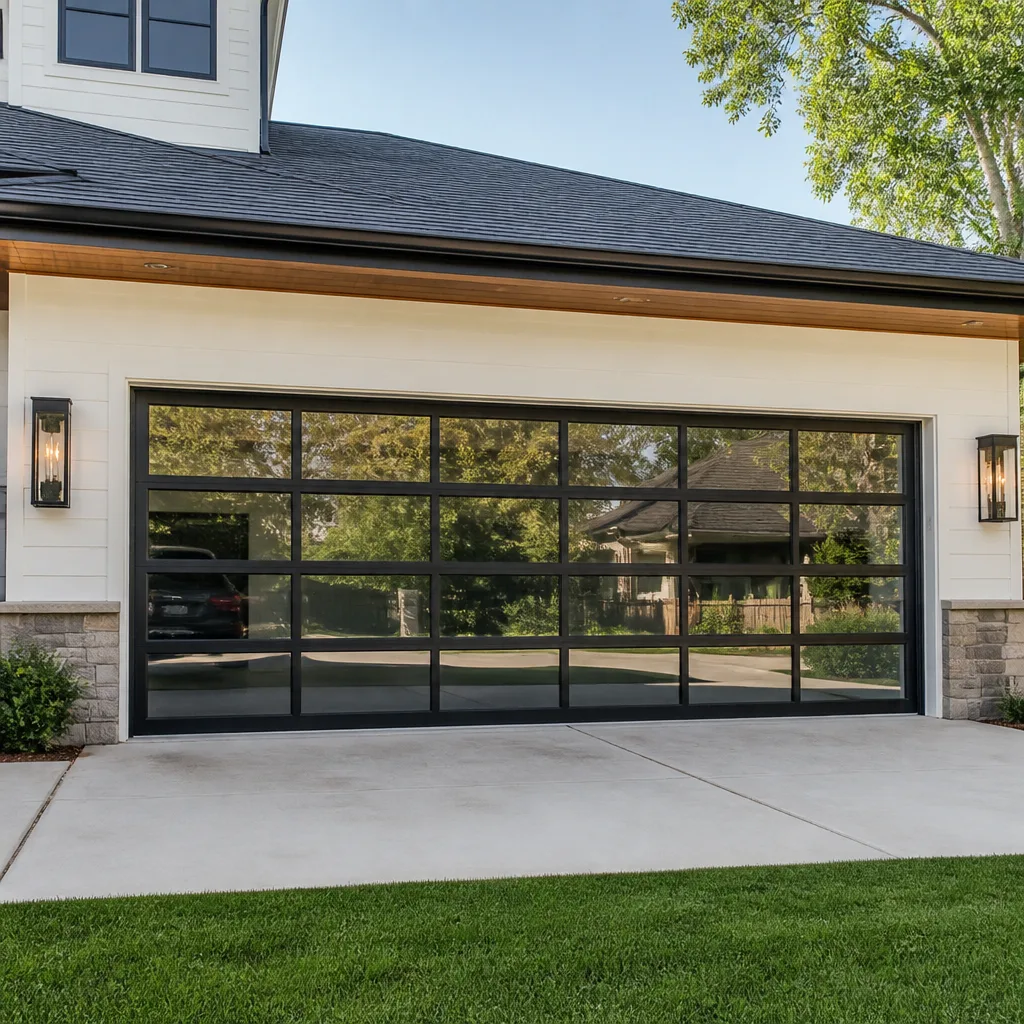 Full-view glass
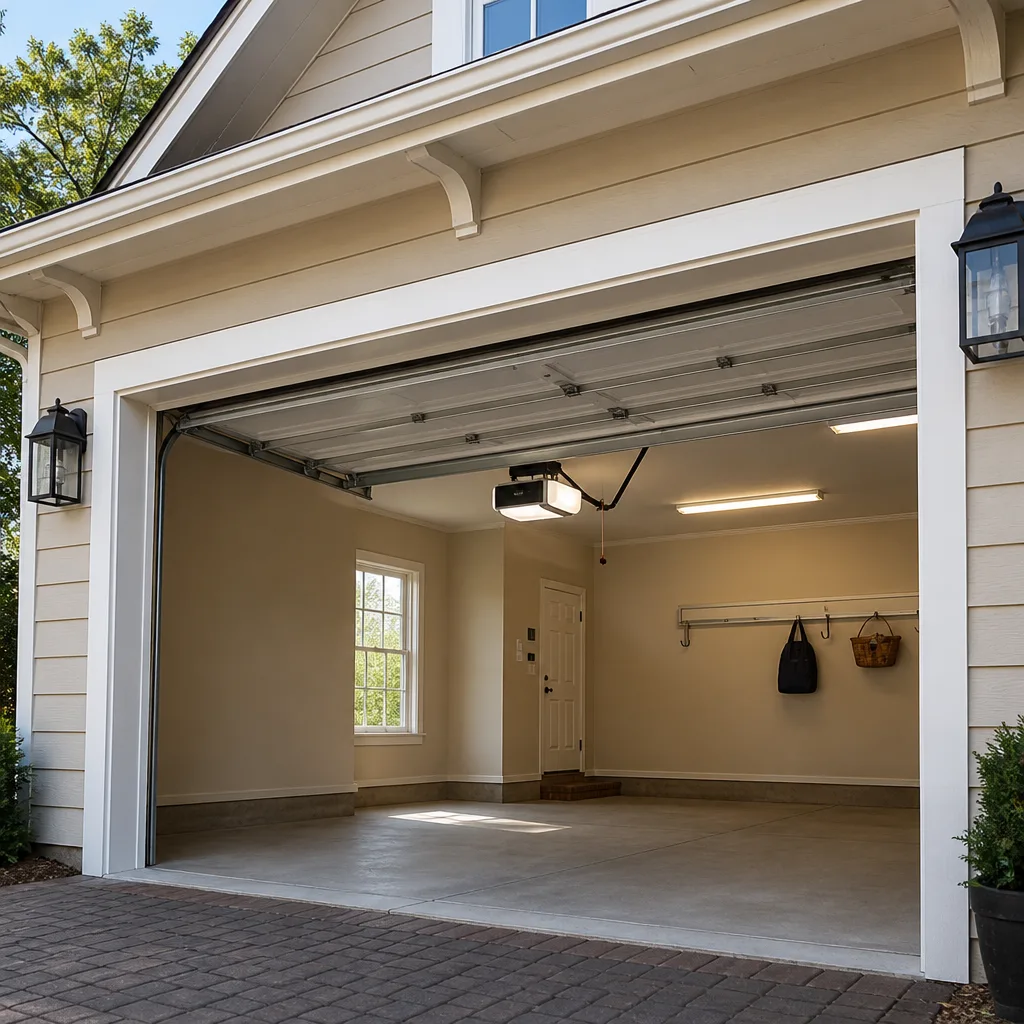 LiftMaster openers
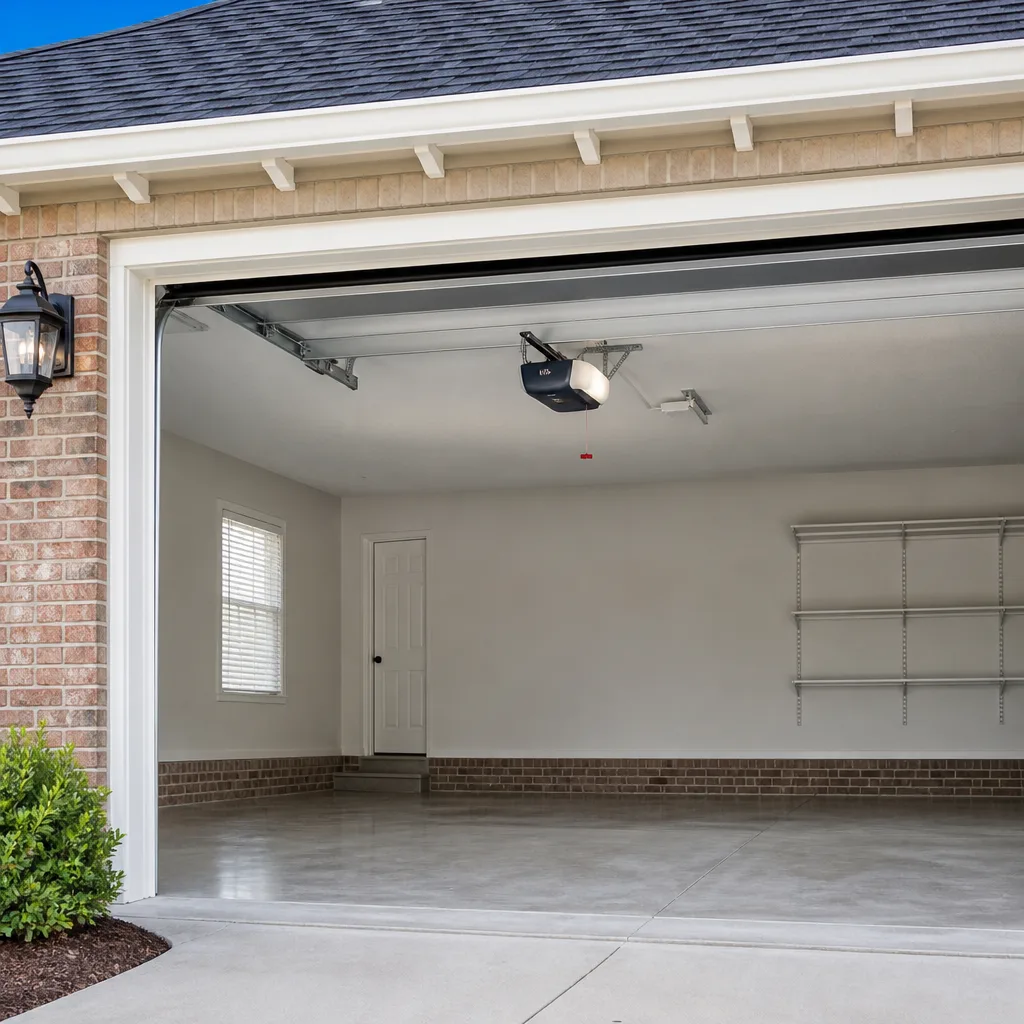 Chamberlain openers
Full 25-point door and opener safety check with every visit - springs, cables, rollers, tracks, and your LiftMaster or Chamberlain opener included
You get a price before we start. It does not change when the truck arrives.
Get your free estimateGarage Door Permits, Codes & Inspections in CA: What You Need to Know
A garage door replacement is one of the most common home improvements in California, and one of the most commonly unpermitted. Homeowners treat it like swapping an appliance. Then escrow hits. In East Los Angeles, where housing stock runs from 1920s bungalows to hillside builds, we see unpermitted door replacements surface as title defects, insurance claim denials, and sale-killing inspection flags. This guide explains what actually triggers a permit in California, what the inspection tests for, and how to fix a door that was never permitted. For garage door warning signs every East Los Angeles homeowner should watch for, see our dedicated reference guide.
Styles & brands we work with
- Raised-panel steel
- Carriage house
- Modern flush
- Full-view glass
- LiftMaster openers
- Chamberlain openers
Quick Answer
In California, a garage door replacement requires a permit when it changes the door’s fire separation rating, alters the structural header or framing, or adds a new electrical circuit for the opener. A like-for-like swap of a non-fire-rated door on an existing header, with the existing opener circuit, typically does not trigger a permit in most unincorporated areas and many cities. But Los Angeles County amendments to the California Building Code add fire-rating triggers that many East Los Angeles homeowners do not discover until a home sale or earthquake claim.
Table of Contents
- When a Garage Door Permit Is Required in California
- California Building Code Section 406 and Fire Separation: The Trigger Most People Miss
- How Los Angeles County Amendments Change Garage Door Rules
- The Seismic Disconnect Requirement for Opener Installations
- Work That Does Not Require a Permit
- What the Inspection Actually Tests For: A Step-by-Step Breakdown
- How to Retroactively Permit an Unpermitted Garage Door in Los Angeles County
- What Permitting Costs and How Long It Takes
- Common Mistakes to Avoid
- When to Call a Professional
- Frequently Asked Questions
- The Bottom Line
When a Garage Door Permit Is Required in California
The trigger is not “you touched the door.” It is what the new door changes about the structure. A permit is required under the California Building Code (CBC) when any of these three conditions apply.
Scenario 1: The Fire Separation Rating Changes
California treats the wall between a garage and living space as a fire separation assembly. If the existing door is a fire-rated door and the replacement is not, or vice versa, the permit requirement triggers. This is not optional. It is the single most common unpermitted garage door situation we encounter in East Los Angeles, particularly in older homes where the original door was solid wood or a labeled fire door and a previous owner swapped in an unrated steel or aluminum door.
Scenario 2: The Structural Header or Framing Is Modified
If the opening gets bigger, the header changes, or the framing takes on new load, a permit is mandatory. This applies to most conversion projects like turning a single-car door into a double-car door, or widening an opening for a taller truck. The header carries wall and roof load above the opening. Modifying it without an engineer’s calc and an inspector’s sign-off is how garages develop sag cracks at the corners.
Scenario 3: A New Electrical Circuit Is Added for the Opener
If the opener needs a circuit that does not exist, that is electrical work. New circuits require a permit. Replacing an opener on an existing, code-compliant circuit does not. In East Los Angeles, where some pre-1960 garages still run a single 15-amp circuit for lighting and one outlet, adding a modern smart opener from LiftMaster or Chamberlain sometimes means a new dedicated circuit. That is a permit trigger even if the door itself is a like-for-like swap.
Anything outside these three scenarios is generally a repair or like-for-like replacement. The Garage Door Repair in East Los Angeles work we do most often, spring replacement, cable replacement, panel replacement, sensor repair, falls outside permit territory because the fire rating and structure do not change.
California Building Code Section 406 and Fire Separation: The Trigger Most People Miss
Section 406 of the California Building Code governs garages and carports. The section that matters for garage doors is the fire separation requirement between the garage and the dwelling. Here is what the code actually demands in plain language.
The wall and any door between a private garage and the living space must provide a fire-resistance rating. For most single-family homes, that means the door must be a solid wood door not less than 1-3/8 inches thick, a solid or honeycomb-core steel door not less than 1-3/8 inches thick, or a 20-minute fire-rated door. The door must be self-closing and self-latching. That is the part that fails most inspections, not the door itself. A fire-rated door installed with a standard non-self-closing hinge set does not meet the code.
The code also addresses penetrations through the separation wall. If the opener motor mounts to the ceiling and the wall between garage and house is breached for wiring, that penetration must be sealed with an approved fire caulk or the wall assembly rating is compromised. We have seen East Los Angeles homes where a previous owner ran an extension cord through a drilled hole in the garage wall to power a Chamberlain opener. That single hole defeats the fire separation the code exists to protect.
For attached garages specifically, the CBC treats the garage as a higher-hazard space because it stores vehicles, fuel, solvents, and combustibles. The fire separation door is the primary safety barrier. When a homeowner replaces a labeled fire door with an unrated decorative door, they have removed the barrier. An inspector will flag it. A home inspector will flag it. A buyer’s lender may refuse to fund until it is corrected.
What makes this confusing is that the door manufacturers themselves do not always make the rating obvious. A Clopay or Amarr steel door with a polyurethane core may or may not carry a 20-minute label depending on the model and construction. The label is usually a small metal plate or sticker on the door edge. If the label is gone, the door’s rating status becomes a judgment call for the inspector. In our experience, that judgment call goes against the homeowner more often than not.
This is exactly the kind of detail that separates a reputable installer from a fly-by-night one. We check the existing door’s rating status before quoting any replacement, because guessing on a fire separation door in East Los Angeles is how you end up with a $3,000 correction bill at escrow two years later.
How Los Angeles County Amendments Change Garage Door Rules
California is not one code jurisdiction. The state publishes the California Building Code, and every city and county can amend it locally. Los Angeles County has adopted the CBC with amendments that affect garage doors in ways that differ from, say, Orange County or Santa Clara County. If you live in an unincorporated area of East Los Angeles served directly by LA County Building and Safety, these amendments are your rules.
The most consequential amendment for garage doors is the county’s stricter enforcement posture on fire separation in attached garages. LA County inspectors routinely flag garage-to-house doors and the surrounding wall assembly during any permitted remodel, even if the garage door itself is not in the scope of work. A kitchen remodel permit can turn into a garage door correction order because the inspector walking through the property notices the unrated replacement door. That does not happen as aggressively in jurisdictions that take a more laissez-faire approach to garage fire separation.
LA County also has specific requirements for opener electrical work in garages that predate the 1980s. The county follows the California Electrical Code strictly on GFCI protection for garage receptacles. If a new opener circuit is installed, the receptacle serving the opener must be GFCI-protected. Some older East Los Angeles garages have non-GFCI circuits that were grandfathered until the moment a new circuit is added. At that point, the new circuit must comply with current code, and the inspector may require the existing garage receptacles to be brought up to standard as a condition of final approval.
One more local wrinkle: LA County requires a permit for any garage door replacement that changes the clear opening dimensions, even by an inch. If the new door frame sets differently than the old one and the rough opening changes, the county treats it as an alteration requiring plan review. This catches homeowners who buy a standard-size door from a big-box store and discover the rough opening does not match, then have the opening reframed to fit. Reframing is structural work, and structural work requires a permit in every jurisdiction in California.
For homeowners inside an incorporated city within the East Los Angeles area, such as portions served by the city of Los Angeles Department of Building and Safety, the rules are similar but the enforcement office is different. The practical advice is the same: check before you cut, and do not assume a like-for-like swap is automatically exempt.
The Seismic Disconnect Requirement for Opener Installations
California has an electrical code provision that surprises most homeowners and, frankly, many installers. It is called the seismic disconnect requirement, and it applies to garage door opener installations statewide.
The rule comes from the California Electrical Code and the CBC’s earthquake provisions. It requires that a garage door opener be connected to the electrical supply through a plug-and-receptacle connection, not hardwired. The receptacle must be installed in the ceiling near the opener motor, and the opener must have a cord plug that can be disconnected. The purpose is straightforward: after an earthquake, emergency responders need to be able to cut power to the opener quickly without opening a junction box, and a plug connection makes the opener easy to replace or de-energize during aftershocks.
Here is what we see in the field. A significant percentage of opener installations, particularly older ones from the 1970s through the 1990s, are hardwired. Some installers, even today, hardwire openers because it saves the cost of a receptacle and cord. That installation does not meet current California code. If the opener is ever inspected, whether at a home sale or as part of a remodel, it can be flagged. More importantly, a hardwired opener cannot be unplugged quickly after an earthquake, which is the entire point of the requirement.
There is a second seismic angle that applies to the door itself, not the opener. Garage doors in seismic zones need lateral bracing hardware, typically metal angle brackets that tie the door track to the ceiling joists and the opener rail to the ceiling. In a quake, an unbraced track can pull away from the ceiling and drop the door. We service openers across the brand spectrum, from legacy Craftsman units to current LiftMaster and Chamberlain smart openers, and seismic bracing is one of the most frequently missing components on older installs. East Los Angeles sits in a high-seismic zone. The track bracing is not optional here.
If you are installing a new opener, the seismic disconnect and the bracing are code items. Ask the installer whether they are doing both. We do, on every opener job, regardless of brand. Raynor, LiftMaster, Chamberlain, Craftsman, the code does not care what logo is on the motor housing. The plug, the bracing, and the GFCI-protected circuit are the same.
Work That Does Not Require a Permit
Most of what we do day to day in East Los Angeles requires no permit because it is repair, not alteration. Here is a clear list of what California and LA County consider exempt.
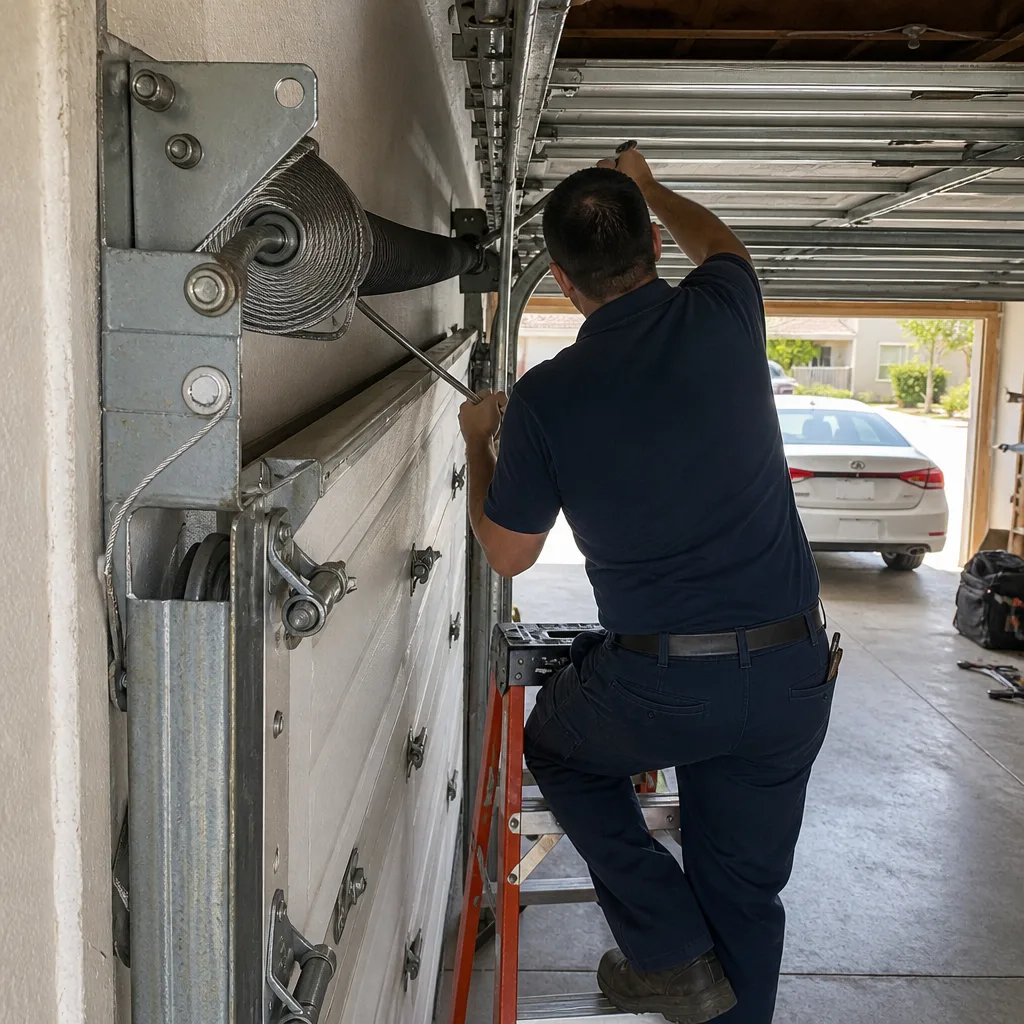
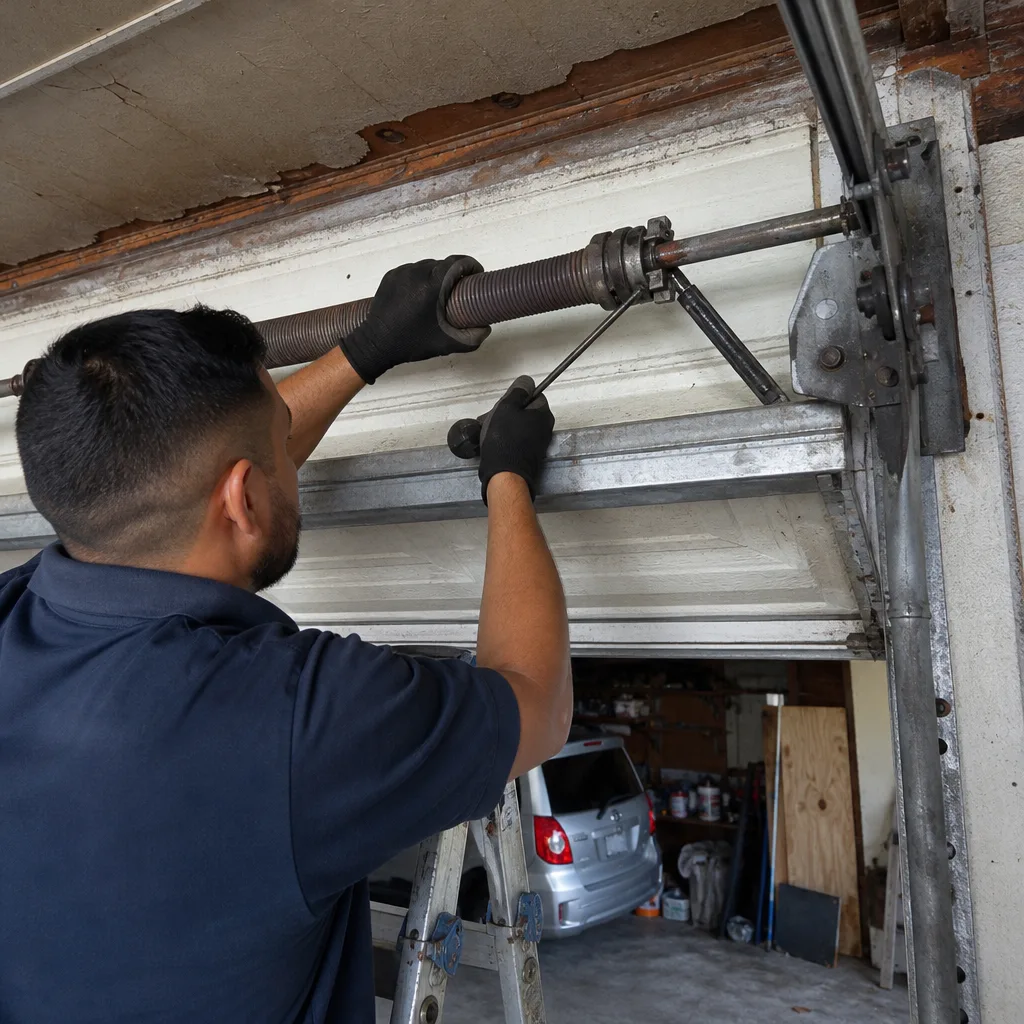
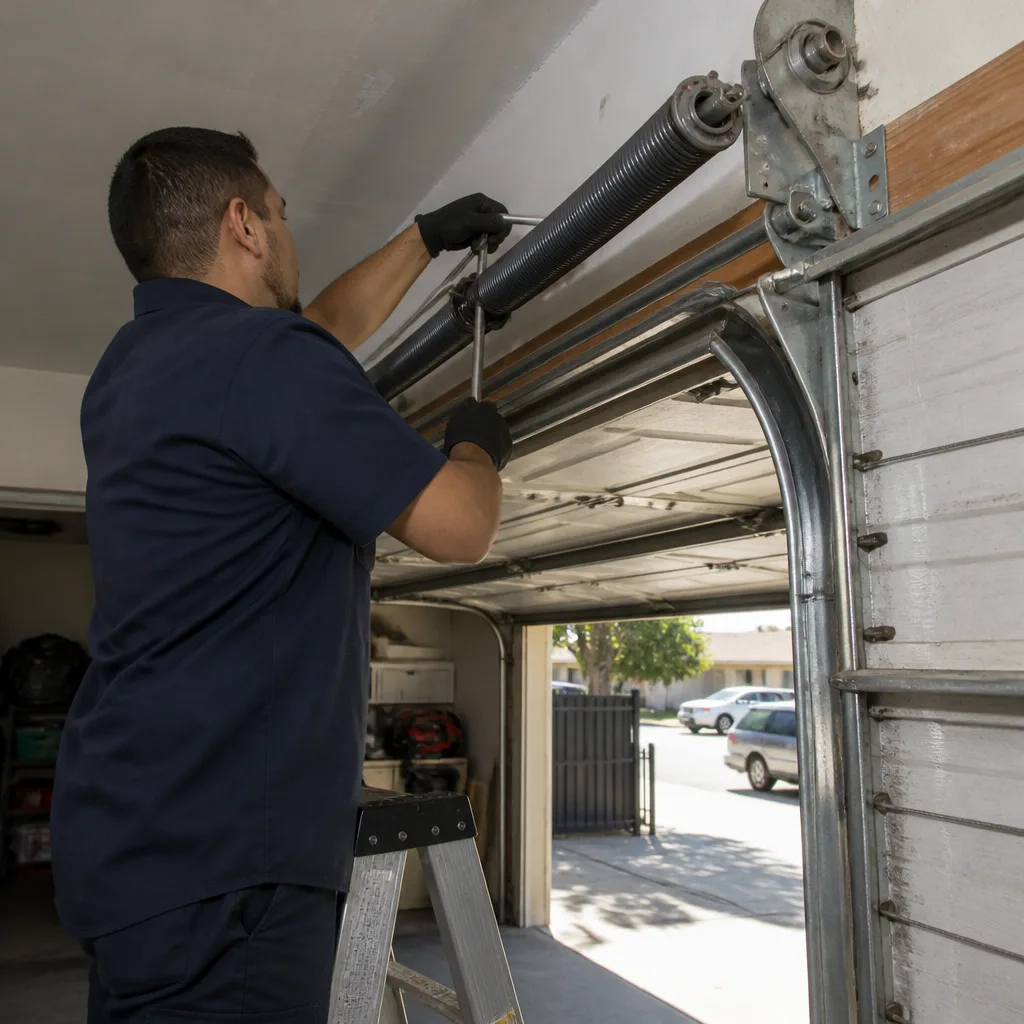
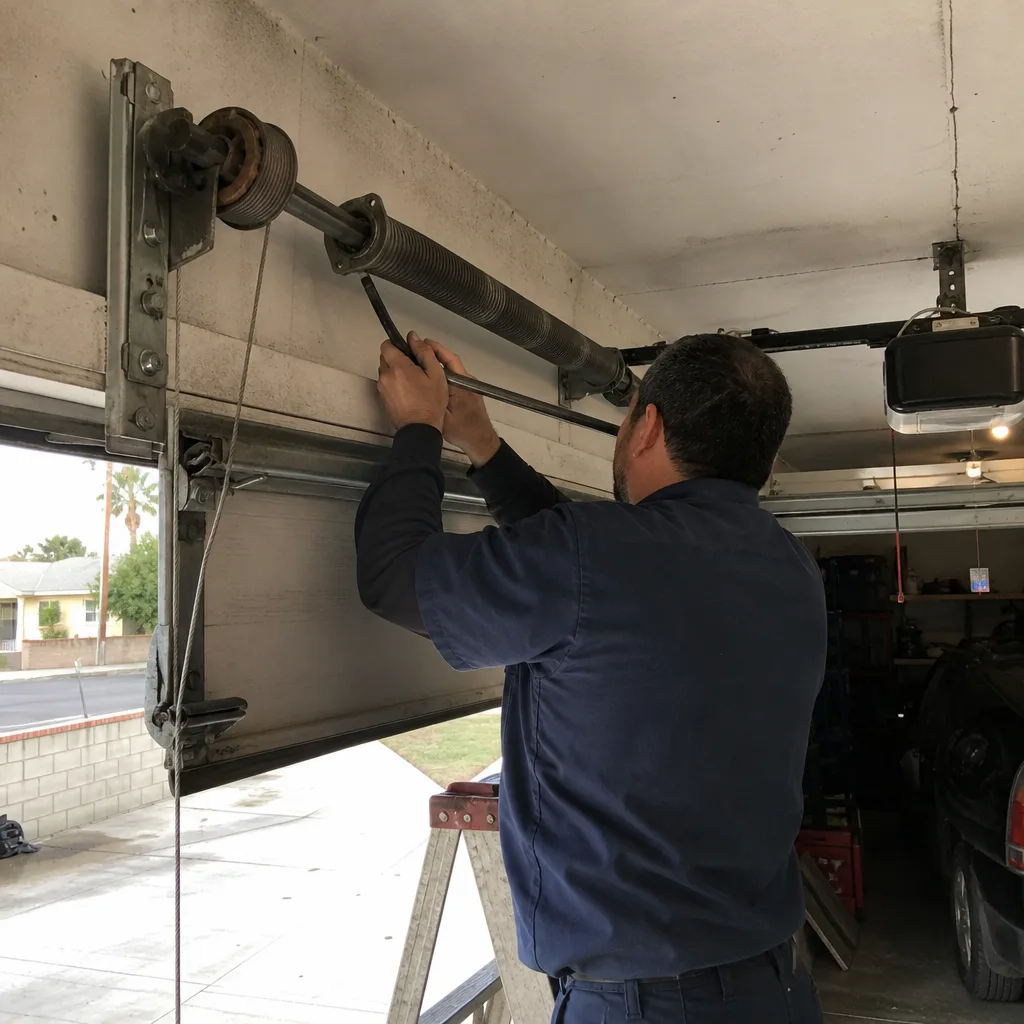
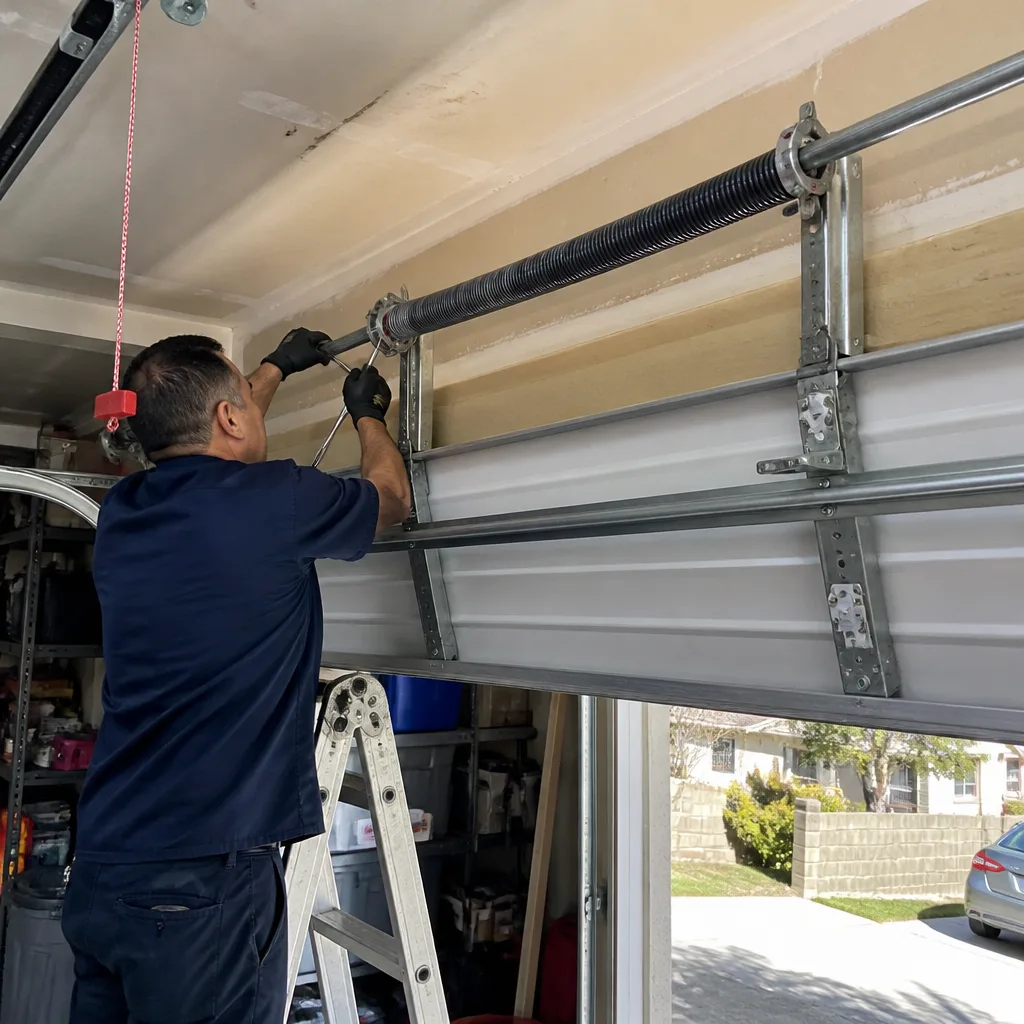
- Spring replacement: Torsion or extension spring replacement on an existing door does not change the fire rating, structure, or electrical system. No permit. This is the single most common garage door repair, and it is squarely in the no-permit zone.
- Cable and roller replacement: Exempt. These are wear parts on the existing door assembly.
- Panel replacement on an existing door: If the frame and rating stay the same and you are swapping damaged sections, no permit. If the new panel changes the door’s construction type or removes a fire label, that crosses into permit territory.
- Opener replacement on an existing circuit: If the plug, circuit, and receptacle are already code-compliant, swapping the opener unit is a repair, not a new installation. A new LiftMaster replacing an old Chamberlain on the same receptacle is exempt.
- Sensor, remote, and keypad work: Low-voltage accessory work. No permit.
- Track lubrication and alignment: Routine maintenance. No permit.
- Weather seal and bottom seal replacement: Exempt. Purely a wear item.
The line between exempt and required is the same line every time: does the work change fire separation, structural loading, or the electrical circuit? No, no, and no means no permit. Any yes flips the requirement. If you are unsure, call the LA County Building and Safety counter or the city building department before starting. The question takes two minutes to ask and saves thousands in retroactive permitting later. For the Garage Door Opener Repair in East Los Angeles side of our work, nearly everything falls into the exempt category because we are working on existing circuits and existing doors.
What the Inspection Actually Tests For: A Step-by-Step Breakdown
If your garage door project does require a permit, here is what the inspection process looks like in Los Angeles County, step by step, so you know what the inspector is looking at.
- Application and plan review: You or your contractor submits a permit application with a scope of work. For a door swap on an existing opening with no structural change, the plan review is typically over-the-counter and fast. For any structural change, the county wants calcs and details from a licensed engineer or the door manufacturer’s engineering package.
- Permit issuance: The permit is issued and the work can begin. The permit must be posted on the job site. For most garage door replacements, the permit is issued the same day as the application if the scope is simple.
- Rough inspection (structural work only): If the header or framing was modified, the inspector comes after the rough framing is done and before the door is installed. They check the header size, the king studs, the jack studs, and the anchors. If the rough inspection fails, the door does not go in until the framing is corrected.
- Final inspection: This is the one every permitted garage door job gets. The inspector checks the installed door for fire rating compliance if applicable, self-closing and self-latching hardware on the garage-to-house door if it is in scope, proper track and opener bracing, the seismic disconnect plug configuration on the opener, GFCI protection on the opener circuit, and general workmanship. They also confirm the work matches the approved plans.
- Certificate of occupancy or final sign-off: Once the final inspection passes, the permit is closed and the work is legal. Keep the final sign-off document. You will need it if you sell the house.
The inspection for a simple door swap looks fast, but the checklist is not trivial. The inspector is verifying the fire separation rating, the hardware, and the electrical. In East Los Angeles, where older housing stock means more pre-code conditions, the inspector also checks for obvious safety issues around the garage even if they are not in the permit scope. That is why a permitted job sometimes turns into a correction list for items the homeowner never touched.
How to Retroactively Permit an Unpermitted Garage Door in Los Angeles County
Previous owners skip permits all the time. The door gets installed, nobody checks, life goes on. Then the house goes up for sale and the buyer’s inspector flags the door. Or an earthquake damages the unpermitted install and the insurance adjuster asks for the permit records. Now you need to retroactively permit work that was done five, ten, or twenty years ago.
Here is the process in Los Angeles County, and it is more approachable than most homeowners expect.
- Take photos and gather documentation: Photograph the existing door, the opener, the track system, the garage-to-house wall, and the electrical. If you have any receipts or records from the original installation, gather them. The county will ask for proof of when the work was done if you claim it is old.
- Contact LA County Building and Safety or your local building department: Ask for the retroactive permit process. They will tell you whether the work can be permitted as-is or needs corrections first. Many simple door replacements can be permitted retroactively without demolition.
- Submit the application as “as-built” work: The application describes the door and opener as they exist, not as a proposed change. The county processes retroactive permits the same way as new permits, but the plan review is looking at existing conditions.
- Schedule the inspection: The inspector comes out and reviews the existing installation against current code. If it meets code, you get the sign-off and the permit is closed. If it does not, you get a correction list.
- Make corrections and re-inspect: This is where the cost can grow. If the door is not fire-rated and should be, the correction is a new door. If the opener is hardwired instead of plug-connected, the correction is a receptacle and cord. If the track is not seismically braced, the correction is bracing hardware. Each correction adds cost but also removes a liability.
The retroactive permit fee in LA County is typically the standard permit fee plus a penalty multiplier, often 2x for as-built work, but the fee itself is not the main cost. The main cost is correcting any code violations the inspection uncovers. A door that cannot meet fire rating requirements has to be replaced, and that is a $1,200 to $3,500 spend depending on the door. The good news is that once the permit is closed, the property is clean for sale and the insurance conversation changes entirely.
What Permitting Costs and How Long It Takes
Budgeting for a permitted garage door project means knowing the math before the project starts. Here are the realistic numbers for Los Angeles County.
- Simple door replacement permit (no structural work): $150 to $400 in most LA County jurisdictions. Same-day issuance is common for over-the-counter scope.
- Permit with structural plan review (header changes, opening changes): $400 to $1,200 depending on the scope and whether an engineer’s stamp is required. Plan review adds one to three weeks.
- Retroactive permit penalty multiplier: LA County typically charges 2x the standard fee for as-built permits, so a $300 permit becomes $600. Some jurisdictions charge 3x for work done without a permit within the last year.
- Engineering calcs for header modification: $500 to $2,000 depending on the complexity. Required any time the load path changes.
- Inspection scheduling: One to two weeks out in most LA County areas. The inspection itself takes 30 to 60 minutes.
The timeline for a simple permitted door swap is typically two to three weeks from application to final sign-off, and most of that is scheduling. A structural change with plan review runs four to eight weeks. The timeline is not the reason to skip the permit. The reason to get it is that the cost of a permit is a fraction of the cost of a retroactive correction, an escrow concession, or an insurance claim denial.
Common Mistakes to Avoid
- Assuming every door swap is like-for-like exempt. The exemption only applies when the replacement door has the same fire rating, the same rough opening, and no new electrical work. Changing any one of those three moves the job into permit territory, and guessing wrong costs more than the permit.
- Installing a non-fire-rated door on an attached garage. This is the number one correction we see on retroactive permits in East Los Angeles. The door looks great, the fire rating is gone, and the buyer’s inspector catches it at escrow.
- Hardwiring the opener instead of using a plug connection. A hardwired opener violates the California seismic disconnect requirement. It also makes future opener replacement harder. A plug and receptacle is a $50 detail that eliminates a code flag.
- Skipping the seismic bracing on the track. East Los Angeles is earthquake country. Unbraced tracks pull away from the ceiling during a quake and the door drops. An inspector will flag missing bracing on any permitted opener job.
- Modifying the opening without an engineer’s calc. Widening or heightening a door opening changes the load on the header. Without calcs, the header may be undersized and the wall starts sagging. We have seen cracked drywall at garage corners that traces back to exactly this error.
- Not keeping the permit records. The permit card and final sign-off are the proof that your door is legal. Lose them and you are doing the retroactive permit dance when you sell, even though the work was permitted originally.
- Buying a door based on price without checking its rating. A cheap unrated door on an attached garage is a false economy. The savings disappear the first time an inspector or home inspector looks at the label situation.
When to Call a Professional
Call a professional when the job touches code compliance, fire ratings, structural framing, or the electrical circuit. That is not a DIY-friendly boundary. A licensed installer who works in your jurisdiction knows which doors carry the ratings that pass inspection, which opener wiring meets the seismic disconnect requirement, and how to pull a permit without turning a two-week project into an eight-week ordeal. If a previous owner installed a door with no permit, or you are not sure whether your current door meets fire code, a professional inspection answers the question for the cost of a service call. Preston Garage Door Repair offers free estimates in East Los Angeles and can verify your existing door’s compliance, quote any correction, and handle the permitting end-to-end. Call (833) 573-5280 to schedule.
Frequently Asked Questions
You need a permit if the replacement changes the door’s fire separation rating, alters the structural header or rough opening, or adds a new electrical circuit for the opener. A like-for-like swap of a non-fire-rated door on an unchanged opening with an existing opener circuit typically does not require a permit. Call (833) 573-5280 and we can tell you which category your East Los Angeles project falls into.
For attached garages, the door between the garage and living space must provide a minimum 20-minute fire rating, be at least 1-3/8 inches thick, and be self-closing and self-latching. The requirement comes from California Building Code Section 406 and is enforced as a life-safety measure, not a paperwork formality.
Yes, but the usual trigger is not a code enforcement sweep. The trigger is a home sale, where the buyer’s inspector flags the door and the lender may require correction before funding, or an insurance claim after an earthquake, where the adjuster asks for permit records. Retroactive permitting costs more than the original permit and any code correction adds to the bill.
Check the edge of the door for a manufacturer’s label, usually a metal plate or sticker indicating a 20-minute rating. If the label is missing, the door’s rating cannot be verified, and an inspector will treat it as unrated. That is the most common starting point for a retroactive permit correction in East Los Angeles.
In Los Angeles County, expect the permit fee with the retroactive multiplier, typically 2x the standard fee, plus the cost of correcting any code violations the inspection finds. A simple compliant door may cost only a few hundred dollars to permit. A non-compliant door that must be replaced runs $1,200 to $3,500 or more. Call (833) 573-5280 for an exact assessment.
A replacement opener on an existing, code-compliant circuit does not require a permit. A new opener installation that requires a new circuit, a new receptacle, or new hardwiring does require an electrical permit, and the installation must meet the seismic disconnect requirement with a plug-and-receptacle connection. We service every major opener brand, from legacy Craftsman units to current LiftMaster and Chamberlain smart openers, and we handle the permit when the job calls for it. Learn more about Garage Door Opener Repair in East Los Angeles or Garage Door Installation in East Los Angeles.
The Bottom Line
Garage door permits in California are about three things: fire separation, structural integrity, and electrical safety. The code exists to keep a garage fire from spreading into living space, to keep the door from collapsing under load, and to make the opener safe to disconnect after an earthquake. None of that is bureaucratic theater. In East Los Angeles, where older homes and high seismic risk overlap, the details matter more than in most places. A permitted, compliant installation is a sales asset and an insurance shield. An unpermitted one is a liability that compounds every year until someone discovers it. If you are not sure where your door stands, call Preston Garage Door Repair home at (833) 573-5280. We will tell you what you have, what it needs, and what it costs. No surprises, no upsell.
Written by the team at Preston Garage Door Repair, serving East Los Angeles since 2018.
See the difference
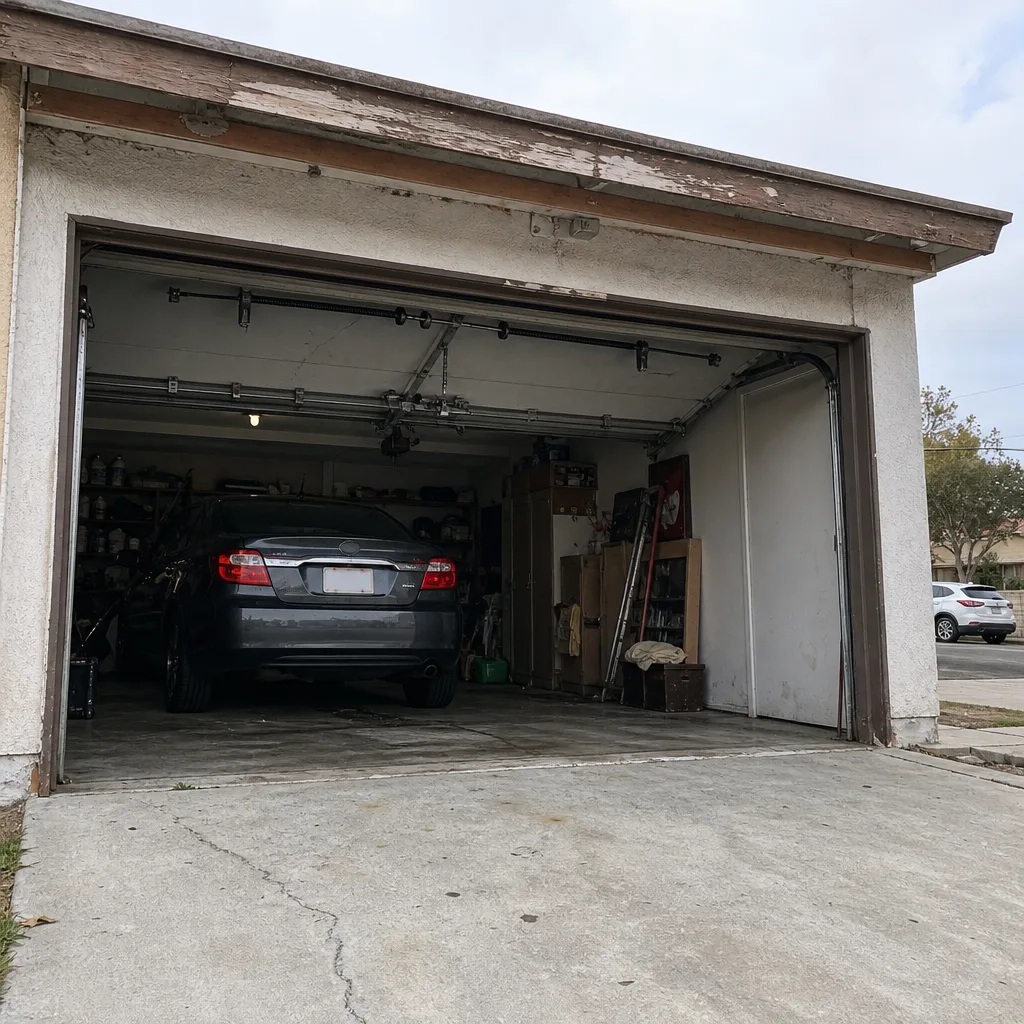 Before
 After
 Before
 After
 Before
 After