
Last updated November 2, 2026
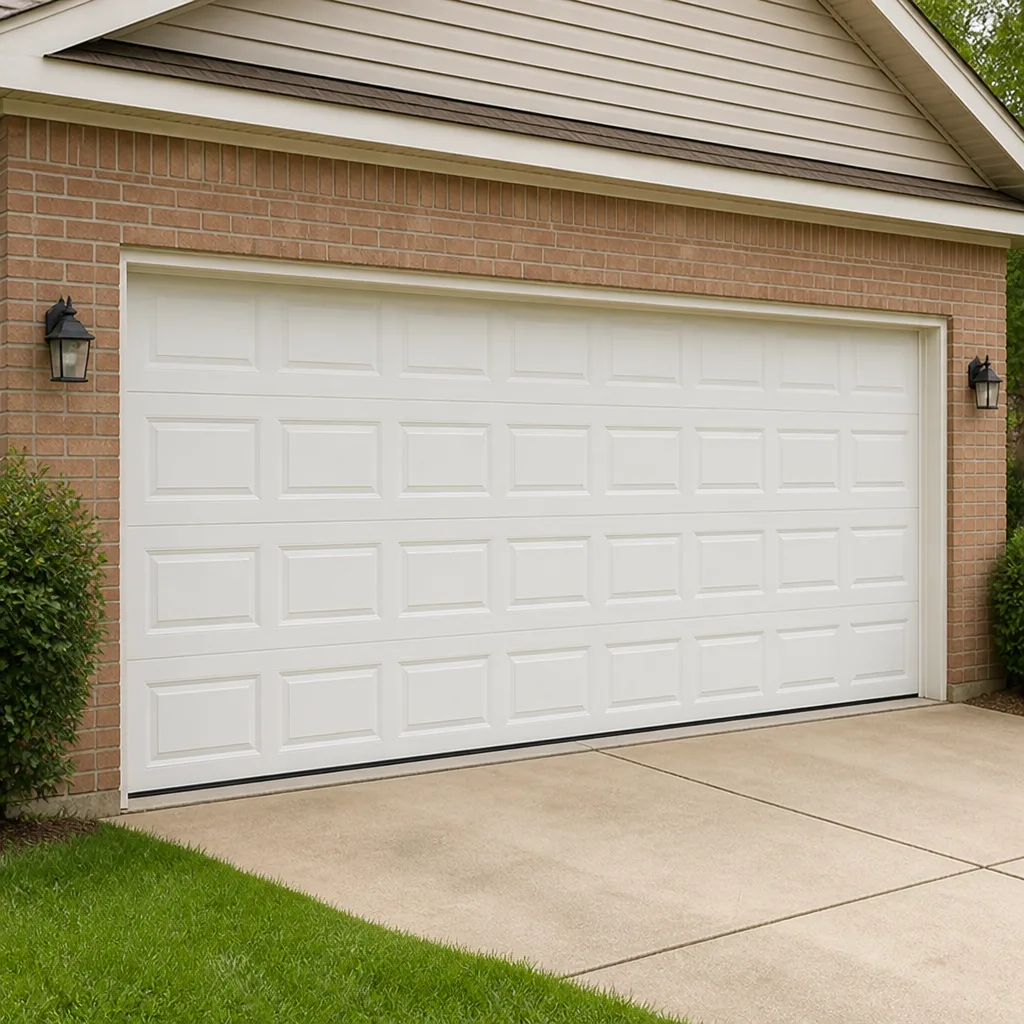 Raised-panel steel
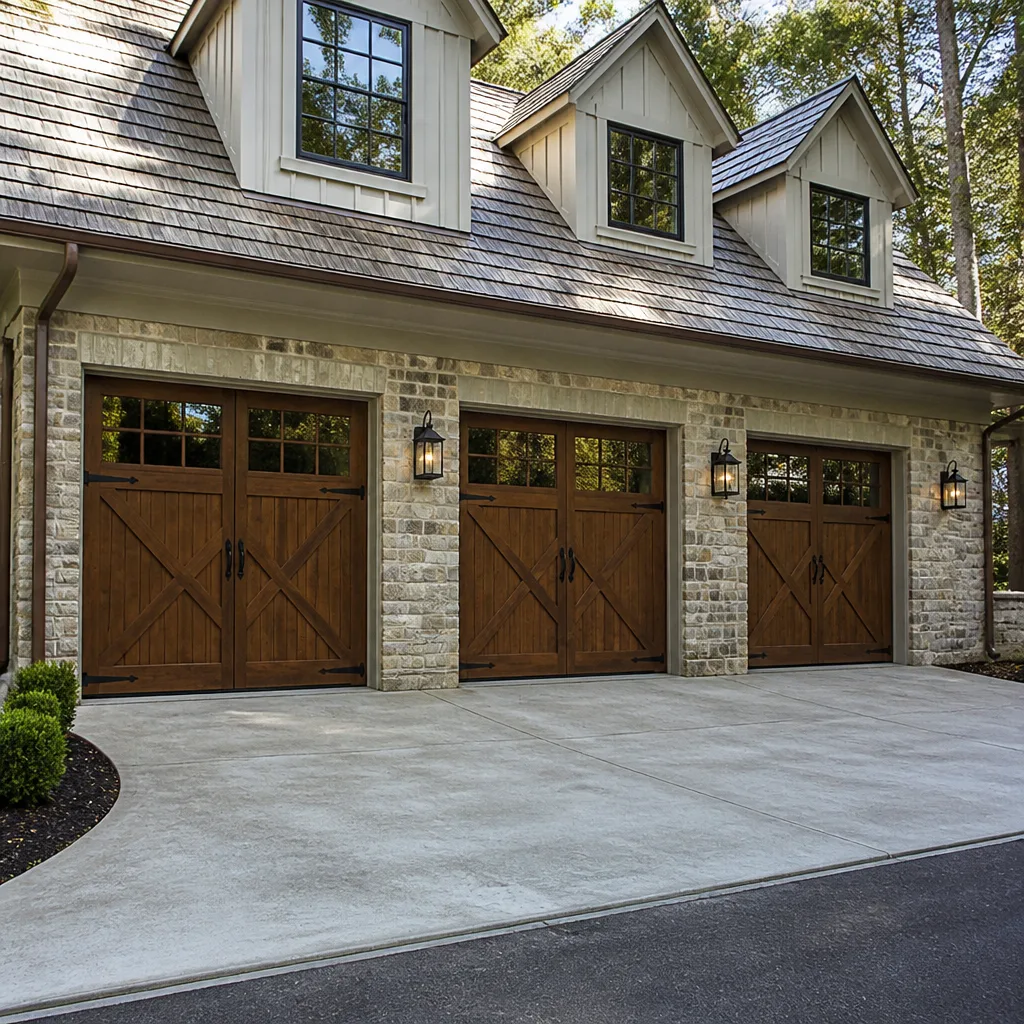 Carriage house
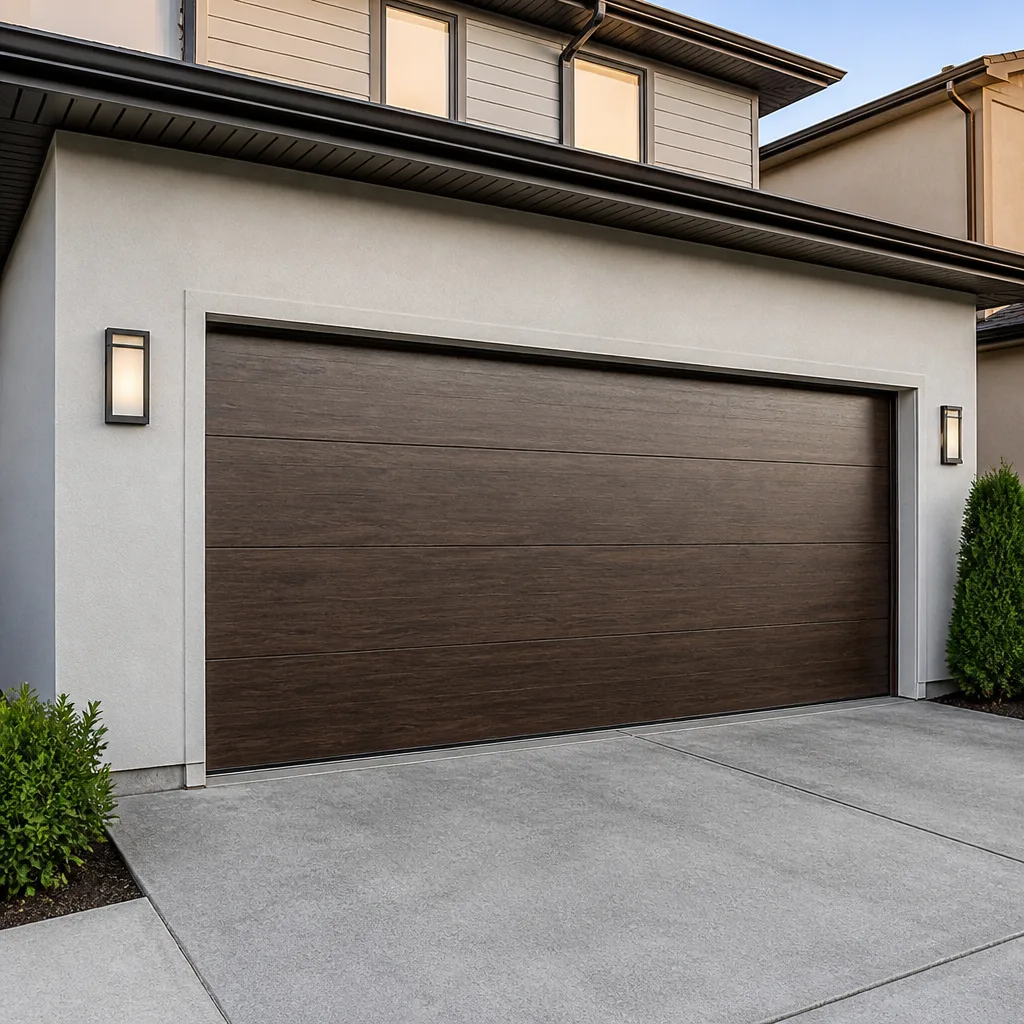 Modern flush
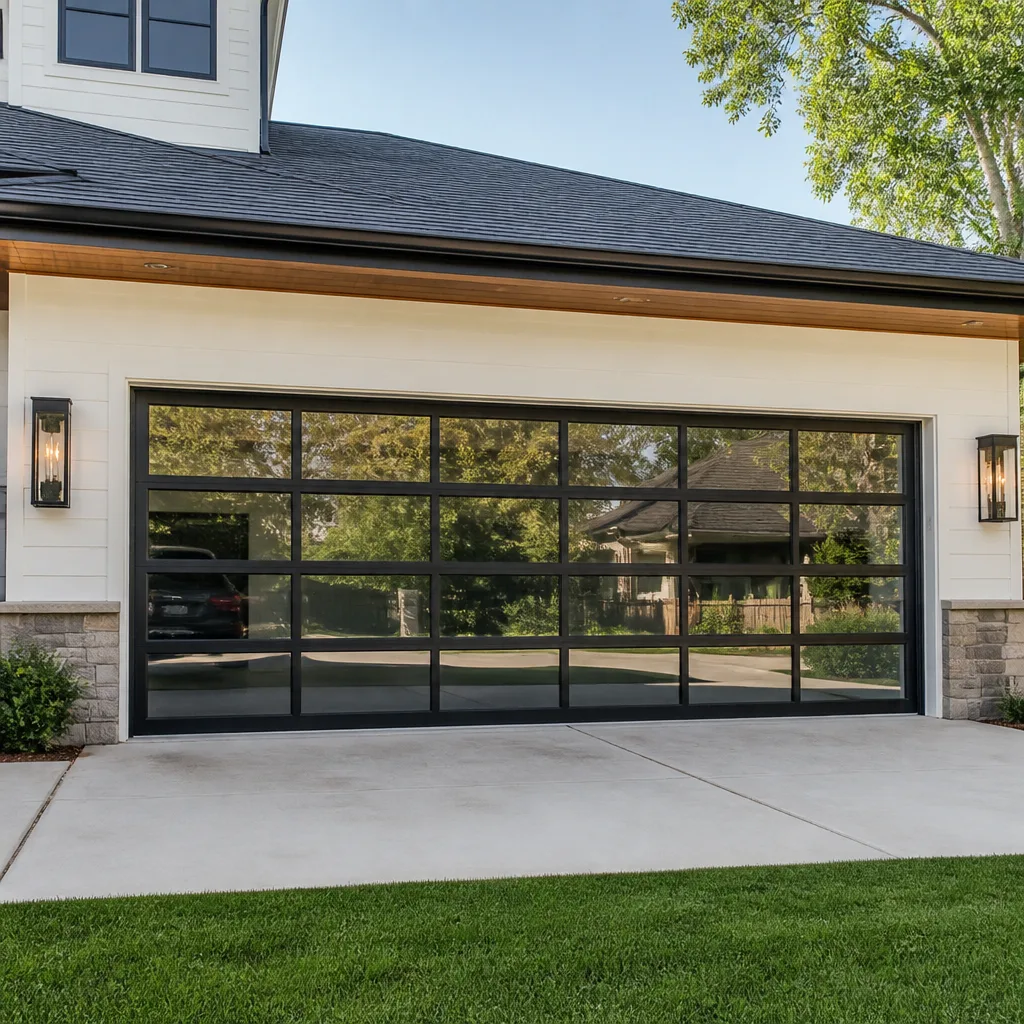 Full-view glass
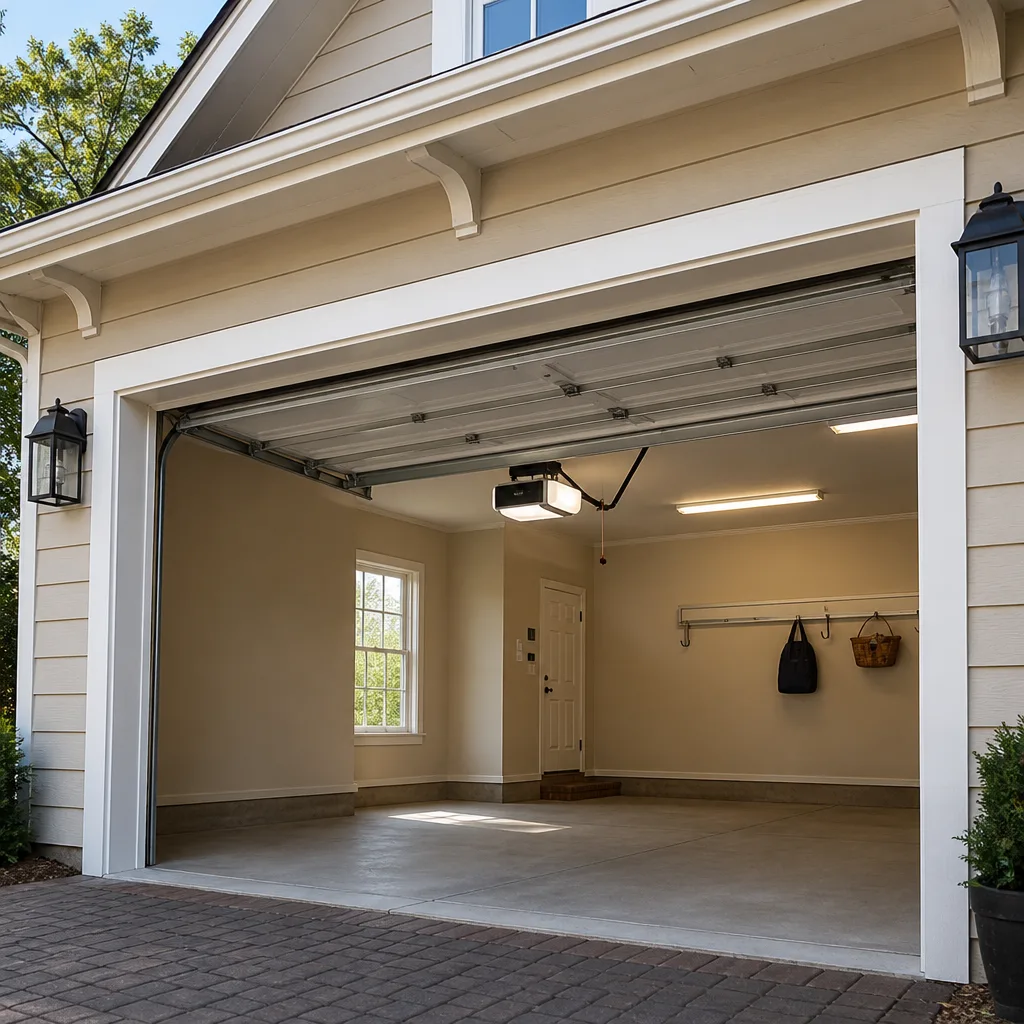 LiftMaster openers
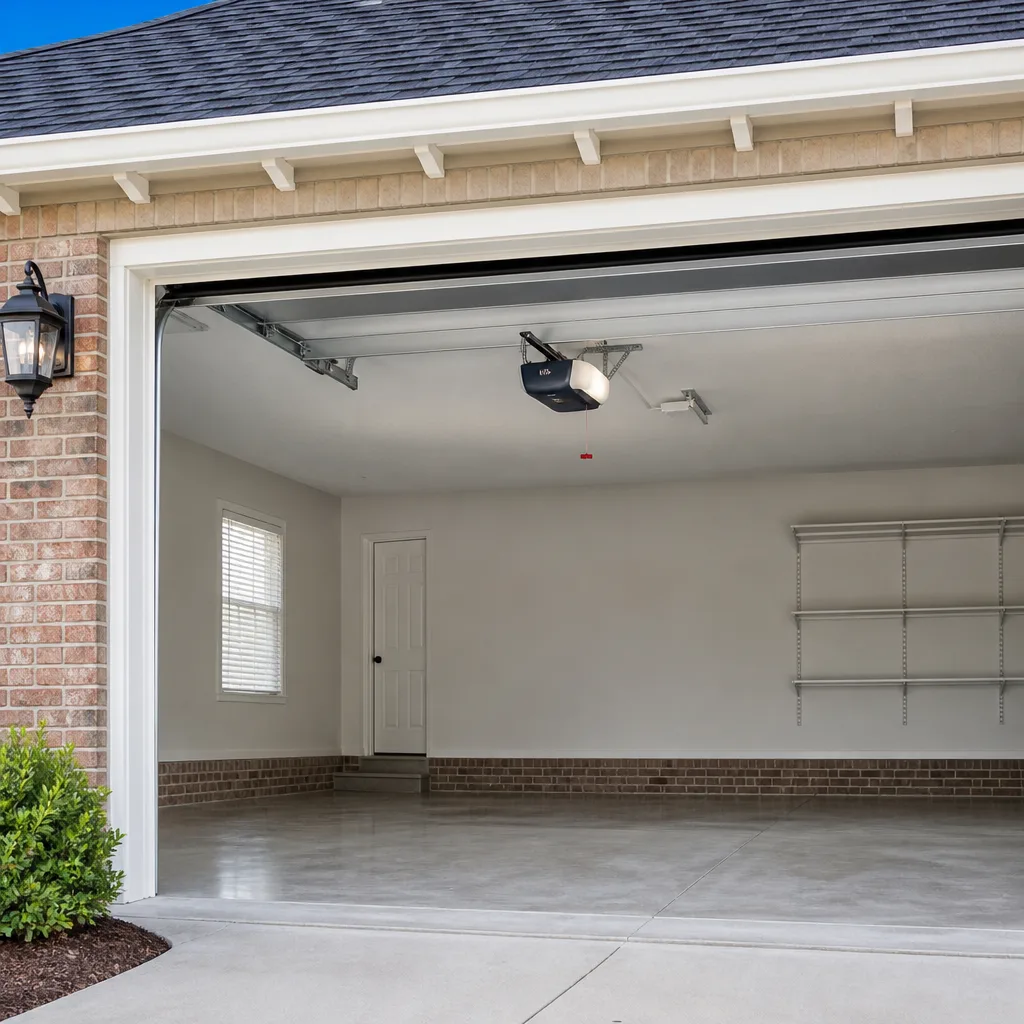 Chamberlain openers
Full 25-point door and opener safety check with every visit - springs, cables, rollers, tracks, and your LiftMaster or Chamberlain opener included
You get a price before we start. It does not change when the truck arrives.
Get your free estimateGarage Door Warning Signs: An East Los Angeles Homeowner’s Reference Guide
Here’s something most East Los Angeles homeowners don’t know: your garage door usually announces that it’s about to fail several weeks before it actually does. The trick is that it speaks in a language of subtle changes, barely-slower cycles, faint new sounds, and quarter-inch gaps that are easy to dismiss as “just how the door’s always been.” This guide covers those early signals, and you can find more guides & resources on our blog. It’s written for the homeowner in East Los Angeles who wants to catch a $150 fix before it becomes an $800 emergency repair, and it’s based on what we see every day in this neighborhood.
Styles & brands we work with
- Raised-panel steel
- Carriage house
- Modern flush
- Full-view glass
- LiftMaster openers
- Chamberlain openers
Quick Answer
The most common early warning signs of garage door failure in East Los Angeles are a door that takes noticeably longer to open than it did a few months prior, a grinding or strained sound from the opener during travel, visible unevenness in the bottom gap when the door is closed, and a door that reverses direction without any visible obstruction. Any single one of these is worth a service call. Two or more together usually means a component is actively wearing out and will fail on a predictable timeline.
Table of Contents
- How to Establish a Speed Baseline Using Your Phone
- The Sound Diagnostic: What Your Door Is Telling You
- The Uneven Bottom Gap: A Cable Problem Before You See Fraying
- Sensor Drift Versus Sensor Obstruction in East LA
- Brand-Specific Failure Signatures
- Torsion Spring Tension Loss: The Two-Second Warning
- Track and Panel Alignment Signs
- Common Mistakes to Avoid
- When to Call a Professional
- Frequently Asked Questions
- The Bottom Line
How to Establish a Speed Baseline Using Your Phone
A garage door that takes two seconds longer to fully open than it did six months ago isn’t “getting a little slow.” That’s a torsion spring losing tension, and it has a predictable failure window that a technician can estimate on sight. In East Los Angeles, where many homes have detached garages and doors that see four to six cycles a day, that tension loss follows a fairly consistent curve.
Here’s the method we use with homeowners who call in and say “it just feels off.”
- Open your phone’s timer or stopwatch app. Stand where you can see the door fully.
- Press the wall button, not the remote. The wall button sends a consistent signal and removes one variable.
- Start the timer the moment the door starts moving. Stop it the moment the door seats fully open.
- Record that number. Do the same for the close cycle.
- Repeat the measurement once a month. If you see a change of more than one full second in either direction without any adjustment to the opener settings, something mechanical is changing.
A healthy residential garage door in the East Los Angeles area typically completes a full open cycle in 12 to 15 seconds, depending on the opener’s speed setting and door height. When a torsion spring begins to lose tension, the opener motor compensates by working harder. The door doesn’t necessarily get “slow” in a dramatic way. It creeps slower over weeks. Two seconds slower is meaningful. Four seconds slower means the spring is working at a significant deficit, and the opener’s motor and gear are absorbing the extra load. That’s the stage where the repair is still straightforward.
What this tells a technician, before they even arrive: a slowing door without any new sounds usually points to spring fatigue. A slowing door with a strained motor sound points to the opener fighting the door’s weight. A door that slows only in one section of travel often indicates a track or roller issue. That distinction matters because it determines whether you need spring work, opener work, or track alignment. For a full breakdown of what garage door repair involves when those components fail, see our Garage Door Repair in East Los Angeles page.
The Sound Diagnostic: What Your Door Is Telling You
Every garage door makes some noise. East Los Angeles homes with original wood doors from the 1960s sound different than a house in Belvedere Gardens with a five-year-old steel door. The useful skill is learning which sounds indicate normal operation for your specific door, and which sounds are new. New sounds are always information.
Here’s a breakdown of the three most diagnostic sounds, described precisely enough that you can describe them to a technician over the phone.
The Grinding Opener Sound. This is a rough, continuous growl coming from the opener motor box itself, not from the door panels or track. It usually means the opener’s internal gear is worn, and in our experience that’s common on older screw-drive openers, particularly legacy Craftsman units that have been in service for fifteen or more years. On a Craftsman opener, the white plastic drive gear inside the motor head eventually strips, and the sound is that of the worm gear turning against a gear with smooth spots. It’s a repairable condition, but only if you address it before the gear is fully stripped.
The Stripped Gear Chatter. This is different from a grind. It’s a faster, rhythmic clicking or chattering sound, and it often happens with a door that is visibly struggling to move or not moving at all. The opener motor is running. The gear teeth are slipping. This is the classic failure on Chamberlain and LiftMaster units from the 2000s and 2010s, which use a similar gear assembly. The good news is the motor itself is often fine. The fix is a gear replacement, not a full opener replacement. You can read more about what that repair looks like on our Garage Door Opener Repair in East Los Angeles page.
The Binding Roller Squeal. A high-pitched squeal or squeak that happens at the same point in the door’s travel every single time usually points to a specific roller or hinge that’s binding rather than rolling freely. This is more common in East Los Angeles than people expect because our dry summers and the fine dust that collects on garage interiors work their way into roller bearings. A roller that stops rolling and starts sliding against the track creates friction heat and wears the track. Left alone, it can cause the door to bind and throw the cable off its drum. That’s a much bigger repair than replacing the roller.
When you call us with a sound concern, describe where the sound seems to come from: the motor box, the top of the door, one side, or the middle. That single piece of information often tells us which component is failing before we even leave the shop.
The Uneven Bottom Gap: A Cable Problem Before You See Fraying
One of the most overlooked signs in residential garage systems is a door that sits slightly uneven when closed. One side of the bottom edge touches the ground. The other side floats a quarter-inch or half-inch above it. Homeowners in East Los Angeles often notice this as a sliver of light under one corner of the door at night, then dismiss it because the door still opens and closes.
That uneven gap is a warning sign for cable wear, and it appears before any visible fraying of the cable itself. Here’s why. A garage door’s weight is counterbalanced by torsion springs, and the springs’ tension is transferred to the door through two steel cables that wrap around drums at each end of the spring shaft. When those cables are healthy and properly tensioned, the door rises and lowers evenly across its full width. When one cable begins to stretch or develops internal strand fatigue, that side of the door sits slightly low during travel and slightly high at rest, because the compromised cable is no longer holding the same effective length.
Visible fraying is the end stage. The early stage is the uneven gap, and that stage can last for months. In our experience the cars parked in East Los Angeles garages are often older, heavier models, and the door gets used frequently. That daily cycle count is what accelerates cable wear.
What we recommend: stand outside the closed door and look at the gap between the bottom weather seal and the driveway. Check it at midday and again at night, when the angle of light changes. If the gap is consistent, the cables are likely fine. If one corner shows a different gap than the other, write down which side sits higher. Then call us. We don’t advise adjusting cables yourself. The cables are under the same spring tension as the springs themselves, which is a genuinely dangerous set of forces to work around without the proper winding bars and training. The right move is a professional inspection, and in our shop that estimate is free.
Sensor Drift Versus Sensor Obstruction in East LA
A garage door that reverses randomly, without anything visible in the way, is one of the most common calls we take in East Los Angeles. And most of the time, the problem is not what the homeowner assumes.
There are two distinct conditions that look similar from inside the house. The first is true obstruction: something is physically blocking the infrared beam between the two safety sensors mounted near the floor on each side of the door opening. In East LA, where many properties were built decades ago and garage floors have settled, an obstruction can be as small as a leaf that blew in, a pile of dust that accumulated against one sensor lens, or a box that migrated from a shelf when someone pulled into the driveway. The fix is straightforward: clear the path between the two sensors and wipe the lenses.
The second condition is sensor drift, and this is the one that gets misdiagnosed. Sensor drift means one of the two sensors has moved a few degrees out of alignment, enough that the infrared beam no longer hits the receiving lens dead center. The beam still connects intermittently, which is why the door behaves unpredictably. It might close properly three times in a row and then reverse for no reason. In East Los Angeles, where garage interiors bake during summer heat waves and the steel frames around the door expand and contract, sensors mounted on that frame can shift gradually over a season.
Distinguishing between the two matters because a dusty driveway or an obstacle is a one-time fix, while drift requires remounting or realigning the sensor, and if it goes uncorrected the door will continue to reverse unpredictably until the sensor is addressed. Some openers, including current-model LiftMaster and Chamberlain units with MyQ, will also show a diagnostic code on the wall panel when the sensors are misaligned. If you have a LiftMaster or Chamberlain opener with a screen, take note of the code before you call us. It shortens the diagnosis. For more on opener-level problems and what’s repairable versus replaceable, see our Garage Door Opener Repair in East Los Angeles page.
Brand-Specific Failure Signatures
One of the reasons we maintain factory-level familiarity with eight major brands, from LiftMaster and Chamberlain to Genie, Clopay, Amarr, Wayne Dalton, Craftsman, and Raynor, is that the failure signatures are not identical, which is why choosing the right garage door brand matters for long-term reliability. Knowing which brand is on the door sharpens the diagnosis considerably. Here are four examples from the brands we see most often in East Los Angeles.
Craftsman openers are workhorses, and there are still thousands of them installed in the older homes of East Los Angeles. The internal nylon drive gear strips with age. The tell is a rough grind from the motor box while the door barely moves. This is a gear replacement, not an opener replacement, unless the motor has also burned out from running against a stripped gear.
Raynor doors use a heavier-gauge steel on many of their residential models, which means the panel itself rarely fails. The usual issue is with the spring system, not the door body. If your Raynor door is slowing or sitting uneven, pay attention early. The heavier door puts more load on the springs and cables, and it decays faster than a lighter panel would.
LiftMaster openers from the last ten years are smart units with DC motors and belt drives in many models. When the belt stretches, the door starts with a visible jerk and then smooths out, and the opener emits a slight high-pitched whine during the first few inches of travel. Homeowners sometimes describe it as the opener “revving up” before the move. That’s the belt, not the motor.
Chamberlain openers share DNA with LiftMaster, but the consumer-grade Chamberlain line uses a different chassis and a different travel module. A Chamberlain that reverses halfway down with no obstruction usually has a limit-setting or force-setting issue that emerged after a power fluctuation, which is common in East Los Angeles when the grid surges. These units often just need the travel limits reprogrammed.
The brand-agnostic approach matters here. We don’t recommend replacing a Chamberlain because you might prefer a LiftMaster. We look at what’s on the door and tell you what’s actually wrong. Whatever brand is on your door, we know it.
Torsion Spring Tension Loss: The Two-Second Warning
We mentioned speed baseline earlier. Let’s talk about what those two extra seconds actually mean, because this is the single most actionable early warning sign a homeowner in East Los Angeles can track.
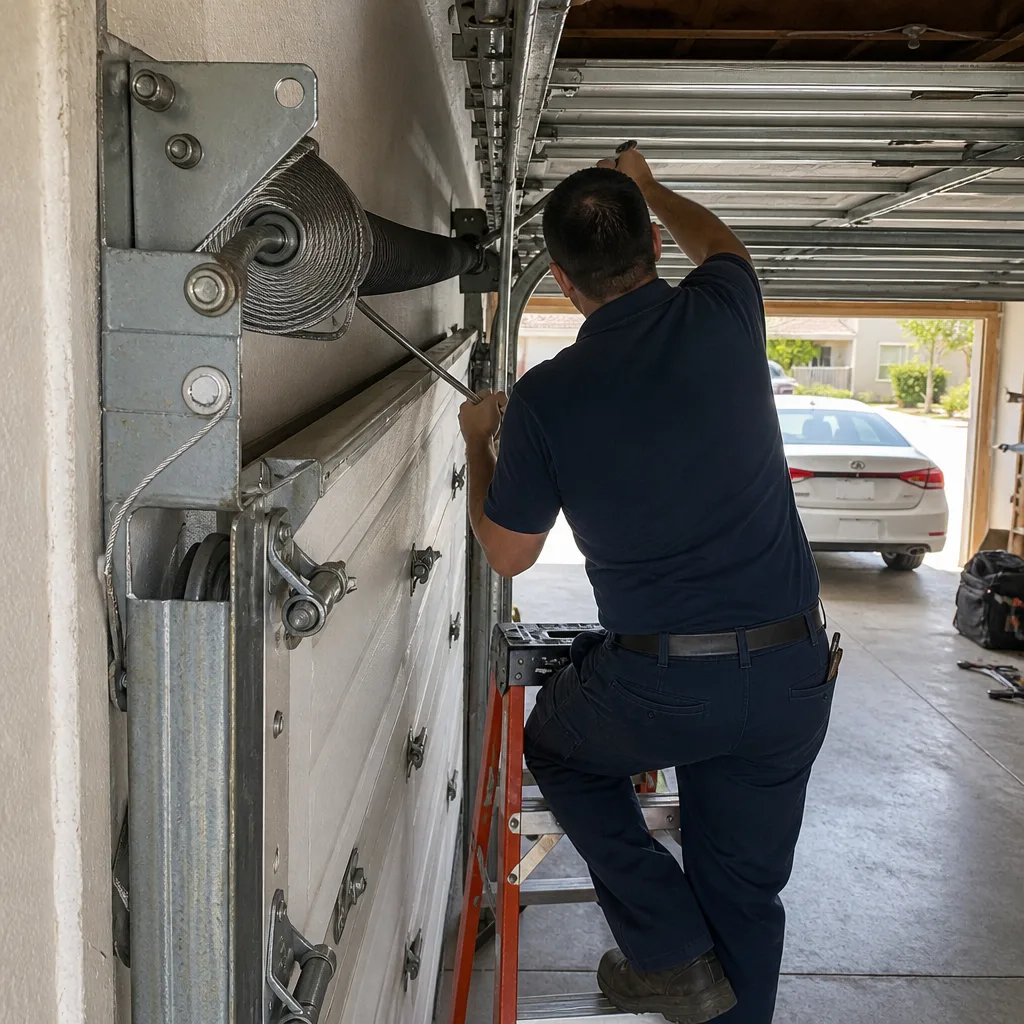
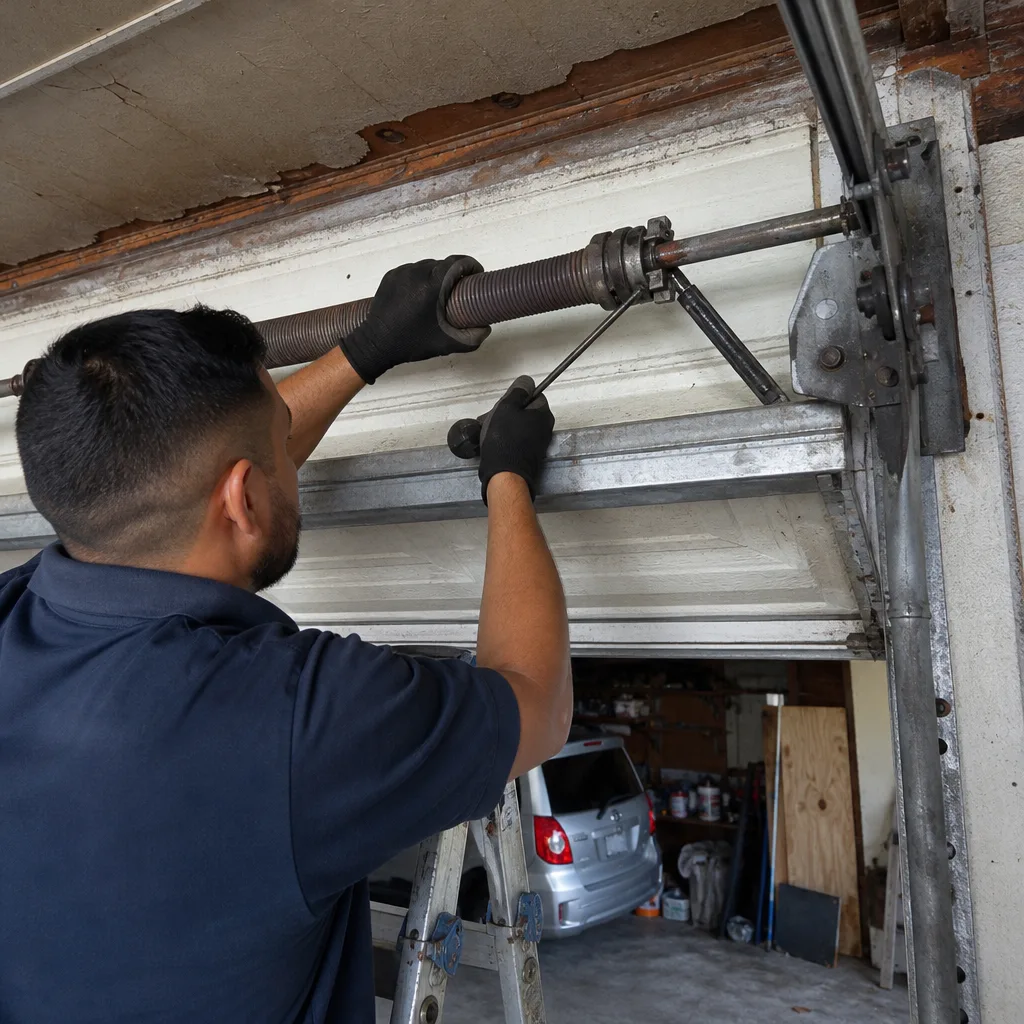
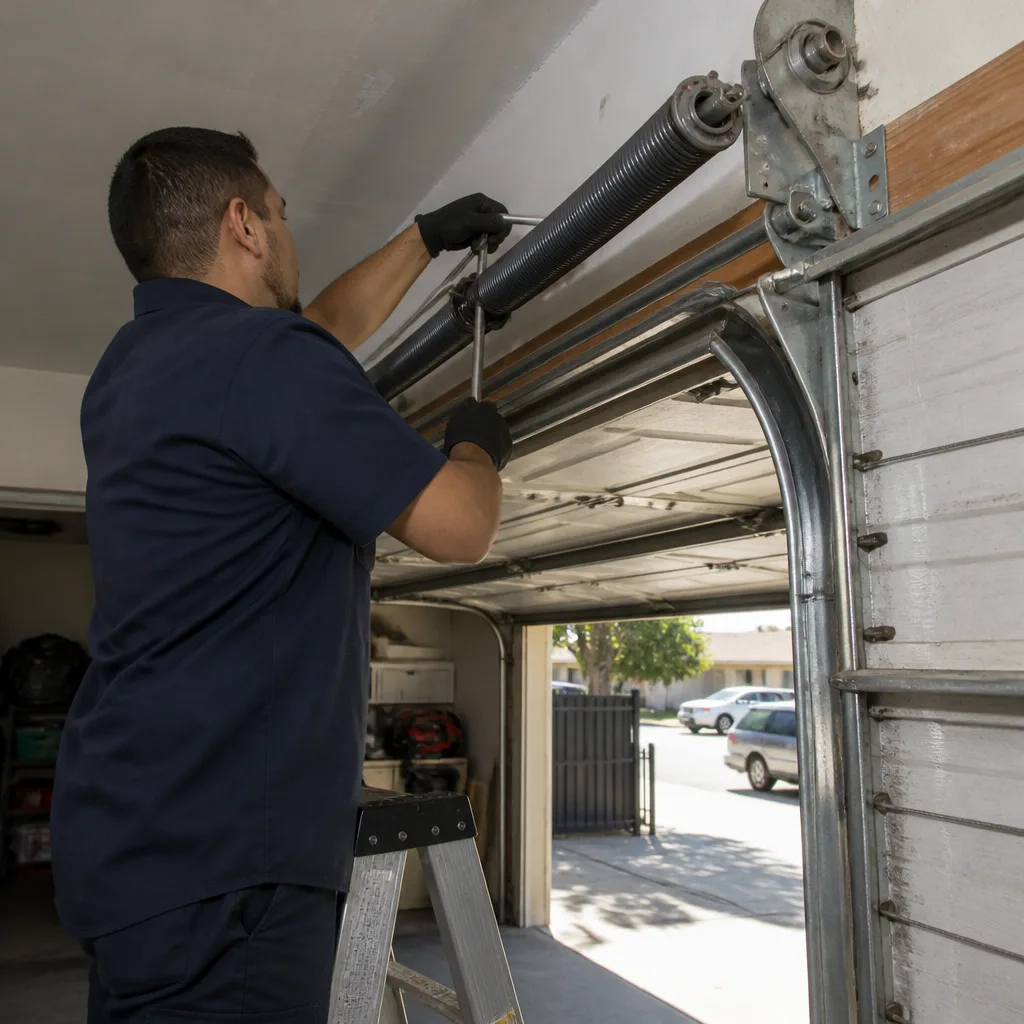
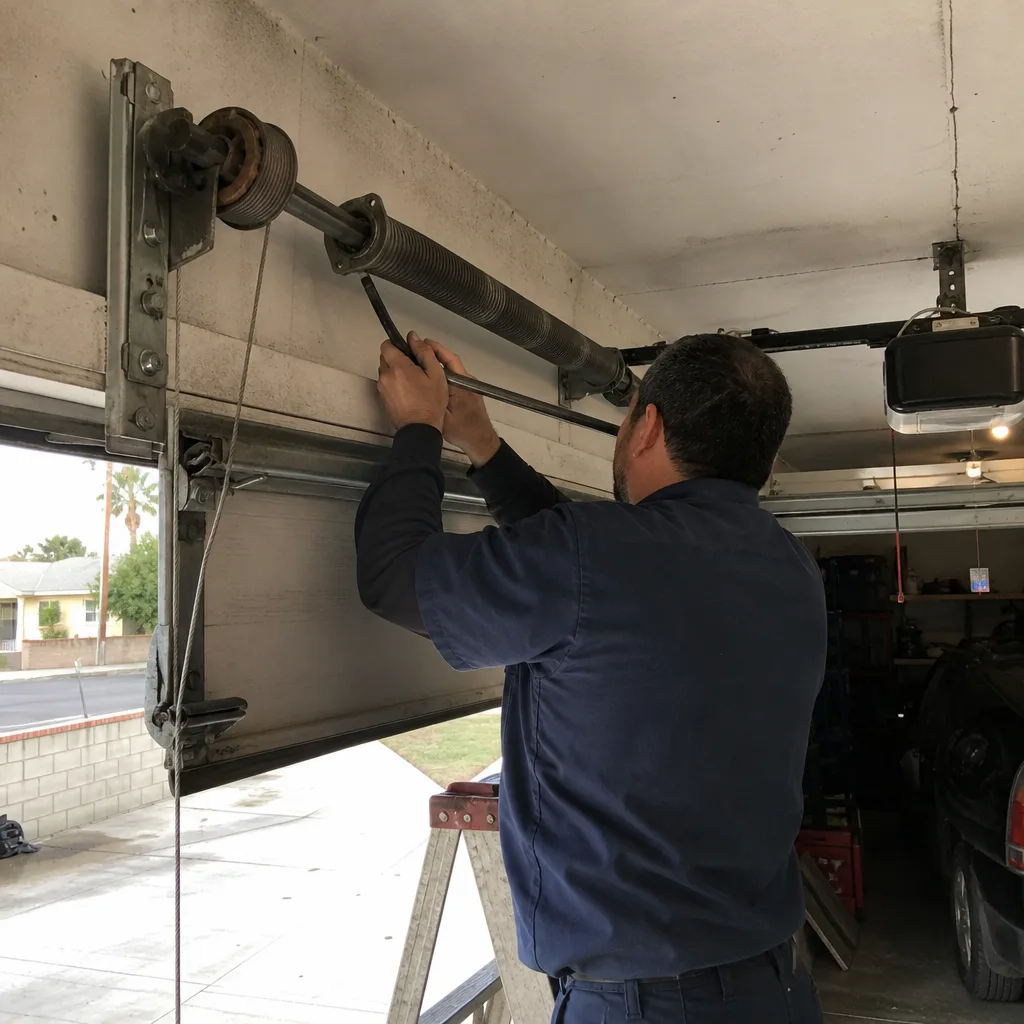
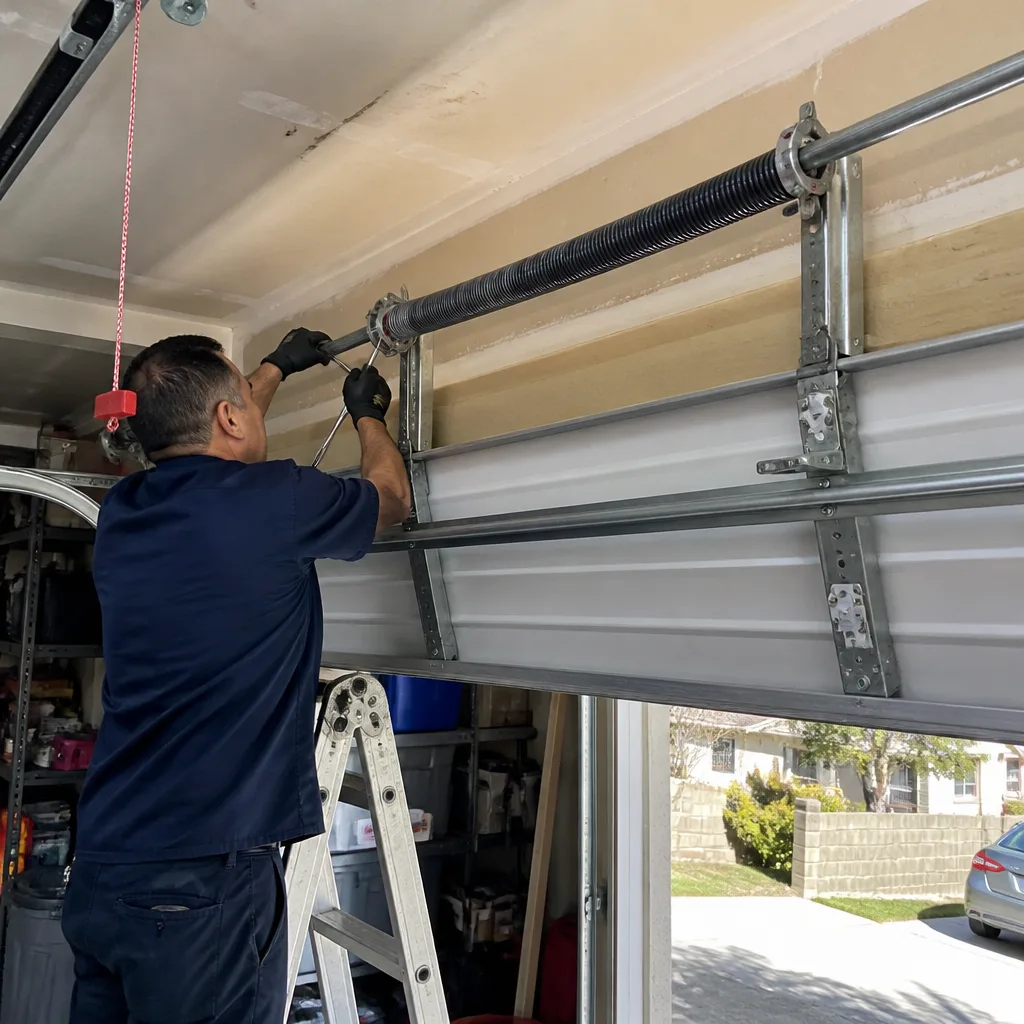
A torsion spring is a coiled steel component mounted above the door opening on a horizontal shaft. It stores the energy that counterbalances the door’s weight, and it does that job through tension. Over years of cycles, that spring gradually loses tension. The process is slow and predictable. A spring rated for 10,000 cycles that’s been in use for eight years in a household that runs the door five times daily has consumed most of its service life, and it’s no longer pulling with the same force it did at year two.
When that happens, several things change at once. The opener has to work harder to lift the same door, because the spring is contributing less. The door travels at a slightly reduced speed, because the counterbalance is weaker. And the door may sag slightly when fully open, because the spring can’t hold it as firmly at the top of its travel. Those are the early signs. A spring does not usually snap without warning, contrary to what most homeowners assume. It telegraphs the failure through slow, measurable degradation.
The dangerous part of a weakening torsion spring is the stored energy. Even a partially fatigued spring holds enough tension to cause serious injury if it breaks or if someone attempts to remove it without the right training and winding tools. This is one repair we firmly recommend leaving to a professional. We inspect the spring, estimate its remaining life based on cycle count and visible wear, and tell you honestly whether it needs replacement now or has another year left. If replacement is the recommendation, the price is quoted and agreed before any work starts.
Track and Panel Alignment Signs
Not every warning sign involves the spring or opener. Some involve the geometry of the door itself, and those are the ones that can cause expensive panel or track damage if ignored.
The door that scrapes one side of the jamb. When a garage door begins to drift slightly out of square, the first place it shows is at the vertical track near the top of the opening. You may see light scratching or rubbed-off paint on one side. That’s a sign the door is no longer traveling perfectly plumb, usually because a hinge is worn or the track brackets have shifted. The longer it scrapes, the more metal you lose from the track edge, and eventually the roller can jump the track entirely.
The panel that bows when the door is open. Park the door open and stand inside the garage looking up at it. If one panel section appears to bow or sag in the middle, that’s a structural sign. It’s more common on older wood doors in East Los Angeles that have absorbed moisture from humid marine-layer mornings, and on steel doors whose internal steel strut has separated from the panel. A bowed panel puts uneven load on the hinges and cables, which then wear unevenly.
The door that visibly “shakes” at one point in the travel. A single-point shudder is usually a track misalignment or a bent roller stem. A shudder through the entire opener rail usually means the opener’s mounting brackets are loose. Both are repairable, but only if addressed before the motion compounds and causes a bigger failure.
The common thread in all of these: the problem announces itself early through visual and physical signs. You don’t need to be a technician to spot them. You just need to look at the door with fresh eyes. If you see a scrape, a bow, or a shudder and don’t know what to make of it, call us. We’ll tell you over the phone whether it sounds urgent.
Common Mistakes to Avoid
- Lubricating as a substitute for diagnosing. Spraying lubricant on a noisy door can quiet a symptom without addressing the cause. A grinding opener gear won’t be fixed by lubricant, and a fraying cable won’t either. Lubrication is maintenance, not repair.
- Ignoring a slow door because it still opens. A door that still works while slowing down is a door that’s consuming its remaining service life. The two-second delay is an early warning, not a quirk.
- Using the remote exclusively, so you never hear the motor. You miss half the diagnostic information if you only open the door from inside the car. Open it from the wall button occasionally and listen.
- Adjusting the spring or cable yourself. The tension in a torsion spring system can cause serious injury, and the cable drums require correct winding. This is the one repair where even a capable DIYer should step back and call a pro.
- Ignoring the sensor issue until the door won’t close at all. Sensor drift gets worse, not better. Address it while the door is still functioning intermittently and the repair is relatively simple.
- Replacing the whole door when only one component failed. We see East Los Angeles homeowners get quotes for full door replacement when the actual problem was a spring, gear, or roller. A repair-first approach usually costs a fraction of the replacement price.
- Not writing down the brand and model of the opener and door. Every manufacturer has its own failure patterns. When you call us, the model number on the opener’s motor box or the door’s edge sticker helps us arrive with the right diagnosis in mind.
When to Call a Professional
If you’ve noticed a slowing door, a new grinding or chattering sound, an uneven bottom gap, random reversals, or a visible scrape along the track, that’s the time to call. These are all early-stage indicators, and the repairs are straightforward at this phase. The cost of waiting is a broken spring, a stripped gear, a thrown cable, or a door that comes off its track, at which point the repair bill and the risk both rise. Preston Garage Door Repair offers free estimates in East Los Angeles. Call (833) 573-5280 and describe what you’re seeing or hearing. We can often tell you over the phone whether the issue is urgent or can wait, and we’ll give you a written price before any work starts.
Frequently Asked Questions
A well-maintained steel garage door in the East Los Angeles climate typically lasts 15 to 20 years, while the opener often lasts 10 to 15 years and the torsion springs last 7 to 10 years depending on cycle count. Our dry, dusty environment shortens roller and sensor lifespan more than the door itself, so seasonal garage door care is essential for East Los Angeles homeowners.
The earliest sign is a door that opens slightly slower than it used to, often combined with a visible sag when the door is fully open. A spring that’s nearing failure loses tension gradually, and a technician can confirm the condition with an inspection. Call (833) 573-5280 if you suspect a spring issue.
Most random reversals are either a physical obstruction in the sensor beam, dust on one sensor lens, or sensor misalignment caused by the metal frame expanding and contracting through our seasonal temperature swings. Check for debris first, then call us if the problem continues.
Most opener problems, including stripped gears, worn belts, and limit-setting failures, are repairable. Replacement only makes sense when the motor is burned out or the unit is so old that replacement parts are no longer available. We’ll tell you which path makes sense for your specific brand, whether it’s a Craftsman, LiftMaster, Chamberlain, or another make. For details on repair scope, see our Garage Door Opener Repair in East Los Angeles page.
An uneven bottom gap usually means one of the two lift cables has stretched or begun to fatigue, and the door has lost its balance. This is an early warning sign that appears before visible cable fraying, and it’s the right time to schedule a repair before the cable fails. We’d rather see it now than after it snaps.
Early-stage repairs in East Los Angeles, such as a roller replacement, sensor realignment, or a gear replacement, typically fall in the $120 to $350 range depending on the specific component and the brand involved. A full spring replacement or cable replacement is higher, and waiting until a spring snaps can also damage the door panels, which pushes the bill much higher. Call (833) 573-5280 for a free estimate before the problem compounds.
The Bottom Line
Garage door failures are rarely sudden events. They are the endpoint of weeks or months of gradual change that most homeowners never stop to measure. A two-second delay, a new grinding sound, a sliver of light under one corner of the door, a random reversal on a dusty morning. Each one is information. In East Los Angeles, where many of us use the garage as the primary entrance and the door cycles multiple times daily, paying attention to these signals is the difference between a small repair and a major one. If you’re planning a bigger project, read our guide on how to hire a garage door contractor in East Los Angeles. Whatever brand is on your door, we know it. And when something feels off, call us before it becomes an emergency.
Written by the team at Preston Garage Door Repair, serving East Los Angeles since 2018.
See the difference
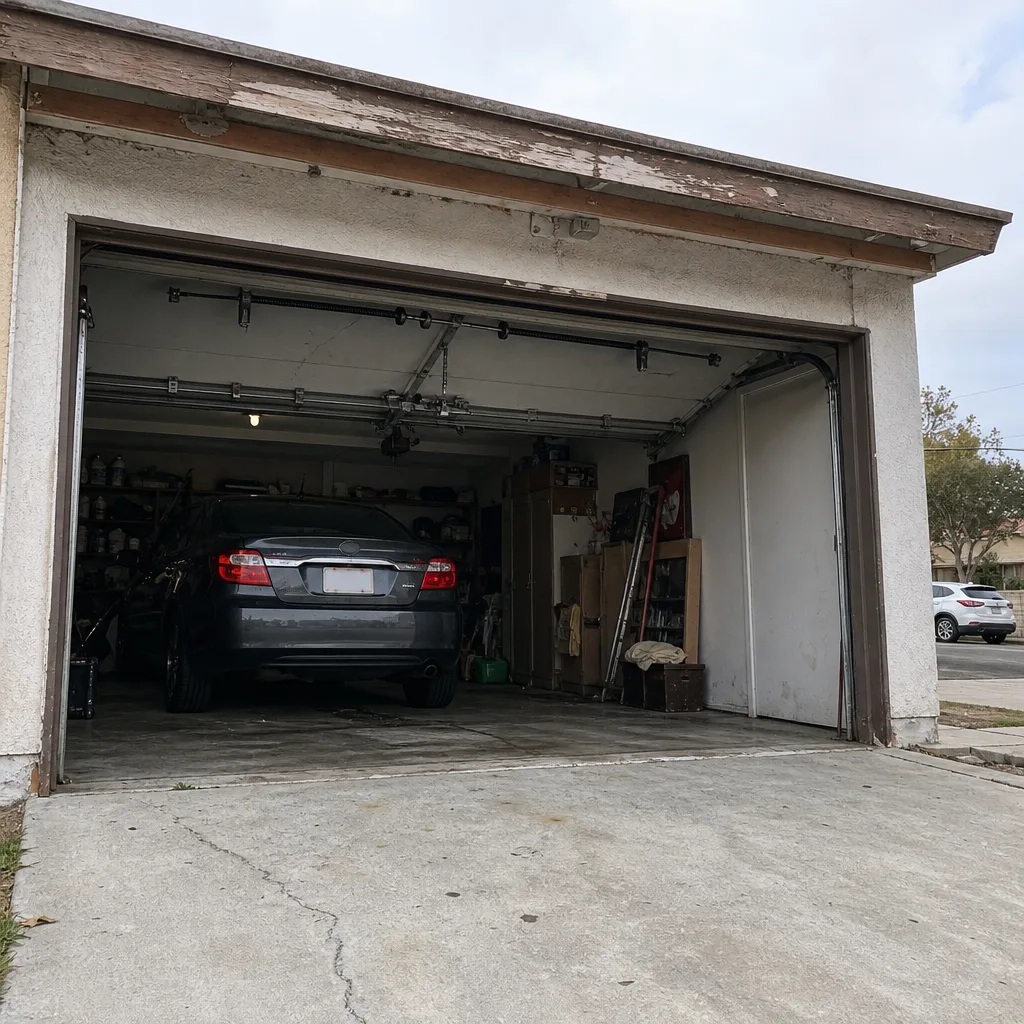 Before
 After
 Before
 After
 Before
 After