
Last updated November 2, 2026
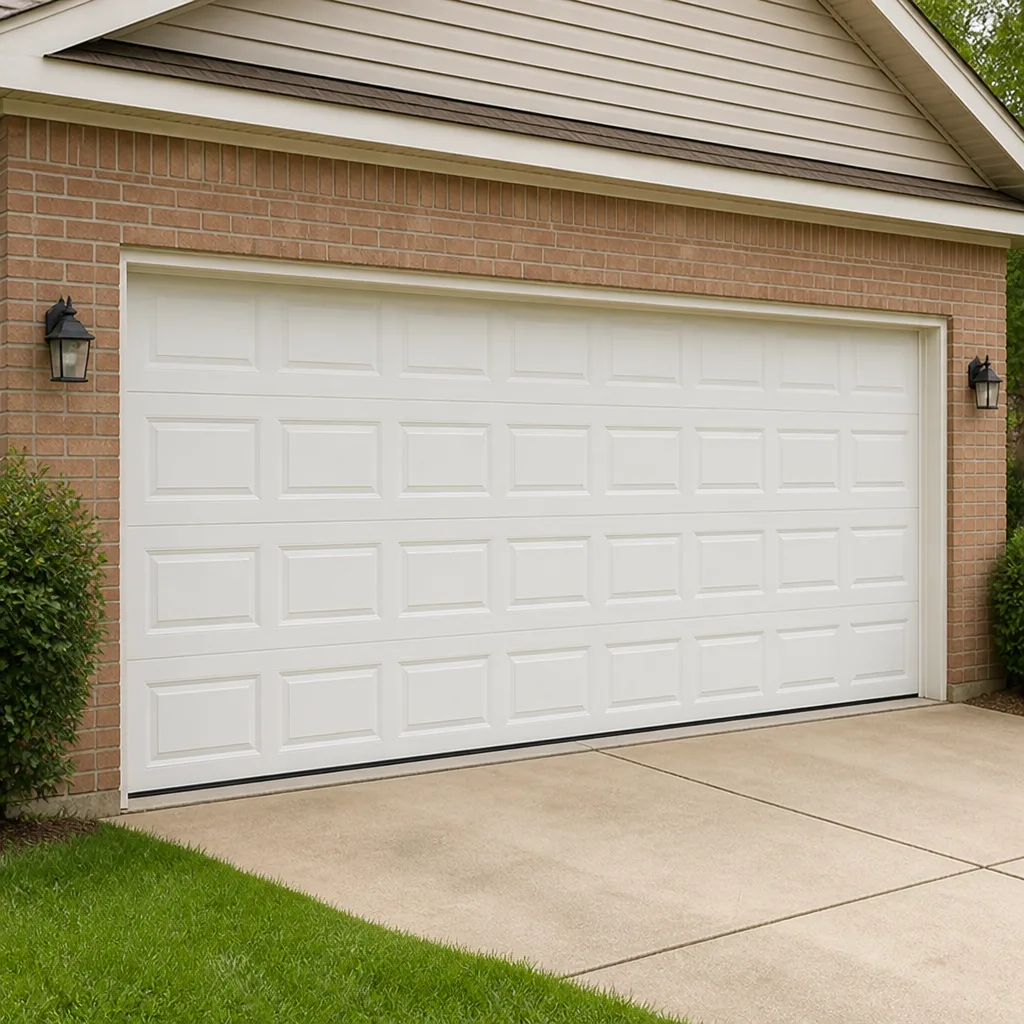 Raised-panel steel
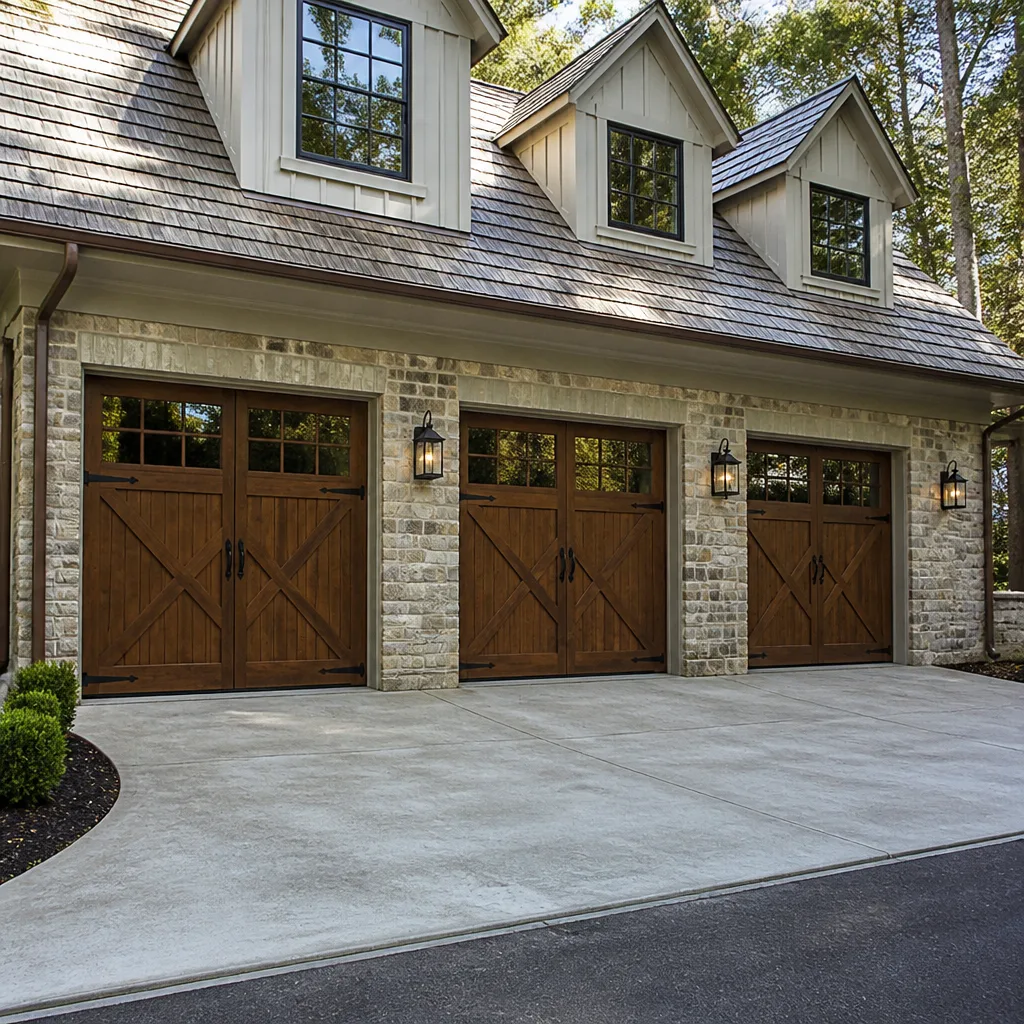 Carriage house
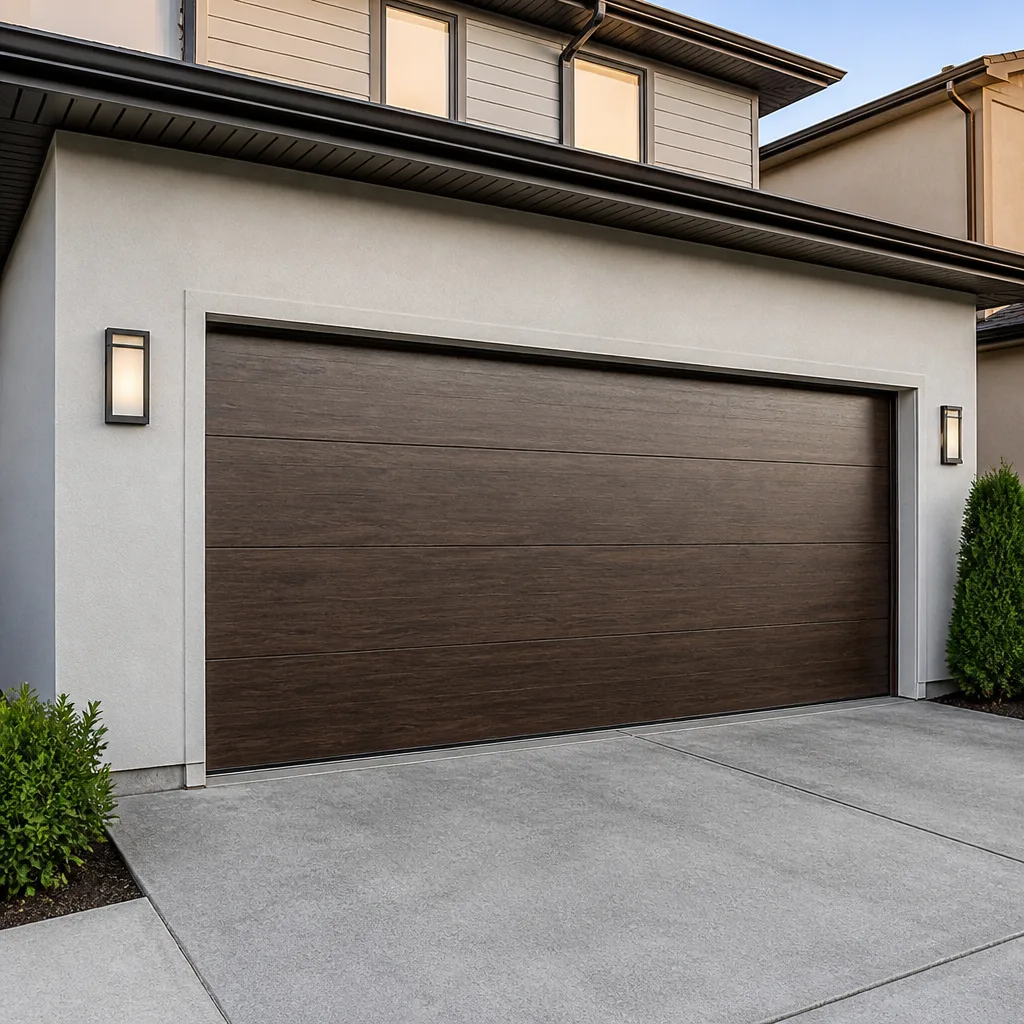 Modern flush
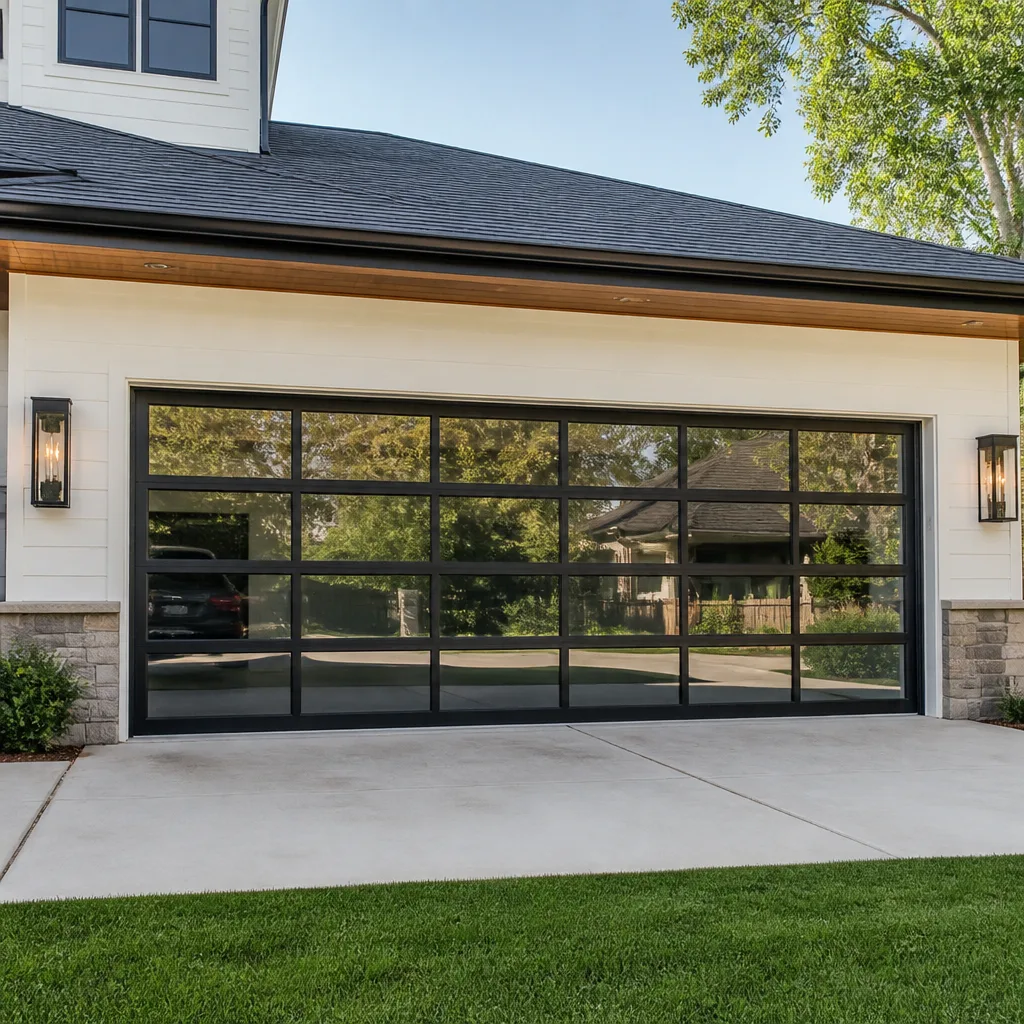 Full-view glass
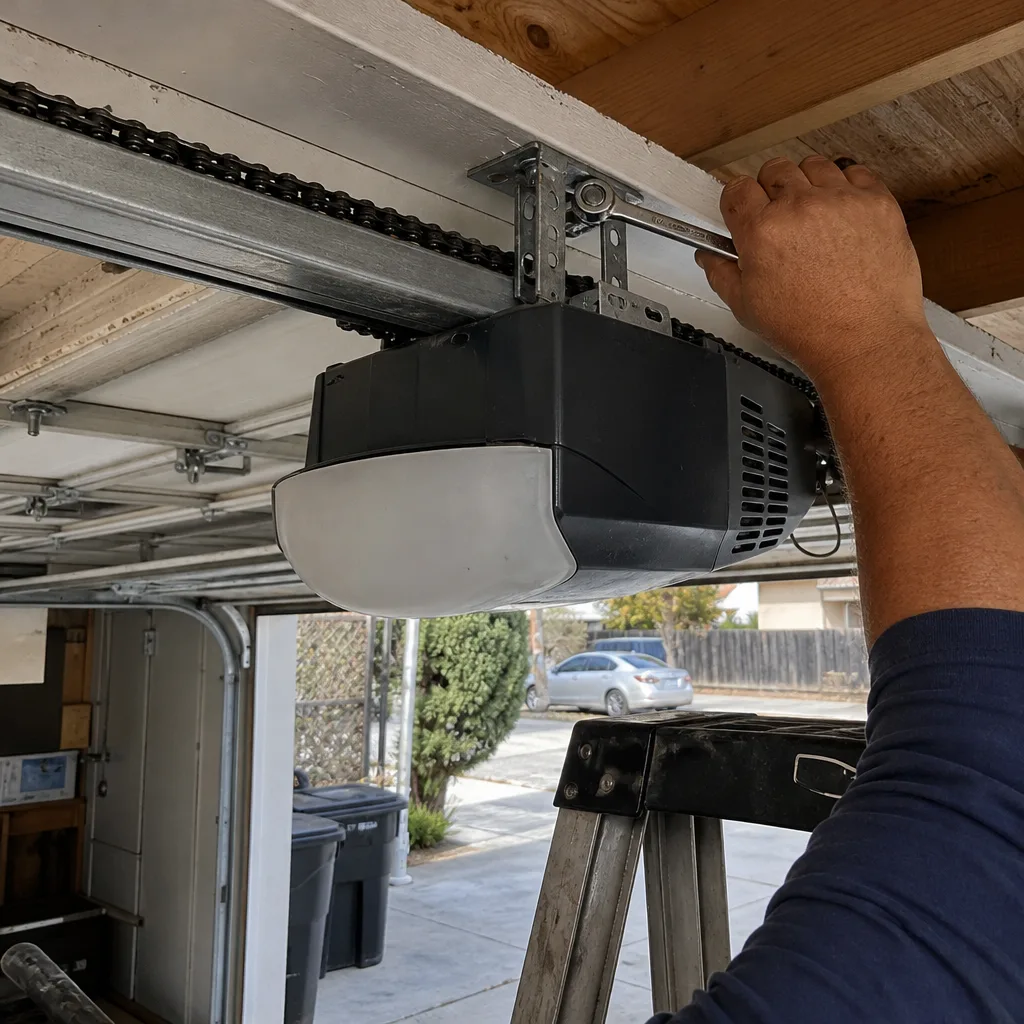
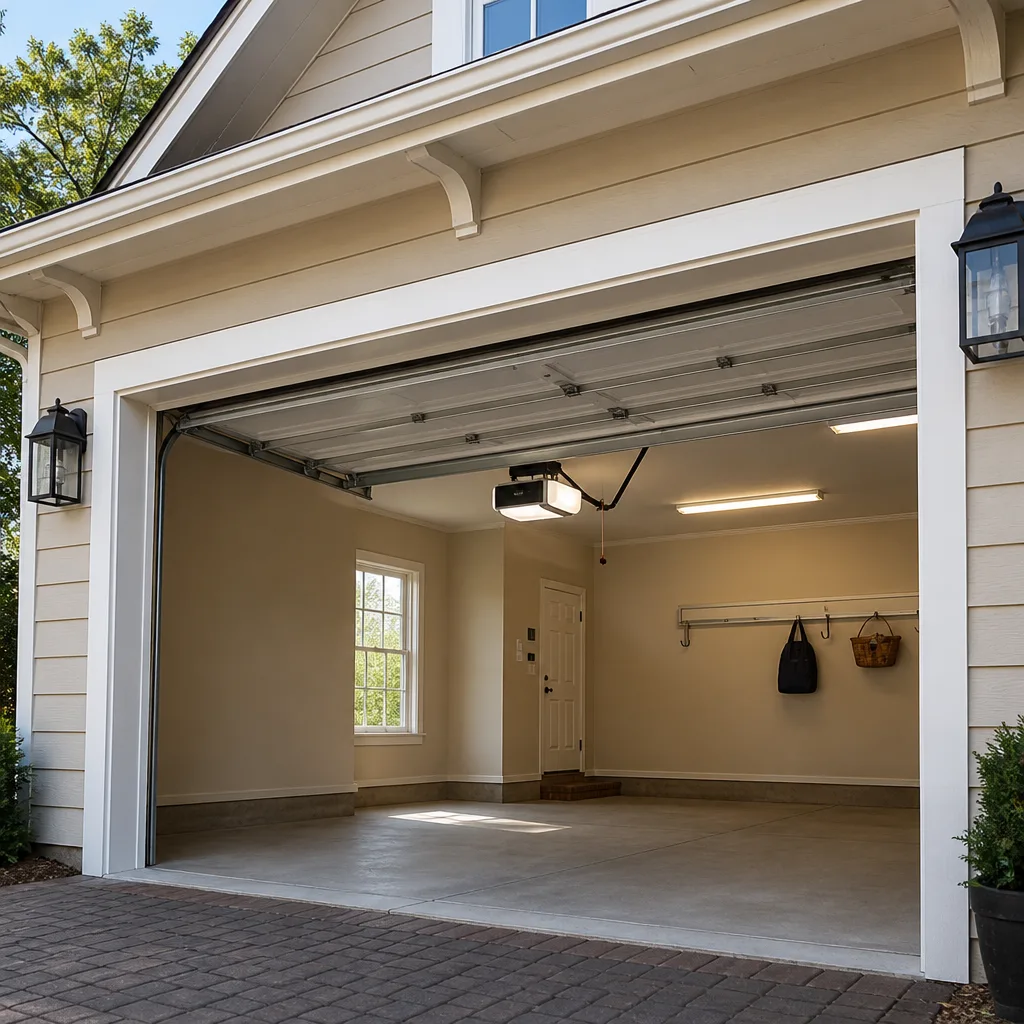 LiftMaster openers
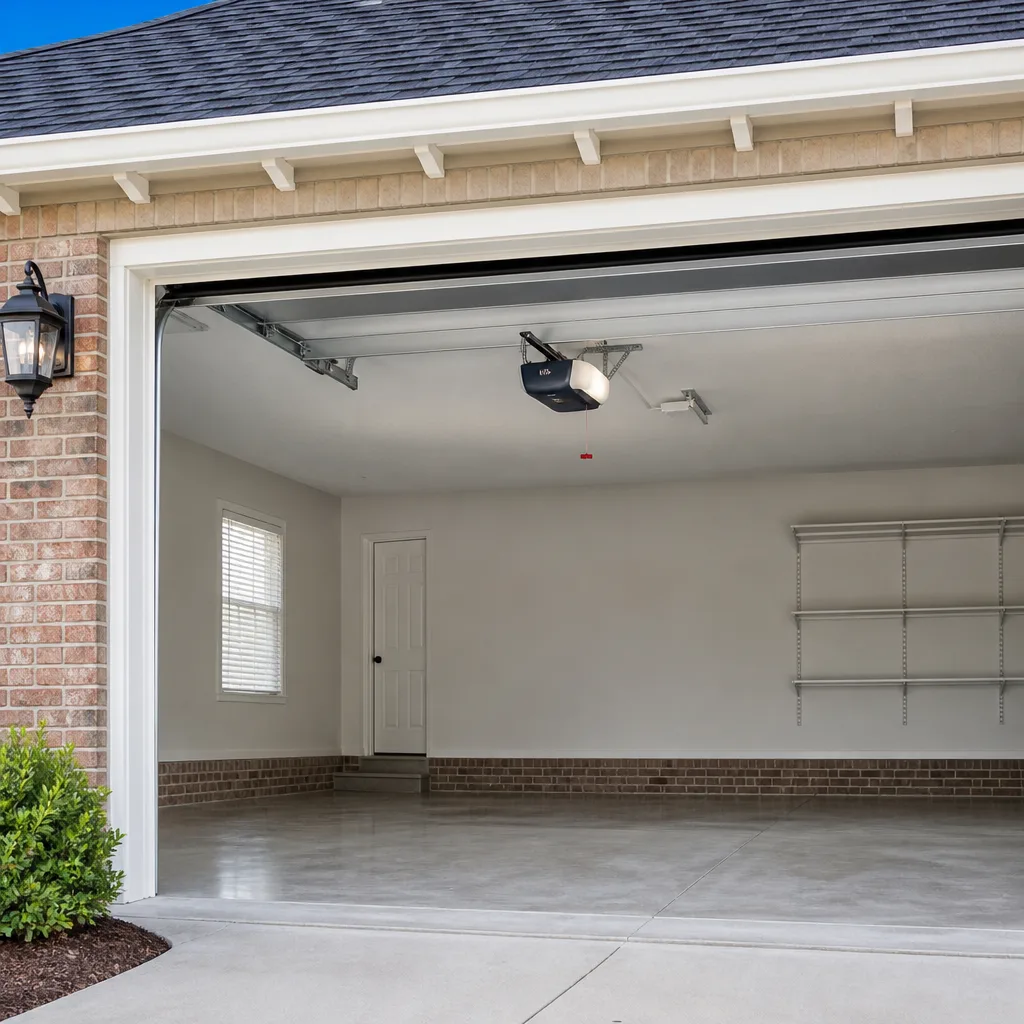 Chamberlain openers
Full 25-point door and opener safety check with every visit - springs, cables, rollers, tracks, and your LiftMaster or Chamberlain opener included
You get a price before we start. It does not change when the truck arrives.
Get your free estimateHow to Hire a Garage Door Contractor in East Los Angeles: A Step-by-Step Guide
Ask a garage door contractor which brands they service and listen for hesitation. A tech who only really knows one or two lines will pivot to recommending a full replacement on anything unfamiliar, and that replacement will conveniently be the brand they stock. East Los Angeles has a specific problem with this: a high volume of one-truck operators who are brand-specialized but won’t tell you that until they’ve already diagnosed your door and quoted a parts markup. This guide walks you through how to screen for genuine multi-brand competence before anyone shows up, so you pay for the right fix the first time and skip the upsell runaround. For deeper reading, see our Complete Garage Door Repair Guide for East Los Angeles Homeowners.
Quick Answer
To hire a garage door contractor in East Los Angeles, verify their California CSLB license first, then ask brand-specific diagnostic questions that reveal whether they actually know the equipment on your door. Get a written quote with itemized parts and labor before any work starts, confirm they carry parts inventory on the truck, and insist on a warranty in writing. A qualified contractor should confidently service whatever brand is already installed, not steer you toward replacing it.
Styles & brands we work with
- Raised-panel steel
- Carriage house
- Modern flush
- Full-view glass
- LiftMaster openers
- Chamberlain openers
Table of Contents
- 1. Verify the License Before Anything Else
- 2. How to Test for Real Brand Competence
- 3. How to Read a Quote Like a Pro
- 4. Why On-Hand Parts Inventory Beats Response Time Claims
- 5. East LA Specifics: Climate, Code, and Market Realities
- 6. Red Flags Specific to East Los Angeles
- 7. The Interview Script: 10 Questions to Ask
- 8. Getting the Warranty in Writing
1. Verify the License Before Anything Else
California requires any contractor performing garage door work over $500 in labor and materials to hold a valid license from the Contractors State License Board (CSLB). Garage door installation and repair falls under the C-61/D-28 classification, which is the Door and Gate specialty. A handyman with a general business license is not legally permitted to replace torsion springs or install a new door in East Los Angeles.
Here’s the step-by-step verification process:
- Go to the CSLB website at cslb.ca.gov and click “Check a License.”
- Enter the contractor’s name or license number. Ask for the number directly.
- Confirm the license status reads “Active” and not “Suspended” or “Expired.”
- Check the classification. It should specifically list Door and Gate (D-28) or a general building classification that covers it.
- Look at the bond and insurance information. California requires a $25,000 contractor bond minimum.
- Check the license issue date. A license held for several years suggests stability. A brand-new license isn’t automatically disqualifying, but paired with other red flags it warrants caution.
- Request a certificate of liability insurance directly from the contractor. Verify it covers property damage and worker’s compensation.
In our experience across East Los Angeles, homeowners who skip this step often discover after an injury or property damage that their “contractor” was uninsured and now unreachable. Torsion springs under tension are dangerous. A spring that snaps during a botched repair can send a technician to the hospital with a bill that lands on you if they don’t carry their own coverage.
The CSLB database also shows any complaints, citations, or disciplinary actions. A clean record over five or more years tells you the contractor has operated without major incidents. One or two old complaints may have context. A pattern of unresolved complaints is a hard pass.
2. How to Test for Real Brand Competence
Here’s the core problem in the East LA market: a contractor who installs primarily one brand will talk fluently about that brand and vaguely about everything else. When they encounter a door outside their wheelhouse, the easiest path is recommending replacement. It’s faster for them, it clears the problem, and it generates a bigger invoice than a repair would have.
The fix is asking diagnostic questions that require genuine familiarity with specific equipment before you ever schedule a visit. You’re not looking for someone who says “yeah, we do all brands.” Every contractor says that. You’re looking for someone who can answer a technical question about the brand on your door without pausing to Google it.
Here’s what that looks like in practice. If you have a Wayne Dalton door, ask: “What’s the common failure point on a Wayne Dalton TorqueMaster system, and how does that change the repair approach versus a standard torsion setup?”
A contractor with real Wayne Dalton experience will mention the enclosed spring tube, the need for specialized winding tools, and the fact that TorqueMaster spring replacement differs significantly from exposed torsion systems. A contractor faking it will give you a generic answer about springs and hope you don’t notice.
For a Craftsman opener, ask about the gear-and-sprocket assembly. Older Craftsman chain drive units are notorious for stripped plastic gears. A tech with Craftsman depth knows this immediately and can tell you whether a gear replacement is worth it or if the unit’s age argues for a new opener. Someone who doesn’t know will suggest replacing the whole unit without assessing the gear.
Raynor doors have their own quirks, particularly in the commercial-grade residential lines. Amarr doors vary significantly between the builder-grade line and the higher-end Heritage series. Each brand has failure patterns, hardware differences, and service requirements that only become visible after you’ve worked on dozens of them.
Why this matters for your wallet: a contractor who genuinely knows your brand can usually fix the actual problem. A contractor who doesn’t will replace the symptom. The difference is often $200 on a repair versus $1,800 on an unnecessary replacement.
3. How to Read a Quote Like a Pro
Once you’ve found a contractor worth scheduling, the next skill is reading their quote. Most homeowners glance at the bottom-line number and ignore the structure. That’s a mistake. The structure tells you whether you’re dealing with honest pricing or a parts-margin game.
A legitimate garage door repair quote in East Los Angeles has three components:
- Service call fee. Typically $45 to $85 in the East LA market. Some contractors waive this with a completed repair. Others charge it flat regardless. Both are fair models. What’s not fair is hiding it until the invoice.
- Parts. This is where the margin game happens. A torsion spring that costs the contractor $40 wholesale might show up on your quote at $80, $120, or $200. Some markup is legitimate. The question is how much.
- Labor. Garage door work in East LA typically bills at $75 to $150 per hour depending on complexity. A standard spring replacement is often a flat-rate job, quoted in advance, not hourly.
The pricing table below reflects what we see across East Los Angeles, including neighborhoods like Boyle Heights, El Sereno, and City Terrace. These are ranges, not exact quotes, and your specific door will vary.
| Service | Typical East LA Price Range | Parts vs. Labor Split |
|---|---|---|
| Torsion spring replacement (pair) | $180 – $340 | Parts 30-40%, Labor 60-70% |
| Extension spring replacement (pair) | $150 – $250 | Parts 25-35%, Labor 65-75% |
| Cable replacement (both sides) | $140 – $230 | Parts 20-30%, Labor 70-80% |
| Opener motor replacement | $300 – $550 | Parts 50-60%, Labor 40-50% |
| Full door replacement (single, basic steel) | $1,200 – $2,200 | Parts 60-70%, Labor 30-40% |
| Full door replacement (double, insulated) | $2,500 – $4,500 | Parts 65-75%, Labor 25-35% |
A red flag: when the parts line item is vague. “Door hardware” or “miscellaneous parts” on a $600 invoice without itemization means you’re being charged for something you can’t verify. A legitimate quote lists specific components: spring gauge, cable length, bracket type. If the contractor can’t tell you exactly what parts are being replaced and why, find another contractor.
And here’s the non-negotiable part: the price quoted before work begins is the price you pay when work is done. Any contractor in East Los Angeles who says they “need to see what else is wrong” after opening the door and then revises upward without your explicit approval is not someone you want on your property. Changes to scope happen, but they require your consent before the invoice grows.
4. Why On-Hand Parts Inventory Beats Response Time Claims
Every garage door company in East Los Angeles advertises “fast response” or “same-day service.” Here’s the thing: response time means nothing if the tech arrives and has to leave because they don’t have the part.
The question to ask instead is: “What parts do you carry on the truck?”
The answer tells you everything. A contractor running a serious garage door operation stocks the following on every truck:
- Torsion springs in common gauges and lengths: .207, .218, .225, .234, .243, .250 wire diameters
- Extension springs in multiple weight ratings
- Cables in standard lengths (7-foot and 8-foot door configurations)
- Rollers (nylon and steel, standard and long-stem)
- Hinges in multiple thicknesses and positions
- Brackets, including center bearing plates and end bearing plates
- Safety sensors compatible with major opener brands
- Opener remote controls and keypads for LiftMaster, Chamberlain, Genie, and Craftsman compatibility
- Emergency release kits
That’s a mobile parts department. A one-truck operator who does this part-time carries springs in one or two sizes and a box of generic rollers. When they encounter a door that needs something they don’t have, they either install the wrong part (dangerous with springs) or drive to a supply house and come back tomorrow.
In East Los Angeles, where many homes date from the 1920s through the 1950s, older door systems frequently use non-standard components. A contractor with an actual inventory handles this. A contractor running on a shoestring makes you wait, or worse, improvises.
This also connects to the brand question. Multi-brand competence requires multi-brand parts. A contractor who genuinely services Wayne Dalton, Raynor, Amarr, and Craftsman equipment carries hardware specific to those brands. A contractor who stocks one brand’s hardware has an incentive to recommend replacements that use what they already own.
5. East LA Specifics: Climate, Code, and Market Realities
East Los Angeles has characteristics that affect garage door performance and contractor selection in ways a generic guide won’t acknowledge. For year-round maintenance specifics, see our Seasonal Garage Door Care for East Los Angeles: Year-Round Homeowner’s Guide. Three factors matter most here.
Climate and salt air proximity. East LA sits far enough inland to avoid direct coastal salt exposure, but close enough that the marine layer reaches certain neighborhoods on summer mornings. What that means practically: spring corrosion is less aggressive than in Long Beach or San Pedro, but humidity fluctuations still cause metal fatigue over time. East LA homeowners with original 40- and 50-year-old doors deal with rust at the bottom panels and bracket connections more than coastal residents do at the springs. A contractor who works primarily in East LA knows this. A contractor driving in from the Valley might not.
Older housing stock. Boyle Heights, El Sereno, Lincoln Heights, and City Terrace have thousands of homes built before 1960. Many still have their original detached garages with single-panel tilt-up doors or early sectional doors. These systems are serviceable but require familiarity with hardware that hasn’t been manufactured in decades. When the bottom bracket on a 1950s tilt-up door fails, the part isn’t at Home Depot. A contractor with a well-stocked truck and experience with legacy hardware is the difference between a $150 repair and a $2,500 replacement.
Local permitting reality. Most garage door repairs in East Los Angeles don’t require permits. Spring replacement, cable replacement, opener installation, and panel replacement are all classified as maintenance. A full door replacement on an existing opening also typically doesn’t require a permit if the structural opening isn’t changed. However, if you’re converting a garage to living space (common in East LA given housing pressure) or enlarging the opening, that does require permits and potentially engineering. A legitimate contractor tells you when a permit is needed. A contractor who says “we don’t deal with permits” on a job that requires them is setting you up for enforcement problems down the line.
6. Red Flags Specific to East Los Angeles
The East LA garage door market has patterns you won’t find in a generic hiring guide. Here are the red flags that show up here specifically:
- Cash-only demands. A contractor who refuses a check or card and insists on cash is avoiding a paper trail. In East LA, this often overlaps with unlicensed operation. A licensed contractor with a real business address accepts standard payment methods. Cash-only also reads as an attempt to avoid reporting income, which signals a contractor who will also avoid reporting your warranty claim.
- No physical business address. A Post Office box in City of Commerce or a UPS Store address in Montebello isn’t a business location. Ask for the physical address. A contractor running out of their truck won’t have one. This matters when you need to track them down six months later for a warranty repair. It’s easier to ghost a customer when you have no fixed location.
- Verbal-only warranty promises. “I’ll take care of you if anything goes wrong” is not a warranty. A written warranty specifies the parts covered, the duration, and what happens if the contractor disappears. In East LA, where cash businesses come and go, insisting on a written warranty is non-negotiable.
- Pressure to replace rather than repair. If you call about a broken spring and the contractor spends 20 minutes explaining why you need a new door, that’s a sales pitch, not a diagnosis. A legitimate contractor leads with the fix. “Repair before replace” should be the default position. If the door is genuinely beyond repair, the contractor should be able to show you specifically why: cracked sections that compromise the track system, rust through the frame, or a design that no longer has parts available.
- The “one brand only” specialist. Some contractors in East LA are dealer-affiliated and push that brand exclusively. There’s nothing wrong with specialization, but there’s everything wrong with not disclosing it until you’re already mid-quote. A contractor who only installs one brand and recommends that brand for every repair isn’t diagnosing, they’re selling.
- No CSLB number on the vehicle or marketing. California requires contractors to display their license number on all vehicles used for business and all advertising. An unmarked truck or a missing number is a basic compliance failure that predicts other compliance failures.
7. The Interview Script: 10 Questions to Ask
Use this script before scheduling an appointment. It takes about ten minutes, and it’ll filter out most of the contractors who shouldn’t be on your property.
- “What’s your CSLB license number?” Write it down and verify it yourself. Don’t take their word that they’re licensed. The database doesn’t lie.
- “Which garage door brands do you work on most frequently?” Listen for the pause. A multi-brand contractor answers without thinking. A one-brand specialist hedges.
- “What’s the most common failure point on my specific door brand?” This requires knowing what brand you have, so check before calling. The quality of the answer reveals whether their brand knowledge is real or claimed.
- “What parts do you carry on the truck?” The specificity of their answer is the test. “Springs, cables, rollers” is generic. “Six spring wire gauges, both cable lengths, nylon and steel rollers in three stem sizes, and safety sensors for three opener brands” is a real inventory.
- “Is the quote free, and is it written?” A written quote with itemized parts and labor is the standard. A verbal quote means nothing, and a contractor who won’t put it on paper won’t stand behind it.
- “What’s your warranty on parts and labor?” Springs should carry at least a year of parts coverage. Labor warranties of 90 days are reasonable. A contractor who won’t state a warranty period in writing is telling you something.
- “Do you have a physical business address in the area?” The answer should be a street address, not a PO box. You don’t need to visit, but you need to know one exists.
- “Who pays if the technician gets injured on my property?” The answer should be “my worker’s compensation insurance.” If the contractor hesitates or says “that won’t happen,” move on.
- “Can you itemize the quote before you start work?” The answer is always yes from a legitimate contractor. It’s only “we’ll figure it out after” from someone planning to inflate the invoice.
- “What’s your process if I need a repair on a door you didn’t install?” A contractor who only wants to service their own installations is an installer, not a repair company. You want someone who works on whatever you already have.
One note on that last question: if a contractor tells you they’ll only service openings they installed, that’s a strong signal their parts inventory is thin and their brand range is narrow. In East Los Angeles, where a huge portion of housing stock has original or aging doors from manufacturers that no longer exist or have merged, that’s the contractor equivalent of saying “I’ll only help customers who don’t need help.”
8. Getting the Warranty in Writing
Warranty promises are easy to make and easy to forget. The only warranty that matters is the one written on the invoice or in a separate warranty document. Here’s what a legitimate garage door warranty in East Los Angeles includes:
Parts coverage. Torsion springs should carry a minimum one-year warranty from the manufacturer, with most quality springs rated for 10,000 to 20,000 cycles. A cycle is one open-and-close operation. A spring rated for 10,000 cycles on a door used four times daily lasts roughly seven years. The contractor should tell you the cycle rating of the springs they’re installing and record it on the invoice.
Labor coverage. Most reputable contractors in East LA warranty their labor for 90 days to one year. That means if the repair fails due to a workmanship error, they return and fix it at no charge. Labor warranties longer than a year are rare and not necessarily better.
Opener warranties. A new opener typically carries a manufacturer’s warranty of one to five years on parts, depending on the model and brand. The contractor should register the warranty with the manufacturer on your behalf and provide you with the registration confirmation and warranty documentation.
Installation warranties. A new door installation should carry a workmanship warranty of at least one year, covering issues like door balance, track alignment, and sensor misalignment that stem from the install itself. This is separate from the manufacturer’s warranty on the door panels and hardware.
The most important sentence in any warranty discussion: what happens if the contractor is no longer in business. Some manufacturers will honor parts warranties directly. Most labor warranties are only as good as the contractor’s continued existence. That’s another argument for a contractor with a physical business address and a track record in East Los Angeles, not a truck-only operation that might not exist next year.
Whatever warranty you’re offered, read it before signing. If the contractor can’t produce a written version, you don’t have a warranty. You have words.
Common Mistakes to Avoid
- Hiring based on price alone. The cheapest quote in East Los Angeles is often the most expensive outcome. A contractor quoting $90 for a spring replacement is either installing used springs, using undersized wire gauge, or planning to find “additional problems” once the door is open. East LA’s market has a price floor for legitimate work, and anyone below it is cutting corners somewhere.
- Skipping license verification because “the guy seems nice.” A pleasant personality doesn’t cover your homeowner’s insurance deductible when an unlicensed tech drops a torsion bar through your car windshield. The CSLB check takes three minutes.
- Accepting a verbal quote and then paying a different amount. We see this regularly in East Los Angeles: a tech quotes $250 over the phone, finds “unexpected complications,” and the invoice lands at $600. The written quote agreed before work begins is your contract. Anything above it requires your explicit sign-off.
- Replacing a door that only needed a spring. If your door is older but structurally sound, a spring replacement extends its life for years. If a contractor immediately suggests replacement without explaining the specific structural reason, get a second opinion.
- Choosing a contractor based on their ability to arrive fastest. The contractor who can be there in 20 minutes is the contractor nobody else is calling. Ask yourself why that is.
- Ignoring the parts inventory question. A contractor who arrives without parts takes your money for the trip, leaves, and then you’re back on the phone tomorrow. On-hand inventory is the single best predictor of same-visit resolution.
- Not asking who pays for injuries. If the answer isn’t “my worker’s comp insurance,” the answer is you. Torsion springs are dangerous. The person working on them needs to be covered, and that coverage needs to not be yours.
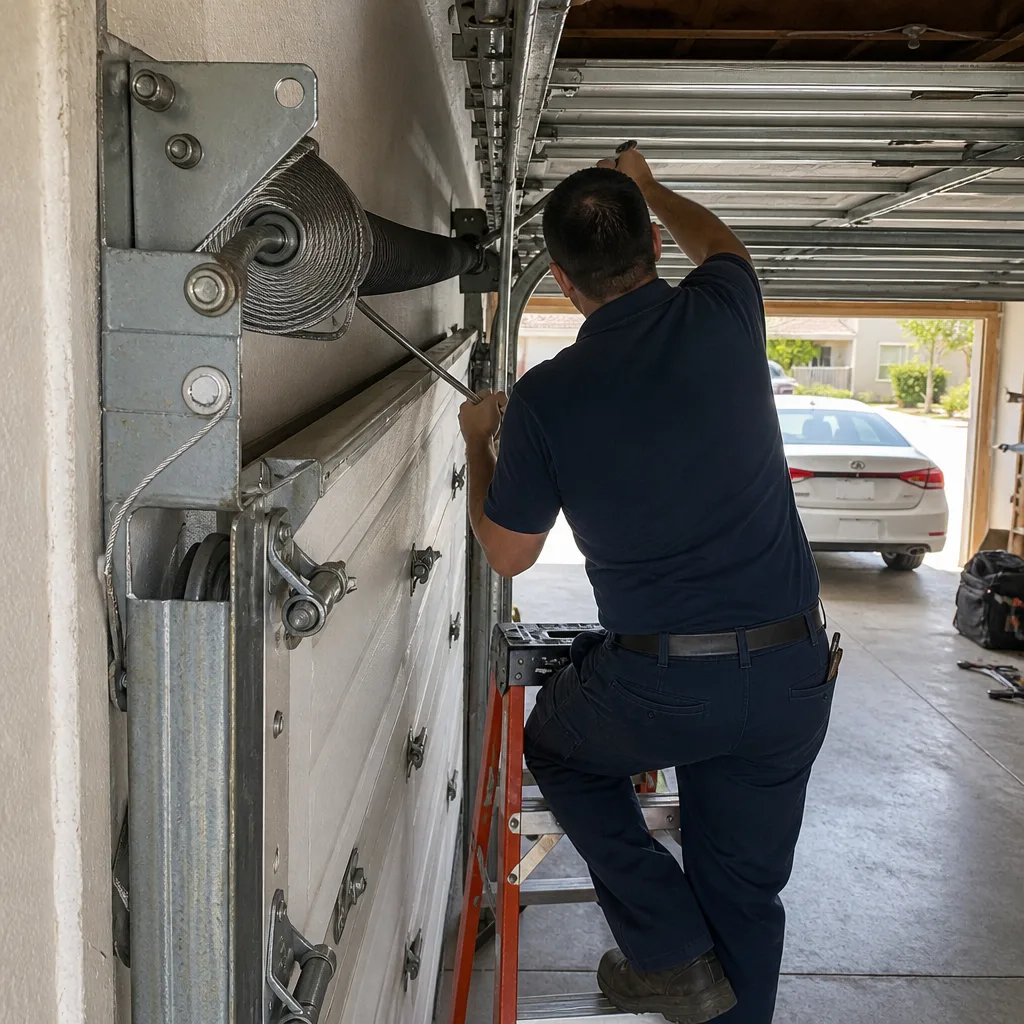
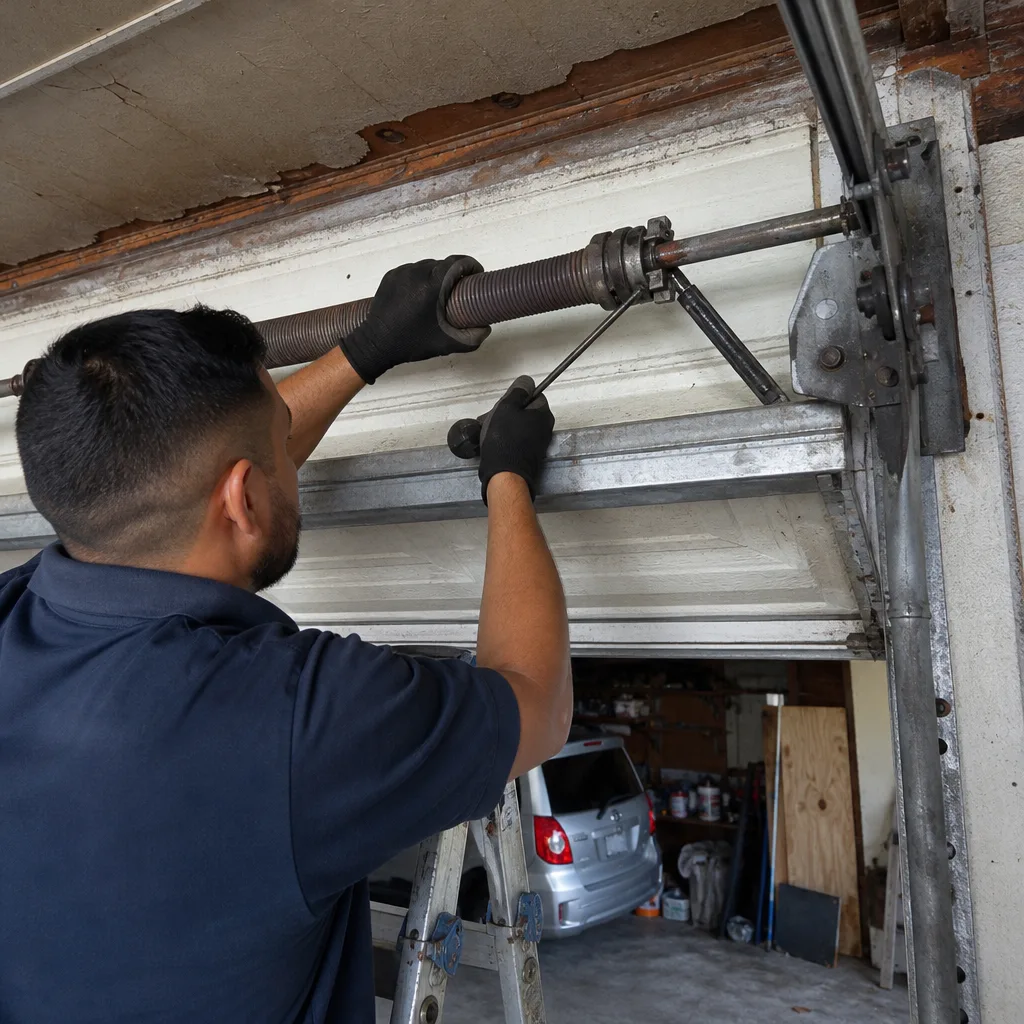
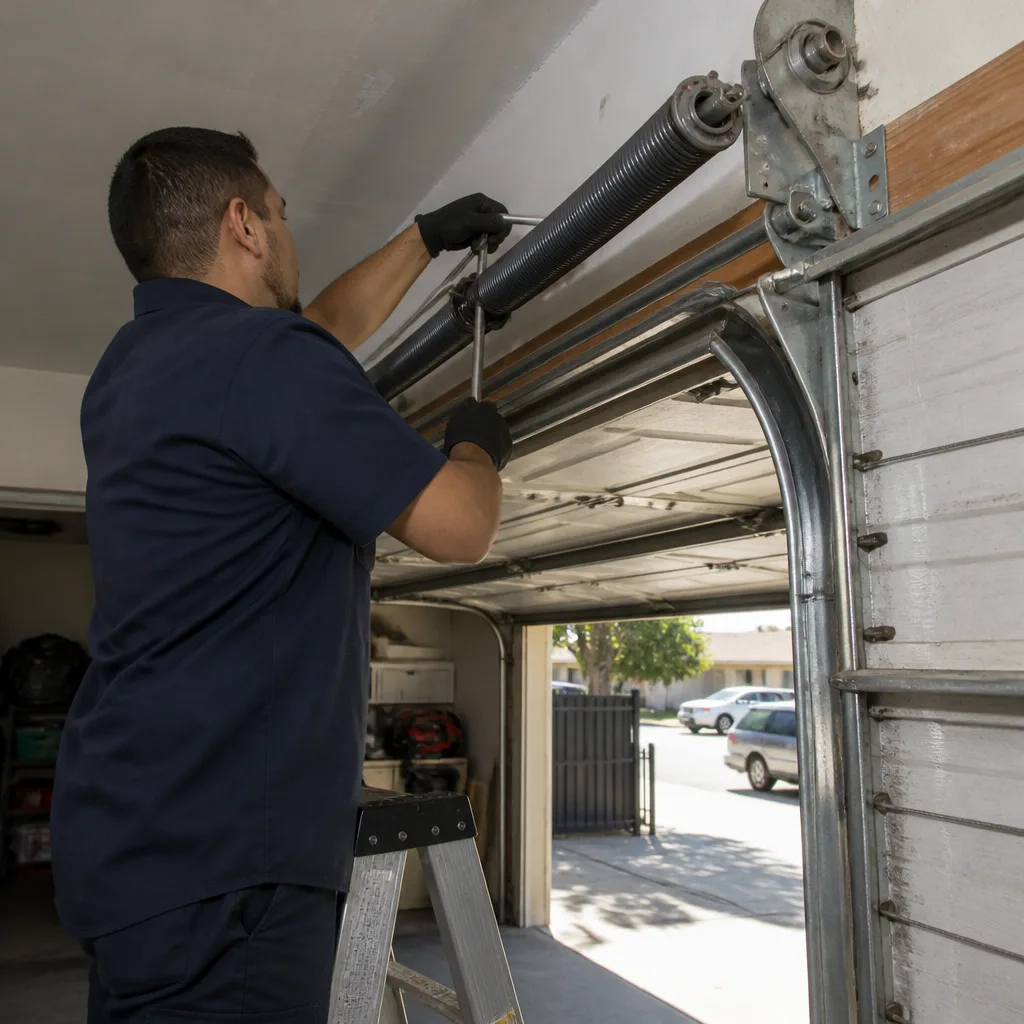
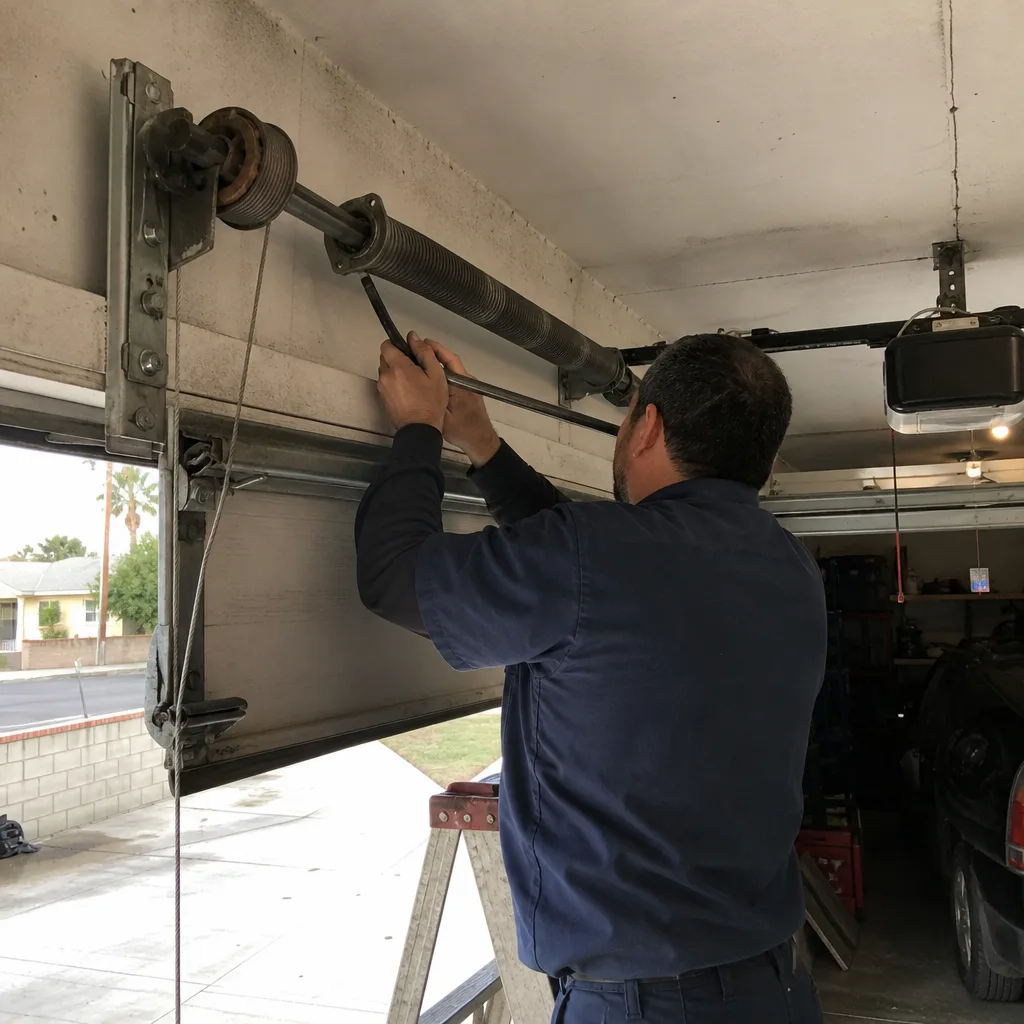
See the difference
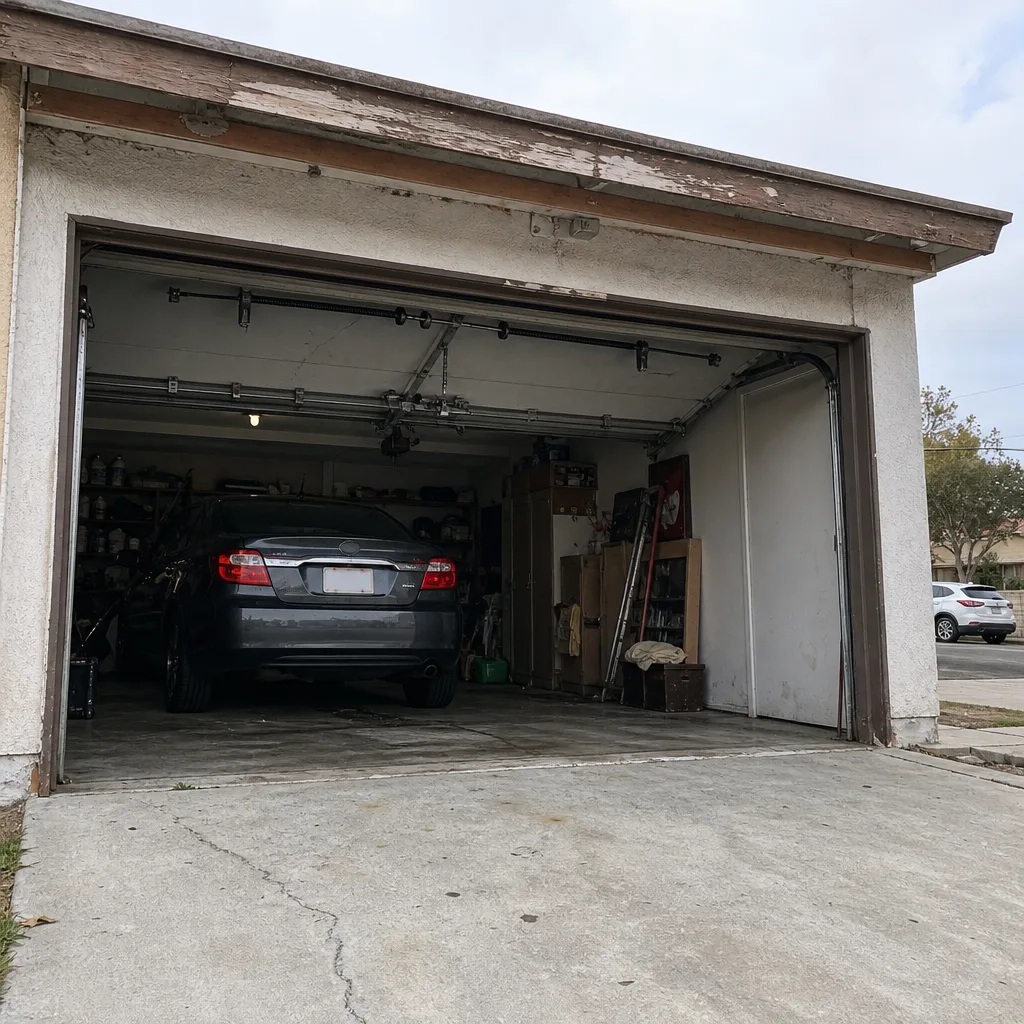 Before
 After
 Before
 After
 Before
 After
When to Call a Professional
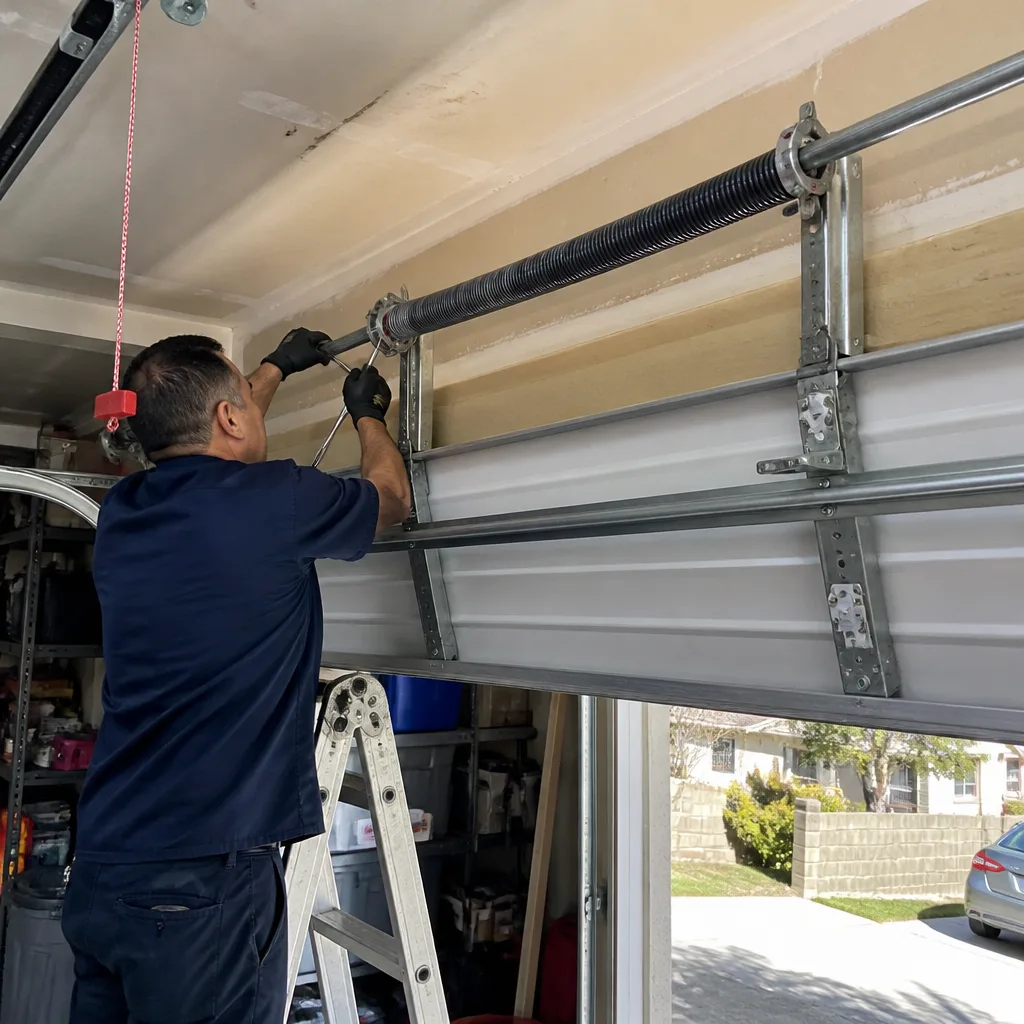
Some garage door problems are obvious calls for professional help, and some homeowners wait too long. If your door is off-balance, making grinding noises, or groaning during operation, call before it fails completely. A door that stops working mid-cycle can lock your car inside the garage or leave the door half-open overnight, which is an open invitation in East Los Angeles. If a spring has snapped, don’t attempt to open the door manually. The door’s full weight is now unsupported, and lifting it puts you at risk of direct injury from the unbalanced load. If your opener’s safety sensors aren’t functioning and the door won’t reverse on obstruction, that’s a hazard for children, pets, and vehicles. Preston Garage Door Repair offers free estimates in East Los Angeles. Call (833) 573-5280 and we’ll send someone who knows your brand and carries the parts. For a broader look at what repair service covers in this area, see our Garage Door Repair in East Los Angeles page.
Frequently Asked Questions
Service calls in East Los Angeles typically run $45 to $85, with common repairs like torsion spring replacement ranging from $180 to $340 including parts and labor. Full door replacements start around $1,200 for a basic single door and climb from there based on size, material, and insulation. The exact price for your job depends on your door type, brand, and the specific failure. Call (833) 573-5280 for a free, written, itemized estimate based on your door.
Most repairs and replacements on an existing garage door opening don’t require a permit in East Los Angeles. Spring replacement, cable replacement, opener repair or replacement, and swapping a door on an existing opening are all treated as maintenance. Structural changes, like widening the opening or converting the garage to living space, do require permits. A licensed contractor will tell you which category your project falls into.
Check the Contractors State License Board database at cslb.ca.gov using the contractor’s license number. The entry should show an active status, a Door and Gate (D-28) classification or equivalent, and current bond information. Any contractor doing garage door work over $500 must hold this license. An unlicensed handyman doing spring replacement is operating illegally and selling you an uninsured risk along with a repair. Read more on our Preston Garage Door Repair home page.
A competent contractor in East Los Angeles should be able to service the brands already installed in the area’s housing stock. Browse our more guides & resources for additional homeowner tools. That includes LiftMaster, Chamberlain, Genie, Clopay, Amarr, Wayne Dalton, Craftsman, and Raynor. Eight brands covering the vast majority of residential doors and openers. If a contractor only works on one or two brands, their recommendation for your repair or replacement is likely shaped by what they stock, not what your door actually needs.
Yes, for repair and emergency work, same-day service is often available. A door that won’t close is a security problem, and a door that won’t open traps your car. The limiting factor isn’t tech availability, it’s parts inventory. That’s why we carry a full range of springs, cables, rollers, brackets, and opener components on the truck. The tech who arrives fast but without parts has wasted your afternoon. For same-day repair scheduling, call (833) 573-5280.
It shouldn’t. The price quoted before work begins is the price you pay when the work is done, unless you specifically approve a change in scope. A contractor who quotes one number on the phone and then revises upward after opening the door is either bad at diagnosis or playing games with the invoice. Both are reasons to call someone else. If the scope genuinely changes, the contractor should stop work and get your approval before proceeding.
The Bottom Line
Hiring a garage door contractor in East Los Angeles comes down to three verification steps: confirm the license, test the brand knowledge, and read the quote structure. A contractor who passes all three is likely to fix your actual problem at a fair price. A contractor who fails any one of them will cost you money, time, or both. The East LA market has plenty of competent operators, and it has plenty who are brand-specialized and won’t admit it. Screen before you schedule, and you’ll get the repair you need instead of the replacement someone wants to sell you. For opener-specific concerns, see our Garage Door Opener Repair in East Los Angeles page. If you’re considering a new door instead of a repair, read our Garage Door Installation in East Los Angeles guide first.
Written by the team at Preston Garage Door Repair, serving East Los Angeles since 2018.