
Last updated November 3, 2026
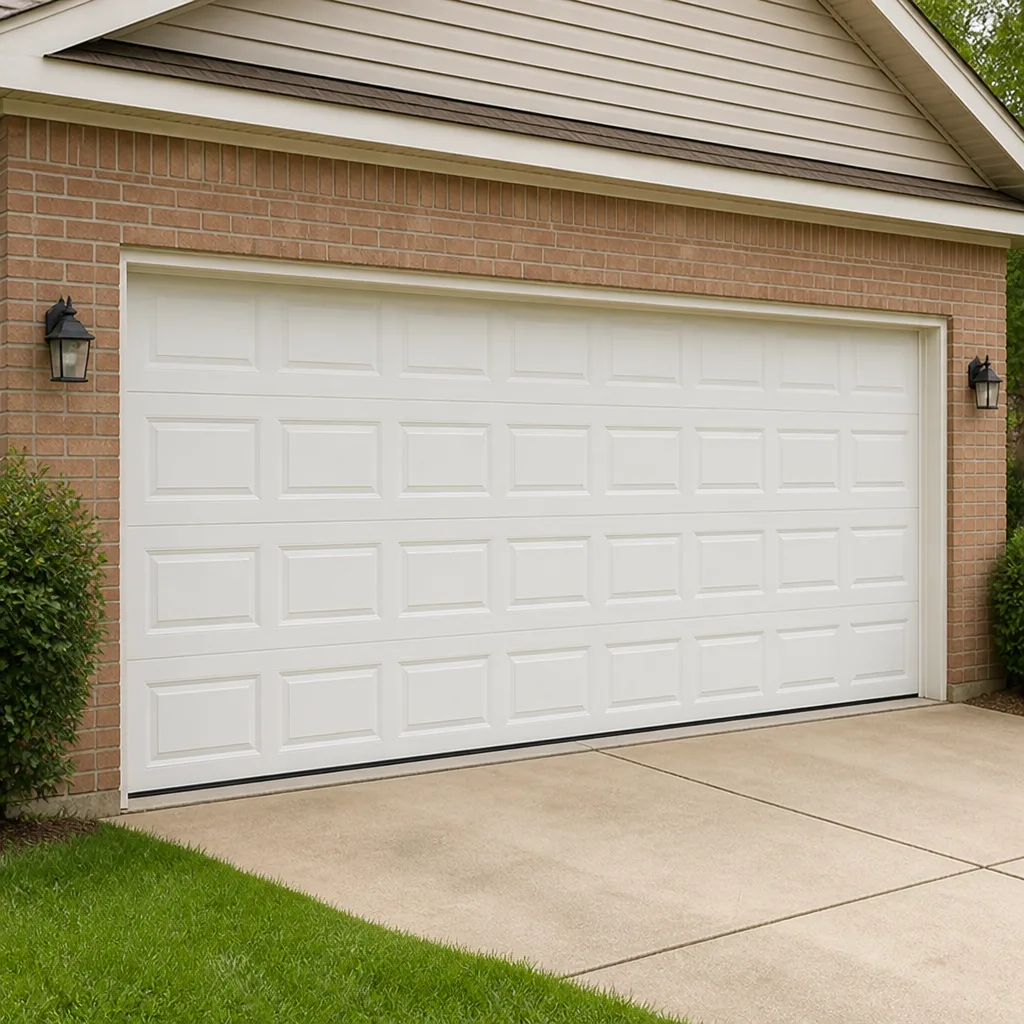 Raised-panel steel
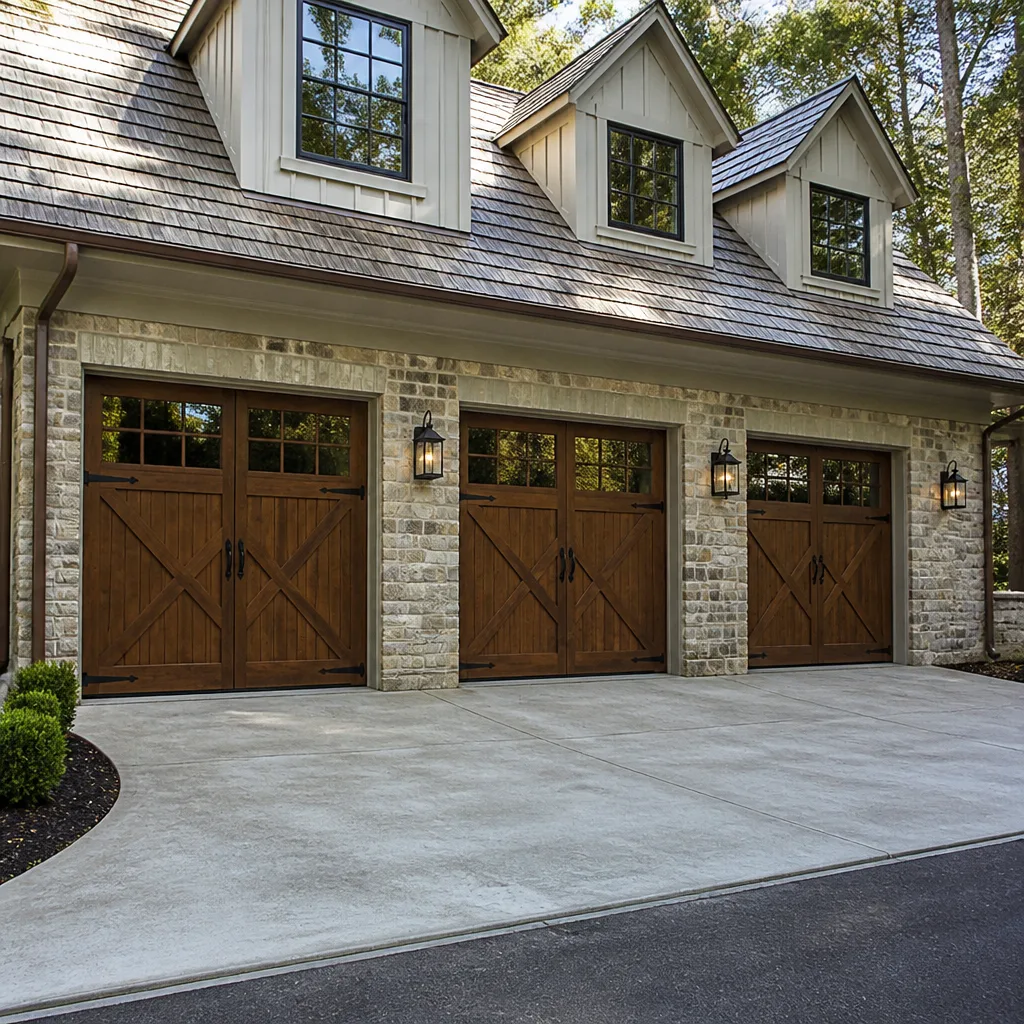 Carriage house
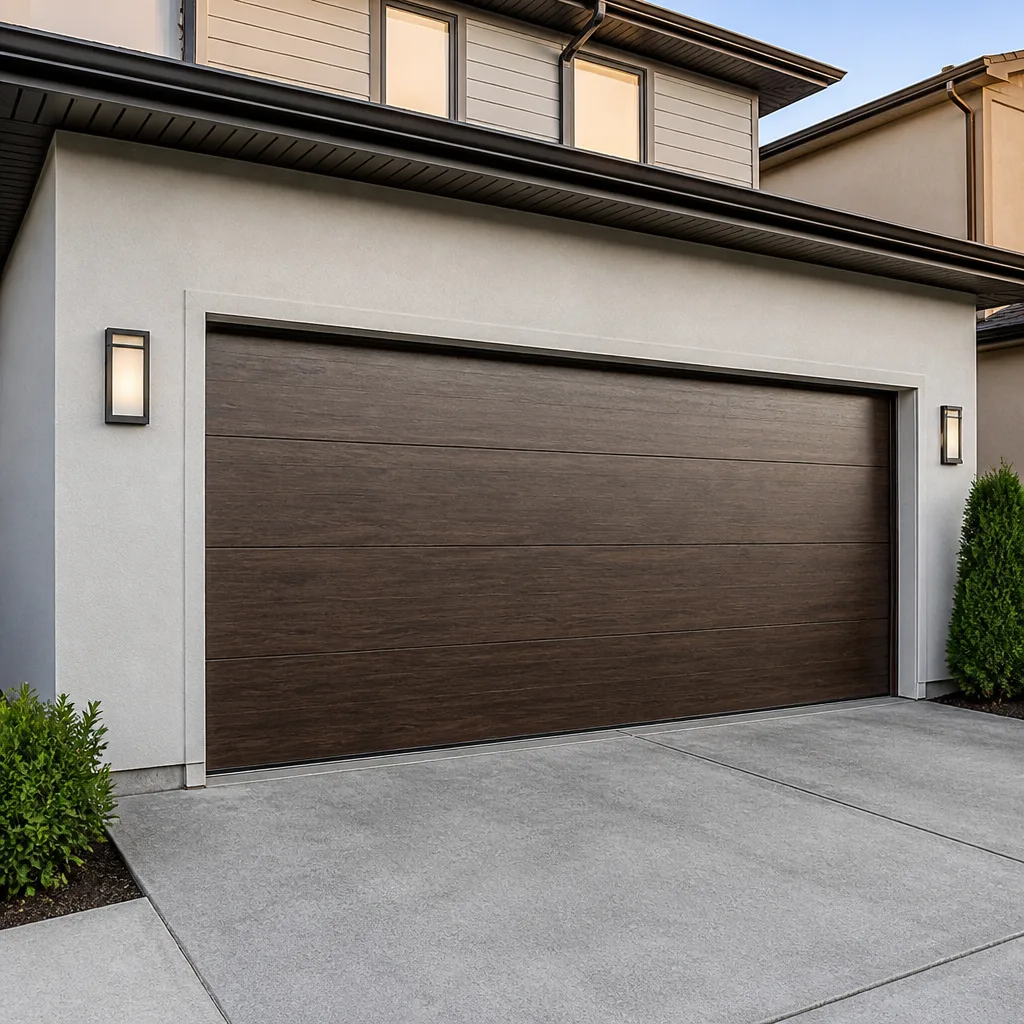 Modern flush
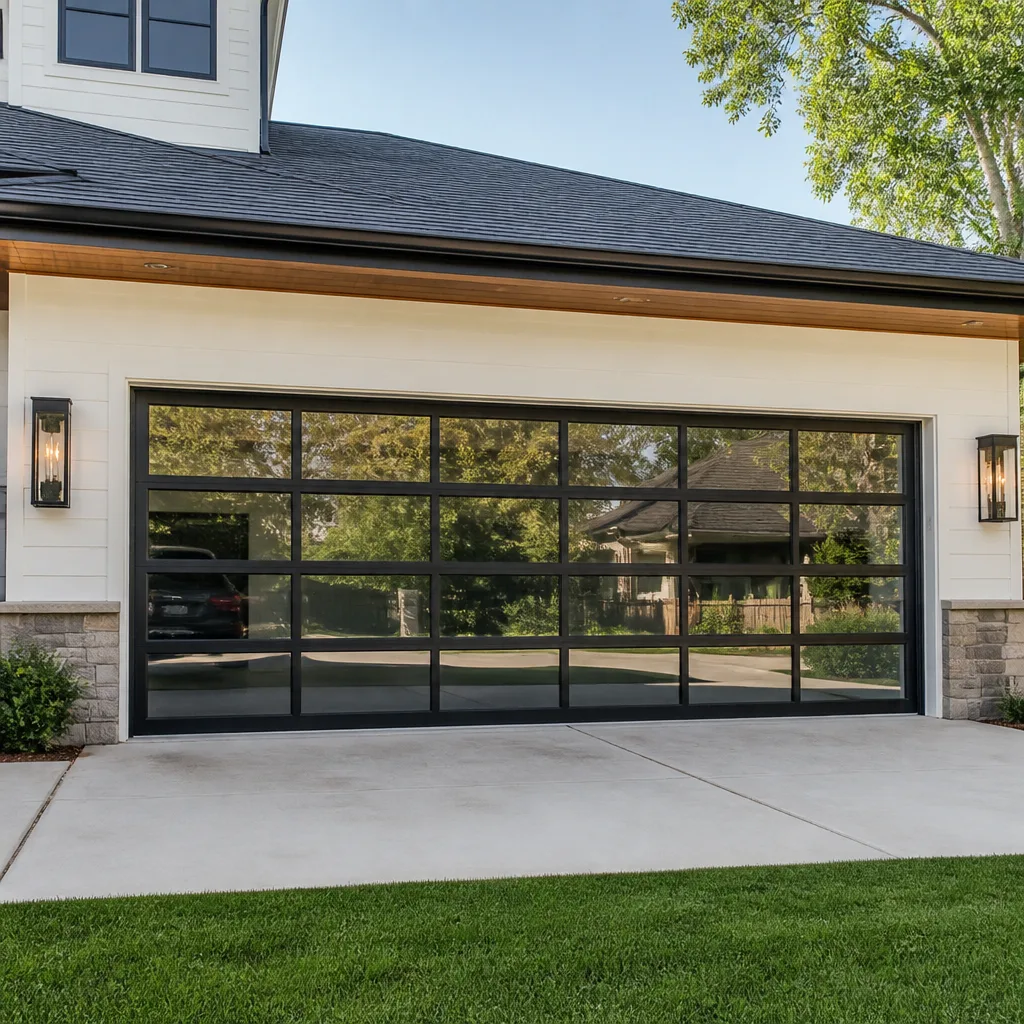 Full-view glass
 LiftMaster openers
 Chamberlain openers
Full 25-point door and opener safety check with every visit - springs, cables, rollers, tracks, and your LiftMaster or Chamberlain opener included
You get a price before we start. It does not change when the truck arrives.
Get your free estimateSeasonal Garage Door Care for East Los Angeles: Year-Round Homeowner’s Guide
Here’s the thing most seasonal garage door guides get wrong about East Los Angeles: they’re written for places with snow, ice, and sub-zero mornings. East LA homeowners often skip seasonal garage door care because it “doesn’t really get cold here.” But the Santa Ana wind events that push desert dust into every mechanical joint are harder on rollers and tracks than a Minnesota winter is. Those fine silica particles grind between steel surfaces, work into torsion spring coils, and turn a healthy door into a noisy, binding mess by late autumn. This guide walks through what actually fails in East Los Angeles, when it fails, and the small checks that prevent a $90 service call from becoming a $400 spring replacement. For more detail on repairs, see our Complete Garage Door Repair Guide for East Los Angeles Homeowners.
Quick Answer
Seasonal garage door care in East Los Angeles means addressing three distinct stress periods rather than four calendar seasons: Santa Ana wind season (September through November) for dust intrusion, the marine layer period (May through July) for surface oxidation, and winter rain months (December through February) for seal and alignment problems. The highest-value tasks are lubricating hinges and rollers with a dry silicone spray every 60 days, checking torsion spring coil gaps for trapped particulate after each major wind event, and testing the bottom seal against East LA’s notoriously uneven older garage slabs before the first winter storm.
Styles & brands we work with
- Raised-panel steel
- Carriage house
- Modern flush
- Full-view glass
- LiftMaster openers
- Chamberlain openers
Table of Contents
- Santa Ana Season: The Dust Problem Hardware Stores Don’t Mention
- Marine Layer Months: When Coastal Moisture Finds Bare Metal
- Winter Rain Prep: Bottom Seals and East LA’s Uneven Slabs
- Inland Heat and Cool Evenings: Spring Tension Realities
- Month-by-Month Maintenance Calendar for East Los Angeles
- Opener Care: What the Smart-Home Manuals Leave Out
- Brand Performance Notes: What We See in East LA Garages
- Common Mistakes to Avoid
- When to Call a Professional
- Frequently Asked Questions
Santa Ana Season: The Dust Problem Hardware Stores Don’t Mention
Santa Ana winds blow desert air from the east, and East Los Angeles sits directly in the path. The wind carries silica dust finer than beach sand, and that dust does not stay outside. It rides through panel gaps, penetrates the weatherstripping at the top of the door, and settles into places gravity alone would never take it. The worst areas are the torsion spring coils, the roller stems, and the track where the rollers ride.
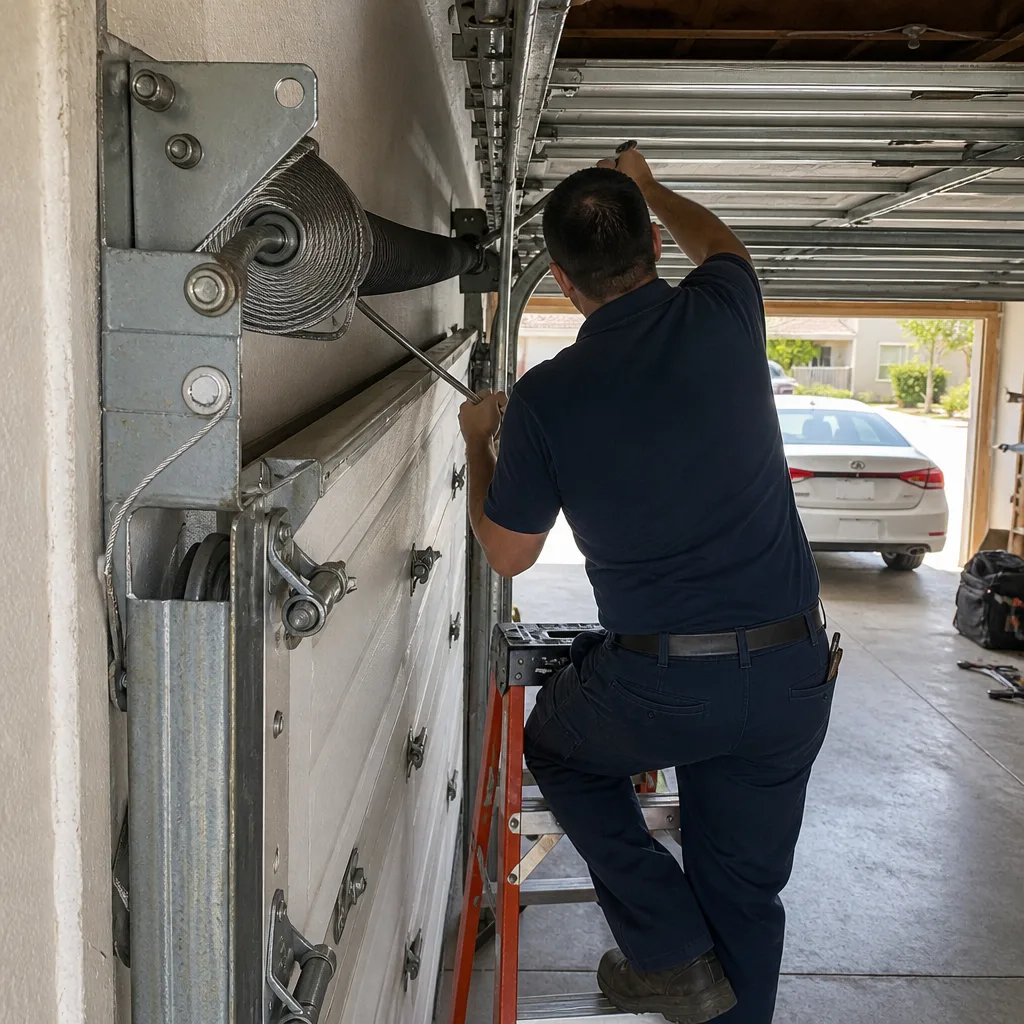
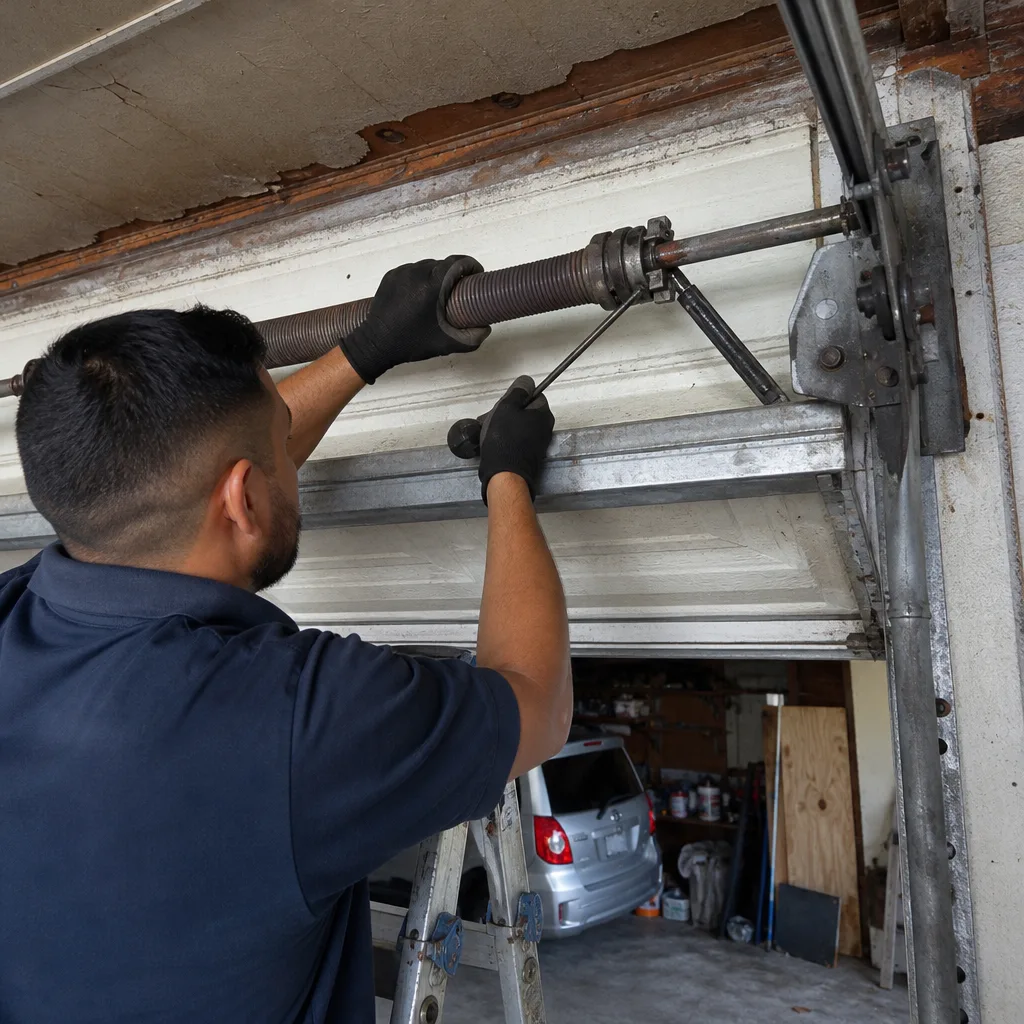
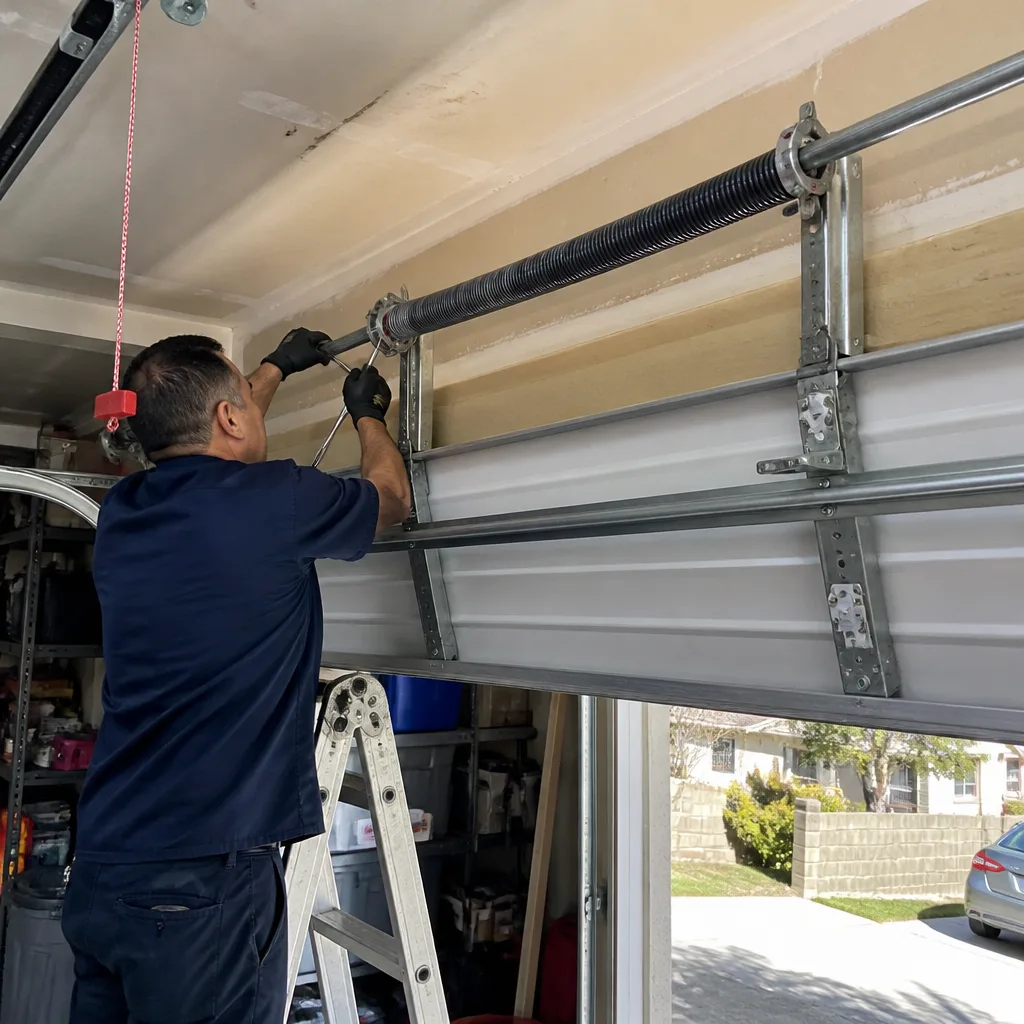
Here’s what happens mechanically. A torsion spring stores and releases energy by twisting. Its coils are tight, but not sealed. Santa Ana dust works between coil gaps and acts as an abrasive every time the door cycles. The spring scrapes itself from the inside out, which shortens its cycle life and causes the faint grinding noise homeowners describe as a “rubbing” sound. The track faces a similar problem: dust mixed with the existing lubrication forms a paste that stiffens in dry air and makes the roller drag instead of spin.
Before each major Santa Ana event, run this five-minute check:
- Open the door fully and wipe the interior track surfaces with a dry microfiber cloth, from the bottom return to the horizontal curve.
- Inspect the torsion spring with a flashlight. Look for gray-white dust packed between coils. If you see it, do not dig at it with a screwdriver. Compressed air at low pressure from 6-8 inches away dislodges most of it safely.
- Apply a dry silicone spray to the roller stems and hinges. Do not use WD-40. Its petroleum base attracts dust and makes the problem worse within days.
- Run the door through three full open-close cycles and listen for any change in sound from before.
After a major wind event, repeat the track wipe and spring inspection. In our experience, doors along the 710 corridor and near the hills on the eastern edge of East Los Angeles collect more dust than houses in the flatter central area. If you notice the door hesitating at the halfway point, that’s frequently dust-compacted lubricant on the track bends, not a failing spring.
For doors with LiftMaster openers, dust on the safety sensor lenses causes more false reversals than actual alignment problems. A quick wipe of the sensor eyes with a dry cloth after Santa Ana events resolves most intermittent reversal issues without a service call.
Marine Layer Months: When Coastal Moisture Finds Bare Metal
May through July brings the marine layer: low clouds and fog that sit over the eastern edge of Los Angeles County until mid-morning. East LA is not a beach community, but the marine influence pushes far enough inland that overnight humidity in East Los Angeles climbs significantly during these months. Steel door panels and untreated hardware absorb that moisture every night.
The failure pattern is gradual and quiet. Bare steel hardware, especially hinges and the bottom bracket plates, develops a fine surface rust that spreads into the hinge pin holes. The hinge still opens and closes, so the homeowner never notices until the pin binds and the door jerks instead of gliding. On steel panel doors, the bottom edge where paint has chipped from years of contact with the ground seal is the first place rust becomes visible.
What to do during marine layer months:
- Inspect all eight hinge points and the bottom bracket plates every two weeks. Look for orange-brown discoloration that wipes off on your finger.
- If surface rust is present, wire brush it off and apply a cold galvanizing compound in a single thin coat. This is a 20-minute job and prevents a hinge replacement later.
- Keep the door interior dry. If you store cardboard boxes against the door inside the garage, move them. Cardboard holds moisture against the steel panel and speeds corrosion on the interior face.
- Run the opener twice daily even if you don’t use the garage for the car. Cycling the door prevents the hinge pins from taking a “set” in humid conditions.
We see more surface corrosion on uninsulated steel doors than on wood composite or aluminum. If your door is bare steel with no factory insulation layer, marine layer months deserve extra attention. And if the door is a Raynor or Wayne Dalton steel model, the factory finish is generally good, but every brand’s painted surface eventually chips at the bottom edge. That’s the spot to watch.
Winter Rain Prep: Bottom Seals and East LA’s Uneven Slabs
East Los Angeles has some of the oldest housing stock in LA County, and that means garage slabs that have moved. Concrete poured in the 1920s through the 1950s settles unevenly. The result: a garage floor that slopes slightly in one direction, a door bottom that does not sit flush against the concrete, and a gap that lets water in during the December through February rain window.
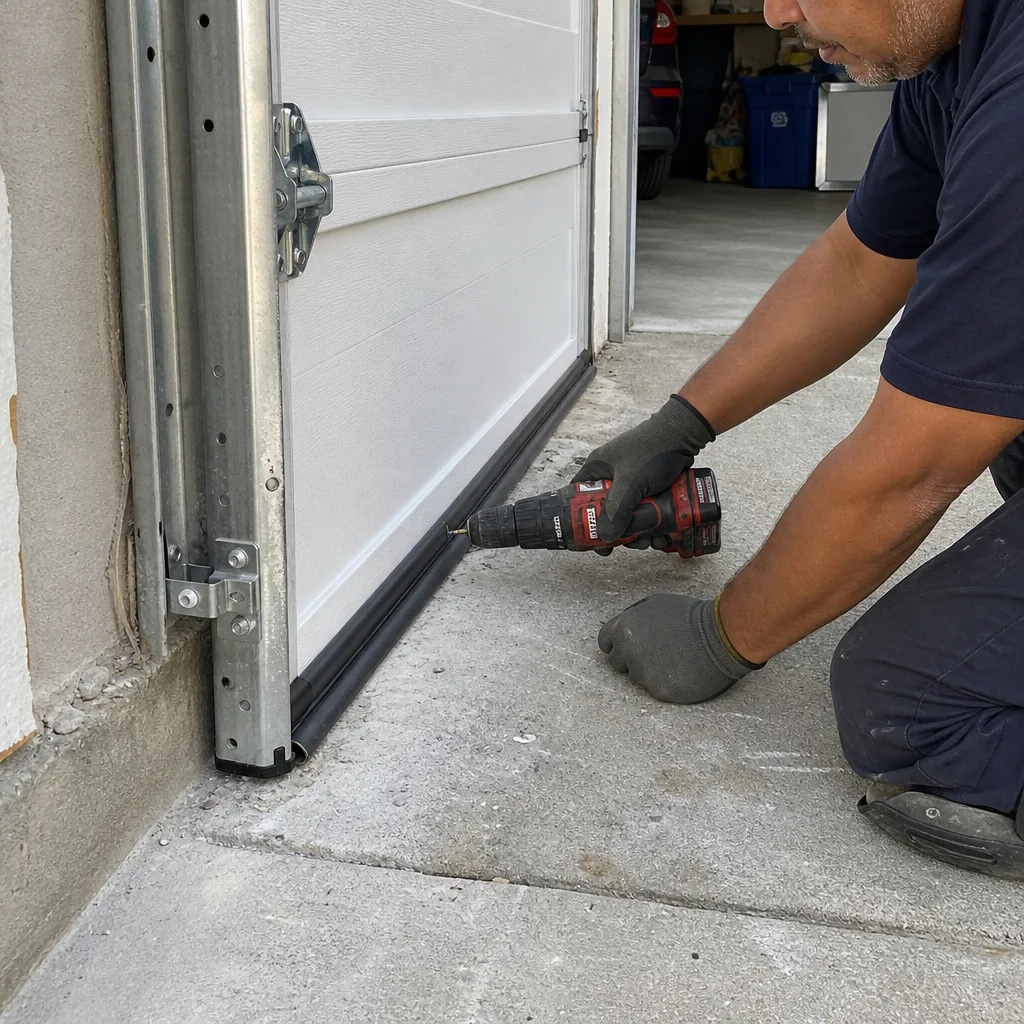
The bottom seal, called an astragal, is a U-shaped rubber strip that attaches to the bottom of the door panel. It compresses against the slab. But if the slab has a half-inch dip, the seal cannot bridge the gap. Water flows under the door, soaks into stored boxes, spreads across the floor, and accelerates rust on the door’s bottom panel and track brackets.
Before the first winter storm, do this five-step check:
- Close the door and get down at eye level with the bottom edge. Look for any light gap between the rubber seal and the concrete.
- Run your hand along the seal from one side to the other. Check for cracks, flattening, or tears in the rubber. Focus on the outer edges, which dry out fastest.
- Look at the concrete itself. If there’s a visible dip near the center or one corner, note its depth. Anything under three-eighths of an inch usually compresses closed. Anything larger will not.
- If the seal is cracked or flattened, replace it before the rain season. An astragal for most doors costs $20-40 and installs with basic hand tools in under an hour.
- For larger slab gaps, consider a threshold seal: an aluminum strip that mounts to the concrete and gives the door seal a flat surface to compress against. This solves the problem without a concrete pour.
East LA winter rain is not heavy by national standards, but a single atmospheric river event can drop an inch of water in a day. When that water runs down a sloped driveway toward a garage with a broken seal, it finds its way inside. The damage to the door bottom, the track, and whatever you store in that garage accumulates faster than most homeowners realize. If reading these checks is more than you want to tackle, full garage door repair in East Los Angeles includes bottom seal inspection and replacement as a standard part of the service.
Inland Heat and Cool Evenings: Spring Tension Realities
East Los Angeles sits inland enough that summer daytime temperatures regularly reach the high 80s and low 90s, but the evenings drop into the 60s. That’s a 20 to 25 degree daily swing, and steel expands and contracts within that range. The question we hear: does that affect spring tension, and does the spring need recalibration?
The answer is usually no, but with an important nuance. Torsion springs are tempered steel designed to flex through their cycle. Daily temperature swings in East LA’s range do not change the spring’s tension in any way that requires adjustment. What they do is expose a spring that was already under-tensioned or over-tensioned. If a spring is correct at 70 degrees, it will still be correct at 90 degrees and at 55 degrees. But if a spring was installed slightly off, the temperature shifts make the problem more visible: the door feels heavier on hot afternoons or runs fast and slams on cool mornings.
Here’s the test that takes 30 seconds and tells you whether your spring tension is in the right range:
- Close the door and disconnect the opener by pulling the red release cord.
- Lift the door by hand to the halfway point and let go.
- A correctly tensioned door stays at halfway without drifting up or down. If it falls, the spring is worn or under-tensioned. If it rises, it’s over-tensioned.
- Reconnect the opener by running it until the trolley re-engages.
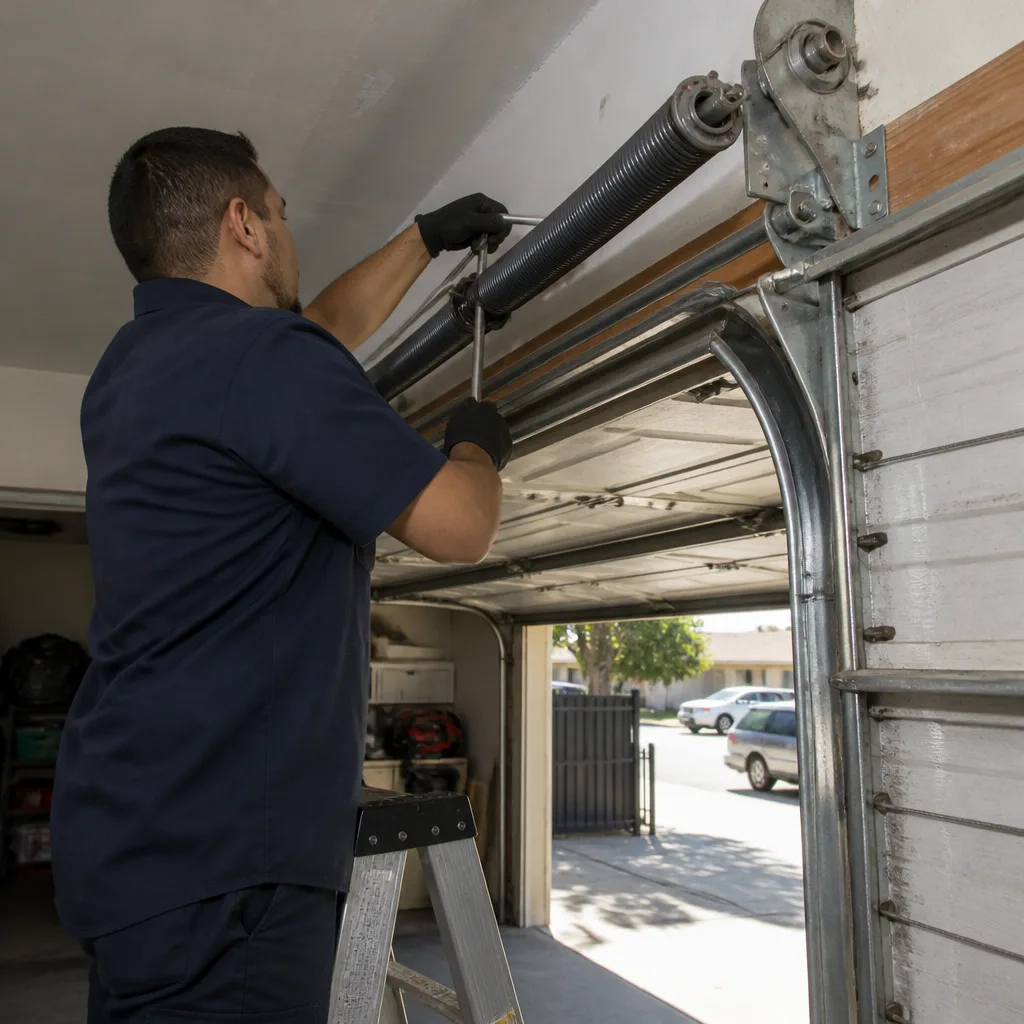
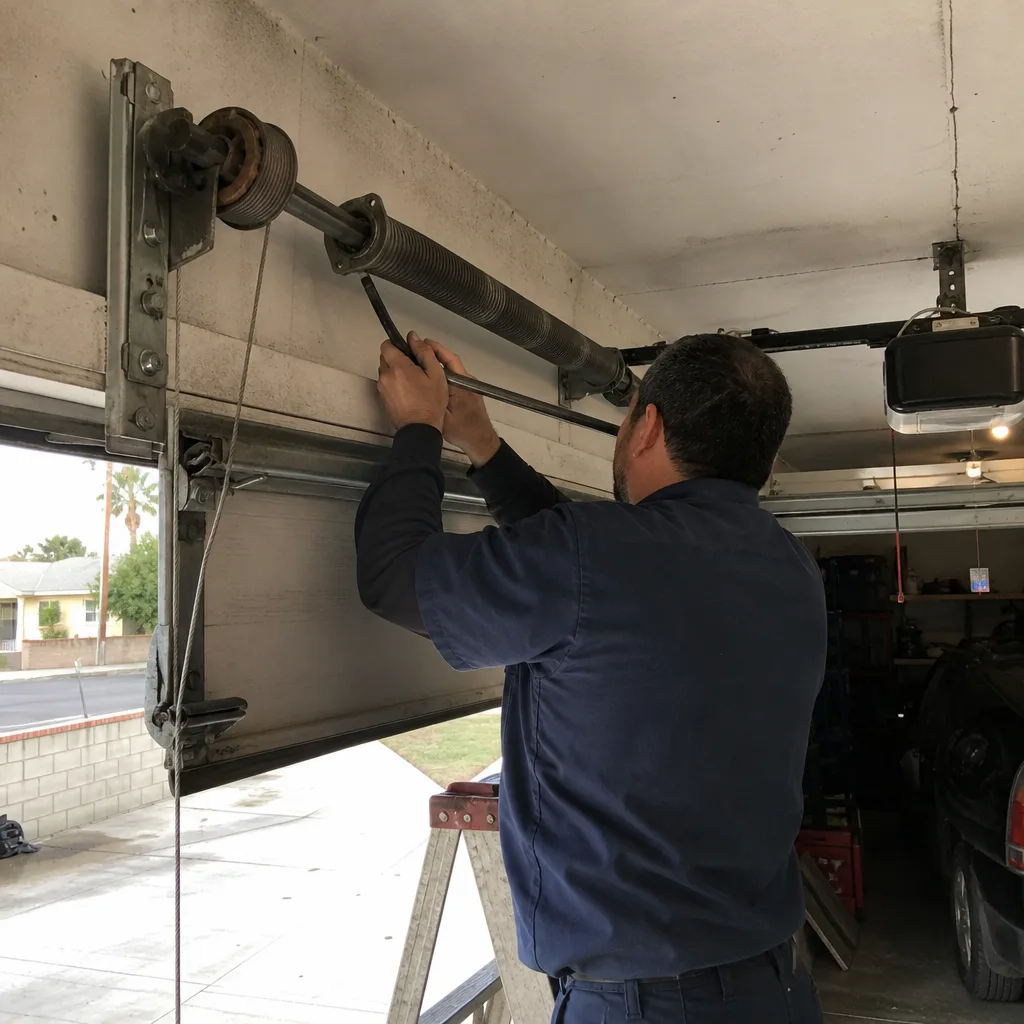
This is a diagnostic step only. Torsion springs hold enough tension to cause serious injury, and adjusting them is not a DIY task. If your door fails the halfway test, call a technician. The good news for East LA homeowners: spring replacement is a routine repair, and most doors use standard spring sizes that a well-stocked truck carries the same day. We service springs on all eight major brands, including Craftsman systems that are 20 years old and still running fine once the springs are replaced.
Month-by-Month Maintenance Calendar for East Los Angeles
Generic guides divide the year into four even seasons. East Los Angeles doesn’t work that way. Here’s a month-by-month schedule tuned to the actual climate pattern, with tasks that take ten minutes or less.
January: Post-Rain Inspection
- Check the bottom seal for water damage from December storms.
- Look for rust starting on the bottom track brackets.
- Test the opener’s auto-reverse by placing a roll of paper towels under the closing door. It should reverse within two seconds of contact.
February: Hardware Torque
- Tighten every bolt and screw on the track support brackets, hinge plates, and opener mounting rail. East LA’s older wood-frame garages let hardware loosen over time as the wood expands and contracts.
- Apply silicone lubricant to hinges, roller stems, and spring coils.
March: Track Cleaning
- Wipe the interior track channels with a dry cloth. Remove any visible grease accumulation.
- Check roller wear. Nylon rollers with cracked edges should be replaced; steel rollers with flat spots should be replaced too.
April: Sensor and Opener Check
- Clean the safety sensor lenses with a dry cloth.
- Check that the opener board’s light bulbs are functioning. LED bulbs with poor shielding can interfere with remote signals on older openers.
- Test the remote from street distance, not from the driveway.
May: Marine Layer Begins
- First of the two-week rust inspection cycles on hinges and bottom brackets.
- Move stored items away from the interior door face to allow airflow.
June: Rust Check Continues
- Continue the two-week hinge inspection.
- If you see surface oxidation, treat it now before it becomes pitting. A cold galvanizing spray from any hardware store works.
July: Mid-Year Full Assessment
- Do the halfway spring tension test described above.
- Listen to the door through a full cycle. Any grind, thunk, or hesitation is worth diagnosing before it becomes a larger repair.
- Inspect cable tension. Both lift cables should be equally taut. A slack cable means a spring or drum problem.
August: Heat Check
- Hot afternoons put extra load on opener motors. If your opener trips its thermal overload and stops mid-cycle on hot days, that’s a sign of either a tired motor or a door that isn’t balanced.
- Lubricate the opener chain or screw drive per the manufacturer’s recommendation.
September: Pre-Santa Ana Prep
- Run the full Santa Ana prep checklist from the section above: track wipe, spring inspection, sensor cleaning.
- Check weatherstripping on the sides and top of the door opening for gaps where dust enters.
October: Mid-Wind-Season Recovery
- After the first major Santa Ana event, repeat the track wipe and spring inspection.
- Check for dust accumulation on the opener’s internal gear in the motor head. A full gear housing drags the door and burns out the motor over time.
November: Pre-Rain Seal Assessment
- Run the full winter rain check described above: seal condition, slab gaps, light penetration.
- Replace the astragal now, before December storms arrive.
December: Winter Rain Response
- After each major rain event, look for any water line inside the garage that indicates a seal leak.
- Confirm the auto-reverse feature still works on the opener. Wet concrete reduces friction, which changes how the door interacts with the safety system.
Opener Care: What the Smart-Home Manuals Leave Out
Garage door openers have changed more in the last ten years than the doors themselves. Modern LiftMaster and Chamberlain units connect to phone apps, log cycle counts, and send alerts when the door runs unattended. But the mechanical guts of an opener, whether it’s a brand-new smart model or a 1995 Craftsman chain drive, still need the same basic care. The manuals cover app setup and remote programming. They skip the environmental factors that matter in East Los Angeles. For broader coverage of local door care, read The Complete Garage Door Repair Guide for East Los Angeles Homeowners.
The three opener issues we see most in East LA garages:
- Thermal overload on hot afternoons. Opener motors have a thermal cutoff that stops the motor when it gets too hot. In August, a garage that lacks ventilation can exceed 110 degrees by 3 PM. If your opener stops mid-cycle and won’t run again for 20 minutes, that’s likely thermal overload, not a dead motor. Ventilating the garage and lubricating the door reduces the load.
- Chain tension drift in temperature swings. Chain drives lengthen slightly in heat and tighten in cold. Most openers self-adjust, but older models don’t. A chain that’s too loose slaps the rail and skips teeth on the sprocket. A chain that’s too tight strains the motor bearings. The chain should sag only about a quarter-inch at the midpoint.
- Belt and screw drive dust ingestion. Santa Ana dust gets into screw drive channels and makes the opener grind. Belt drives are more forgiving, but dust on the belt surface transfers to the pulleys and accelerates wear. A dry wipe once a month during Santa Ana season helps.
If your opener is making noise or hesitating, the problem is usually resolvable with a service call rather than a full replacement. Garage door opener repair in East Los Angeles should always be explored before ripping out a unit that may just need a gear, a capacitor, or a limit switch adjustment. We’ve repaired openers that other companies recommended replacing, and many of them ran for years afterward.
Brand Performance Notes: What We See in East LA Garages
Any technician who tells you all garage door brands are interchangeable either hasn’t worked on enough doors or is trying to sell you one. Different manufacturers have different failure patterns, and knowing those patterns changes the maintenance approach. Here’s what we see in East Los Angeles specifically.
Craftsman: The garage door opener equivalent of a Honda from the 1990s. Millions of these units are still in service across East LA, and most are 15 to 25 years old. The mechanisms are simple and repairable, but the gears wear out. The nylon drive gear inside the motor head is the most common failure, usually showing up as a grinding noise that sounds like the door is chewing itself. If you have a Craftsman opener from the pre-smart era, treat it gently: keep the chain lubricated and the door balanced so the motor doesn’t strain. A new gear is a $40 repair. The same unit new would cost $300 plus installation.
Wayne Dalton: Known for doors with factory-installed torque springs rather than the torsion spring on a bar across the top. These springs are enclosed inside a tube above the door, which protects them from Santa Ana dust better than exposed torsion springs. But the internal components are less accessible for inspection, and when they fail, the whole torque tube assembly often needs replacement. The care strategy for Wayne Dalton doors in East LA is checking the end brackets for play and listening for internal spring noise.
Raynor: A brand with a strong commercial reputation that also makes residential doors used in older East LA homes. The residential units are durable, but replacement parts are less commonly stocked than the bigger residential brands. A Raynor door that loses a spring or a hinge pin may wait longer for parts. Maintenance matters more on these doors because a neglected component that fails on a Raynor sometimes means a longer downtime than a comparable failure on a LiftMaster or Chamberlain door. If you have Raynor hardware, do not skip the seasonal inspections.
The broader point: whatever brand is on your door, we know it. That matters for East LA because the housing stock is old enough that no single brand dominates. A home built in the 1940s and renovated twice may have a Chamberlain opener from the 2000s, a Wayne Dalton door from the 1990s, and Raynor replacement panels from the 2010s. If you’re considering a new door, garage door installation in East Los Angeles should always begin with an assessment of what’s already on the opening, not a brochure for a single brand.
Common Mistakes to Avoid
- Using WD-40 as a garage door lubricant. WD-40 is a solvent and water displacer, not a lubricant. It strips existing lubricant and flashes off, leaving metal dry and attractant to dust. Use a dry silicone spray or white lithium grease for hinges and springs.
- Ignoring a slow or jerky door because “it still works.” A door that hesitates is telling you something. Ignoring the symptom for months lets a minor problem grow. An unbalanced door strain the opener motor and shortens its life.
- Skipping auto-reverse testing after rain. Wet concrete changes the door’s contact dynamics. A reversal system that worked in August may not react correctly in December. Test it monthly.
- Painting the spring or cable. Paint on a torsion spring cracks and flakes as the spring flexes, and flakes get between the coils. Paint on a cable prevents inspection of the cable strands for fraying. Leave springs and cables bare metal.
- Leaving stored items against the door interior. Boxes and bins touching the door panel trap humidity and block airflow. In marine layer months, direct contact creates a microclimate that rusts the panel from the inside.
- Attempting DIY torsion spring repairs. Torsion springs hold enough tension to break bones or worse. Attempting to adjust or replace one without proper winding bars and training is one of the most common sources of garage-related emergency room visits in the US. If the spring fails, call a professional.
When to Call a Professional
Some tasks in this guide are homeowner-friendly: wiping tracks, checking seals, testing the auto-reverse. Others are not. Call a technician when you see a broken torsion spring (you’ll hear it, a loud bang like a gunshot from the garage), a frayed lift cable, a bent track, or a door that falls from the halfway point. Those are mechanical failures that require specialized tools and, in the case of springs and cables, can cause serious injury if mishandled. Call if your opener motor runs but the door doesn’t move, which usually means the gear or the drive coupling has failed inside the motor head. And call if your door is original to a pre-1970s East LA home and you’ve never had the spring system inspected. Springs on older installations are often overdue for replacement and can fail without warning. Preston Garage Door Repair offers free estimates in East Los Angeles. Call (833) 573-5280 and describe what you’re seeing. We’ll tell you over the phone whether it’s urgent or can wait.
Frequently Asked Questions
Every 60 days during Santa Ana season (September through November), and every 90 days the rest of the year. Use a dry silicone spray on hinges, roller stems, and spring coils. Avoid petroleum-based lubricants, which attract dust and create a grinding paste in East LA’s dry conditions.
No. East LA’s seasonal temperature range does not require spring recalibration on a correctly tensioned door. If your door feels heavy in hot weather or slams in cool weather, the spring was already incorrectly tensioned, and the temperature swing is simply exposing the problem. The halfway test described above will confirm it.
A typical seasonal service visit, including track cleaning, lubrication, balance testing, and seal inspection, runs $75 to $150 in East LA depending on the door type and opener age. Replacing a bottom seal adds $20 to $40 for the part. If the visit uncovers a needed repair, that’s quoted separately. Call (833) 573-5280 for an exact quote; estimates are free.
No. At Preston Garage Door Repair, the price is quoted and agreed upon before any work starts. If the technician discovers something unexpected during the service, that’s discussed with you first, and no additional work is done without your approval. The quote you’re given is the price you’ll pay for the work described.
That’s most likely dust-compacted lubricant in the track or between the spring coils. Remove the old lubricant with a dry cloth, clean the track, and reapply a dry silicone spray. If the grinding persists after cleaning, call a technician; continuing to run the door will accelerate roller and spring wear.
In most cases, yes. Preston Garage Door Repair prioritizes emergency calls for doors that won’t open or close, especially when a car is trapped in the garage. Call (833) 573-5280 and describe the problem, and we’ll give you an honest arrival window. Parts for the most common repairs are carried on the truck.
The Bottom Line
East Los Angeles doesn’t have a winter that kills garage doors, but it has a Santa Ana season that wears them down, a marine layer period that rusts them, and a rain window that tests their seals. The seasonal care that matters here isn’t a generic spring cleaning. It’s dust management in the fall, corrosion prevention in the early summer, and seal preparation before the winter rain. Ten minutes a month covers most of the tasks in this guide, and the cost of a professional seasonal inspection is a fraction of a spring replacement or opener rebuild. Whatever brand is on your door, from a 1998 Craftsman opener to a current LiftMaster smart hub, the maintenance logic is the same: clean tracks, lubricated hinges, balanced springs, intact seals. For more guides & resources, visit our blog. Do that, and your door will outlive the housing market’s next cycle.
Written by the team at Preston Garage Door Repair, serving East Los Angeles since 2018. We service LiftMaster, Chamberlain, Genie, Clopay, Amarr, Wayne Dalton, Craftsman, and Raynor equipment.
See the difference
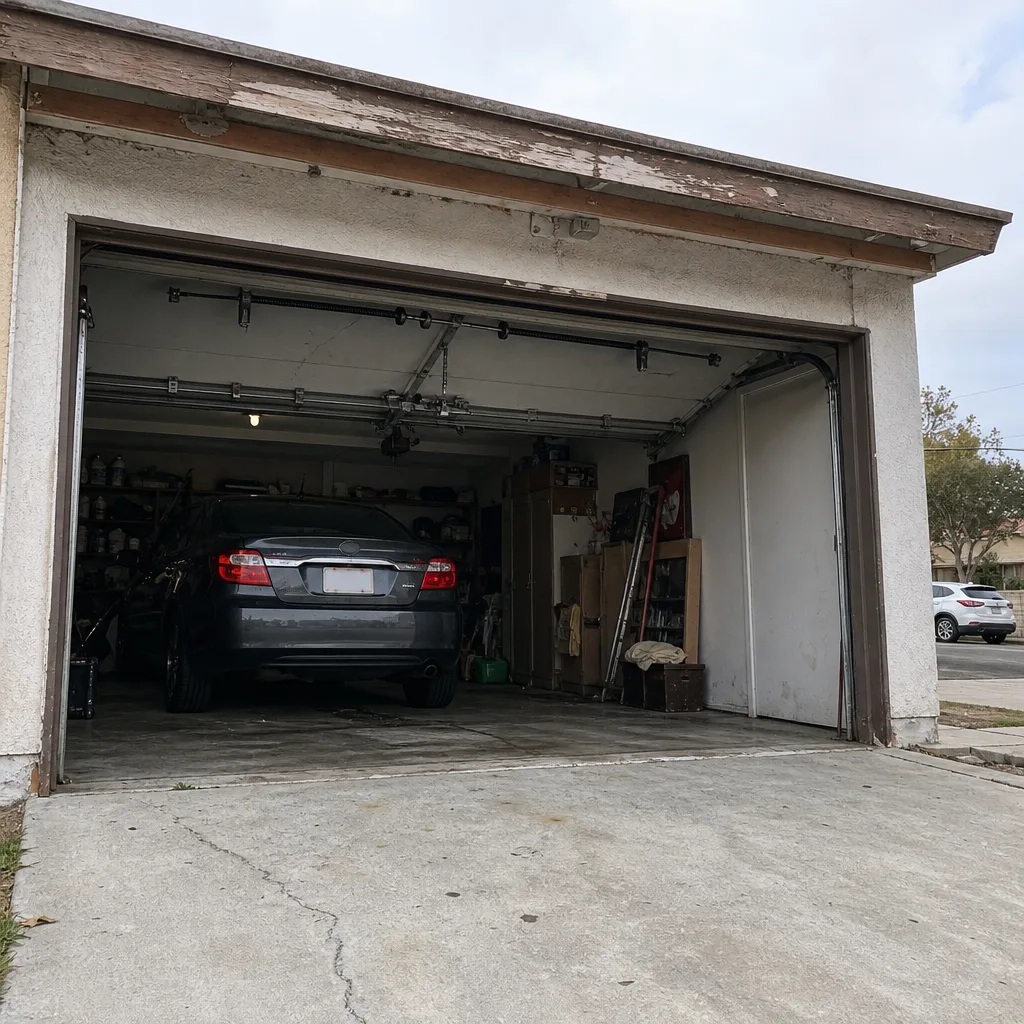 Before
 After
 Before
 After
 Before
 After